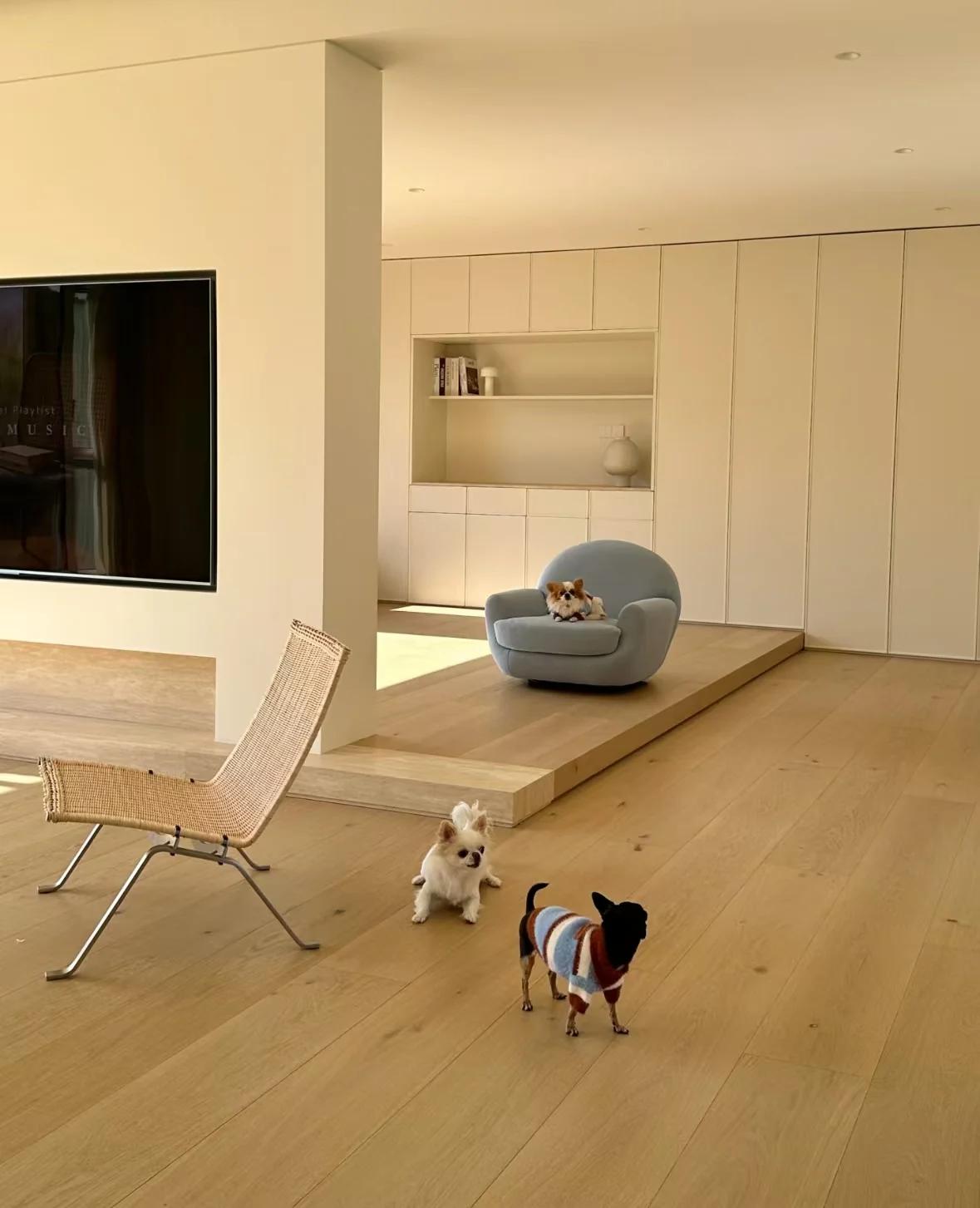














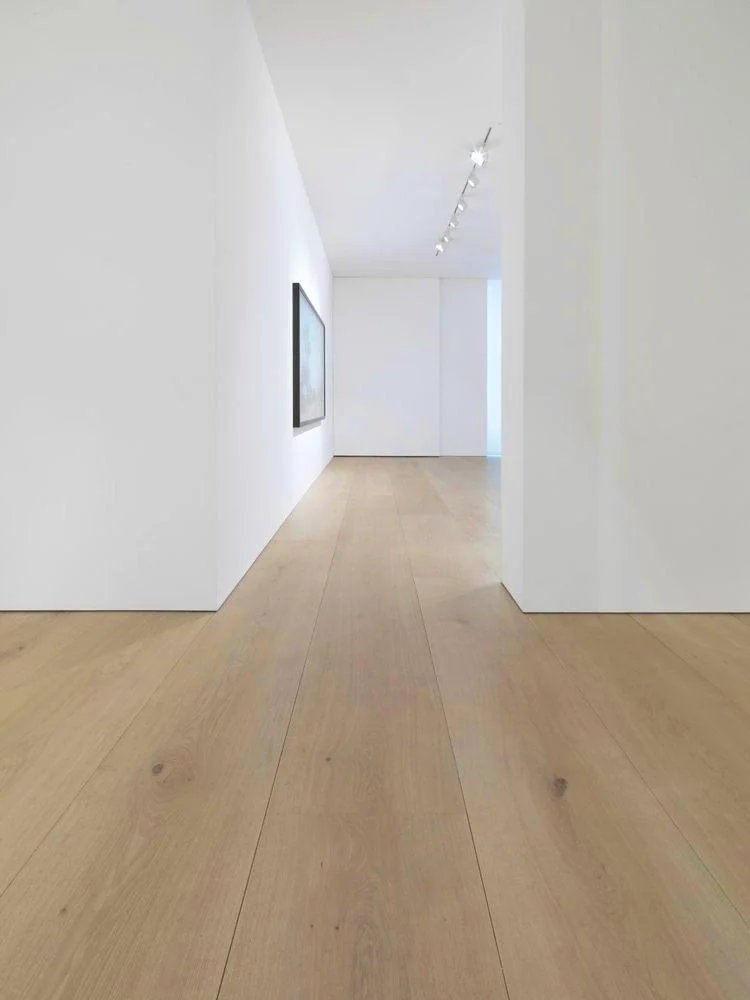
Overseas designers and buyers can observe interior flooring applications in HUAGE's China project materials. UpperHills and Oriental Rose Garden are China project records. Their photographs and catalogue material information support selection; they are not UK or other overseas project achievements.
UpperHills: exploring several wood colour directions within one project record
The original UpperHills record lists Baixue No. 1, Fabric-textured Oak, French-style Oak No. 1 and Classic Black Oak, with an installation date of October 2025 and an area of 360 m². These details belong to that page's project record and should be read with the original names. Product names can guide further browsing, but they cannot fill in the construction and installation methods for every location.
This record's value is that one project entry provides clues to different tones and flooring expressions. Observe light/dark relationships, strip rhythms and furnishings, then identify further interests. More detailed matters, such as the product used in each room or area per product, require project documents and cannot be calculated by dividing the total area equally.
Oriental Rose Garden: connecting material construction with the experience of space
The Oriental Rose Garden catalogue record lists solid teak and black walnut engineered flooring with an all-birch plywood core, with installation dated December 2024 and an area of 360 square metres. Solid wood and all-birch plywood core describe construction; teak and black walnut identify timber. Understand them separately. Project photographs show visual material relationships but do not replace full specification approval for a specific product.
For a new project using this record as reference, discuss preferred colour and appearance first, then select construction and pattern for the actual rooms. Similar visual aims need not copy the original configuration. Changed subfloors, use, levels and budgets require renewed checks; the photograph's harmony comes from several conditions together.
Project photographs illustrate applications but cannot establish every conclusion
Both records show flooring within interiors, supporting observation of broad grain and furniture coordination. Pictured walls, cabinetry, stone and lights are not all flooring supply. Installation months do not prove later maintenance condition or long-term performance. Preserve these limits when introducing cases.
When browsing cases, distinguish project material names from product models. Records may use broad descriptions while catalogues provide designs and specifications; they are not always interchangeable. Discuss case photographs with physical samples to confirm desired colours or patterns through actual materials and schedules, not a case title as ordering instructions.
Turn application references into your own material-selection questions
Start a case-based discussion with three questions: which wood colour and pattern should remain, which rooms or applications are intended, and which site conditions differ from the original photograph? These connect visual preferences with a practical scheme. Then check construction, dimensions, finish and edge details so the reference leads to an actionable next step rather than a wish to copy an entire image.
Read HUAGE project materials from case to product, then samples and site. Catalogue names, installation months and areas preserve historical material records for comparing colours, patterns and applications on new projects. Knowing provenance and applicability helps designers and buyers more than inferring complete construction results from limited photographs.
Use wood colours and patterns in China cases as a starting point, then confirm the products, documents and local installation proposals required at the destination. Case records explain applications but do not replace approval of cross-border supply conditions or local installation capability.