














Overseas buyers and designers can use HUAGE images and descriptions to narrow wood colours and patterns, then request samples and technical documents for specific products. Product photographs, interior references and China project records have different roles; retain their provenance when browsing.
Board and sample images focus on the material itself
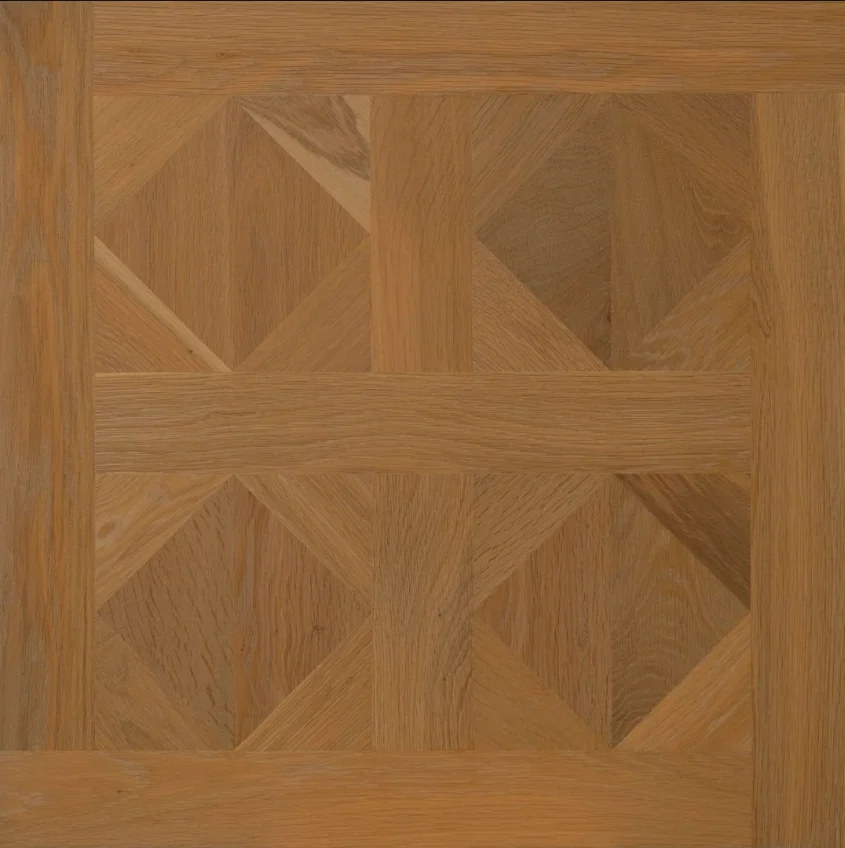
Board photographs help show grain, tone, knots and finish, while sample photographs help compare different selections. HUAGE designs including Champs-Élysées, Camilla and Chloe have their own stated finishes. Read the name, image and product description together. Images help narrow down an appearance, but colour and feel still require physical confirmation, particularly where flooring must coordinate with furniture or wall colours.
Similar screen colours can have different constructions and dimensions, and close-ups may not show full proportions. After liking a product image, check species, core, overall and top-layer thickness rather than save only the photograph. Identify important surface details and compare them with samples or further documents.
Layouts and module diagrams focus on joints and boundaries
Read herringbone, chevron and square parquet through their joints: staggered rectangles, meeting angled ends and module continuity have different organisations. HUAGE records support these comparisons. Review not only preferred patterns but starting direction, edge cuts and room boundaries.
A module diagram explains pattern, not identical timber or thickness across every module. Nine square designs list species and dimensions individually; shaped samples require further configuration approval. Compare product images with room plans for repetition scale before discussing borders and adjoining floors.
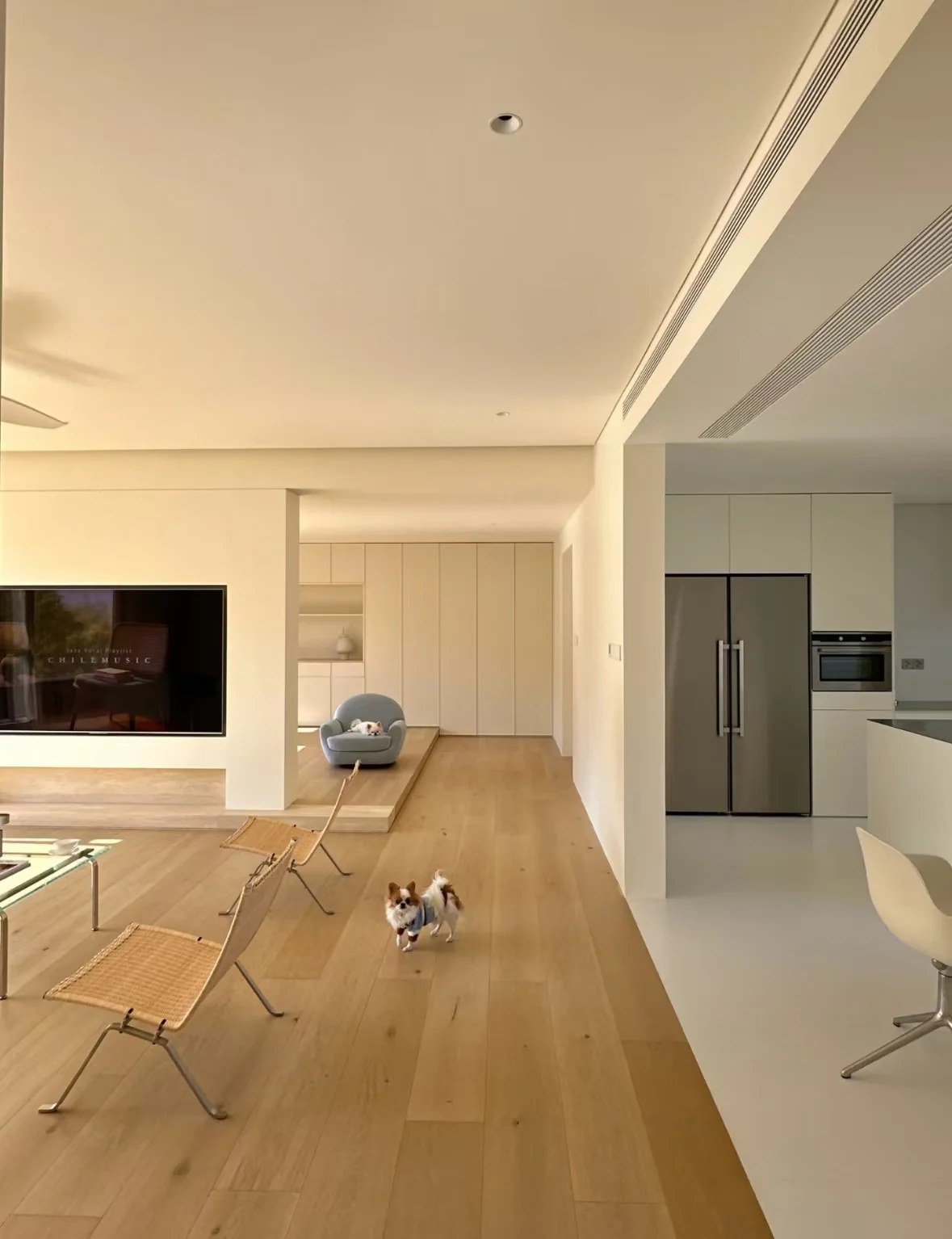
Interior images help observe relationships between materials
Interior images show relationships with walls, furniture and daylight and grain rhythm over larger areas. They are overall references: pictured cabinetry, stone, lights and other finishes do not become flooring supply. Identify whether floor, wall or ceiling is the reference rather than assume one party executed the entire space.
Wall, ceiling and stair images need corresponding drawings. Showing timber does not provide fixing, fire or slip parameters. HUAGE images express design directions; actual use needs product/build-up confirmation. Separating observation from technical checks preserves efficient selection and necessary installation judgement.
Project record image retaining its original identity and scope
Browse actual project records with their names, listed products and catalogue context. HUAGE's China project pages retain material and photograph links so readers can understand colours and patterns in use before returning to product configurations. Other visible materials cannot become HUAGE supply references merely from photographs, which also cannot replace long-term performance records.
After selecting an image, retain its product name or project page and record the tone, pattern and application to reference. Subsequent discussions can then use identifiable information without tracing the image source again. HUAGE's illustrated guide connects images, text and project conditions so an appealing scene gradually becomes a defined selection direction.
Send selected product pages with intended applications and reference features to reduce screenshot-only ambiguity. China project images provide application references, not evidence of overseas installation scope or local achievements.