















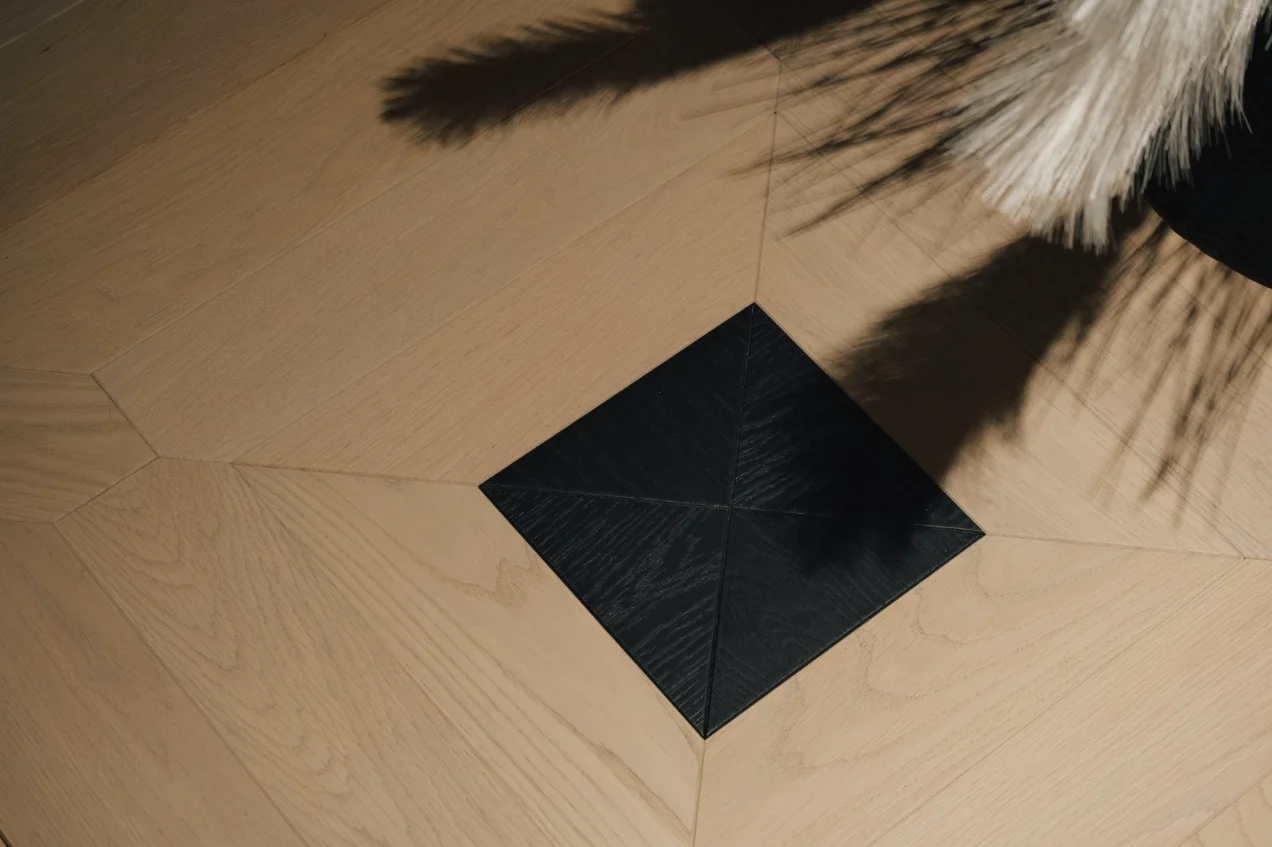
Dorothy and Sveta differ in pattern and face timber: North American black walnut and European white oak respectively. Both are 800×800×18mm square modules with 3.0mm solid wood top layers. Comparing them shows why identical dimensions still require pattern names, face material and finish information to be recorded together.
Confirm the module first, then the face material
Dorothy and Elizabeth list North American black walnut; Sveta and Valo list European white oak; another record combines North American black walnut with Canadian maple. Sharing a square module format does not make the face timbers identical. Place pattern names and face materials in adjacent schedule fields so identical square dimensions are not mistaken for complete product interchangeability.
Nine square-module source pages list Russian all-birch plywood cores: 800mm is module length and width, 18mm overall thickness and 3.0mm the solid wood top layer. Other sizes are described as customisable, but proportions, construction and availability need approval; not every size is ready-made. Shaped modules cannot inherit these parameters automatically.
Read coating and selection information against the relevant design
The original group page lists nine primer coats, two topcoats and an ABC appearance-selection group. These describe catalogue processing and appearance, not an abrasion rating inferred from coating count or an environmental grade inferred from ABC. For specific performance, request documents for the relevant product and batch rather than treat a finish description as an independent test result.
Mixed-timber patterns depend on each colour's proportion and direction within the module. Compare intersections, adjoining modules and grain turns physically, not only the centre. For straight-board junctions, compare actual tones and sheen together; shared oak or walnut names do not remove the need for side-by-side samples.
Turn a preferred pattern into a confirmable checklist
A square-module brief should include the plan, visible boundaries, pattern direction and selected sample. Show borders, module adjustments and local cuts on layout drawings before calculating quantities. A tightly cropped pattern photograph often cannot establish the intended scale or whether edges should remain complete.
HUAGE catalogue names and patterns locate records; confirm formal external names, current specifications and supply terms per project. Where source names need verification, use catalogue identifiers instead of implying new range authorisation or brand associations. Selection can begin with a pattern but must end in joint approval of material, sample and configuration.