













Oak and black walnut appear in different formats and patterns in HUAGE's materials. They first identify face material or species, not something reliably recognised by darkness alone. 'Black walnut' does not mean the entire board must be solid wood. Locate two complete product records before discussing the grain and tone to retain.
Compare within the same use first
The American black walnut straight-board record lists multi-ply construction and all-birch plywood core; European white oak planks also have multi-ply records. Both are selection directions, but compare dimensions, top layer and finish individually. A wide-board interior and close-up sample have different image scales, easily confusing photographic differences with material differences.
Parquet also has different face configurations. Dorothy and Elizabeth list North American black walnut; Sveta and others European white oak; another combines black walnut and Canadian maple. Pattern cannot identify species. Confirm the actual combination after choosing a composition rather than borrow timber names from another pattern.
Check wood colour separately from material identity
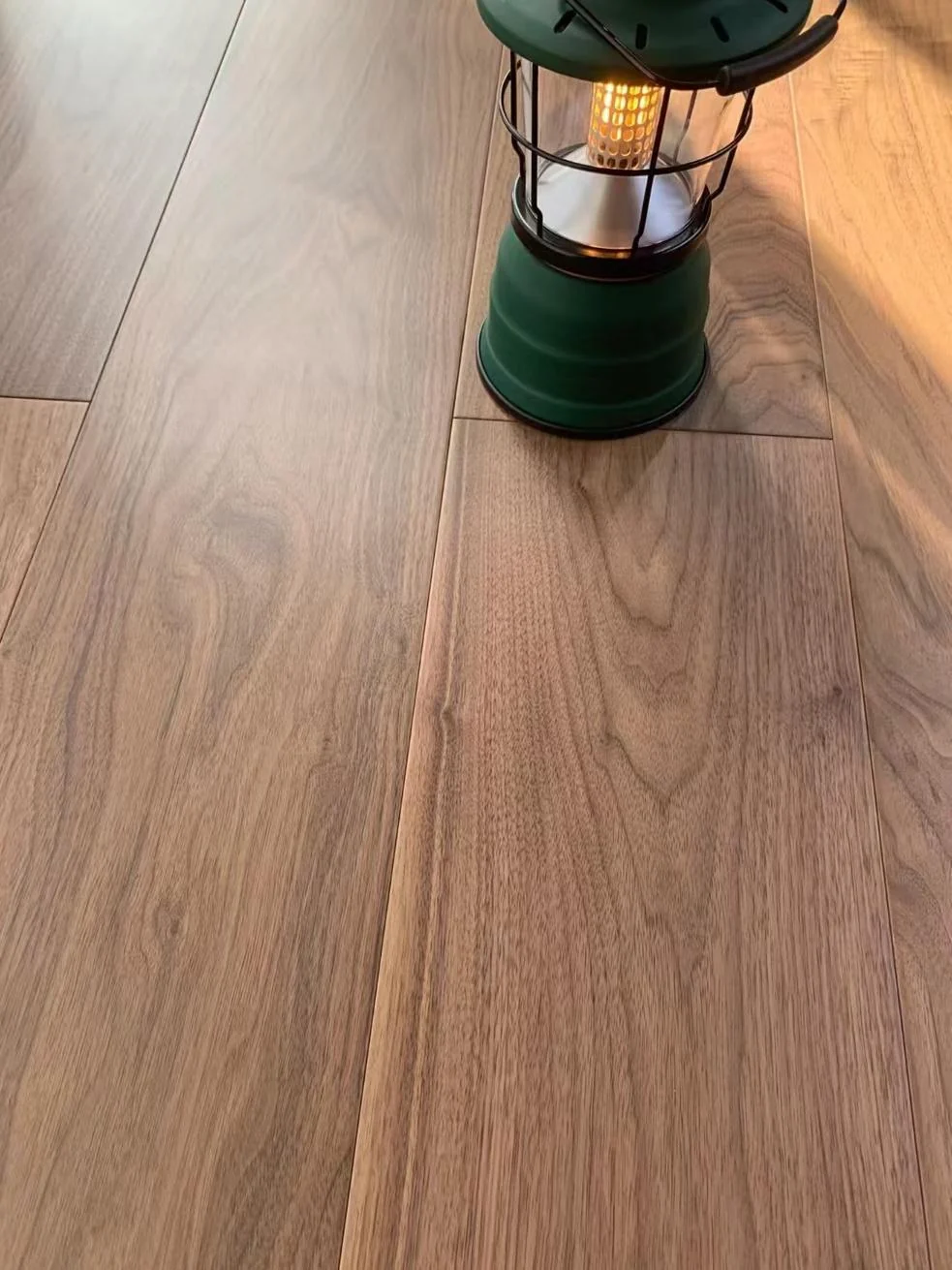
Light Black Walnut Chevron shows that species names do not correspond directly with darkness. Processing, light and photography affect appearance; smoked, grey or cream-white names also do not describe complete processes. Compare actual samples together for lightness, grain and sheen rather than turn one warm photograph into a fixed colour code.
For matching floors, doors and cabinets, identify whether grain, tone or sheen is the priority, then compare both samples. Different applications can share timber but differ in construction/finish. Retain individual material names rather than summarise all supply as whole-home walnut.
Make comparison outcomes usable for procurement
Sample approvals should include the product reference, identifier, observation conditions and acceptable variation, with the selected construction and specifications in the requirements schedule. Record wood or core origins only from specific sources; do not borrow unstated origins from neighbouring products or geographical words in names. For traceability requirements, specify the document type and product it must cover.
HUAGE retains varied oak and black walnut catalogue displays to compare specific materials rather than rank them universally. Confirm current supply, care and UK installation conditions with the product. Record comparisons through reviewable samples and fields so later discussions continue from the same choice instead of reconsidering unrelated photographs.