














Hand-scraped or blunt-tool finishes for Champs-Élysées and Rebecca, cross-sanding for Camilla, and brushing for Chloe and Zoe are separate original records in HUAGE's 1900 straight-board group. The 2400 long and wide boards and 800 square parquet groups have their own coating descriptions. Organising fields by product group identifies the actual surface directions to compare before sampling.
Observe feel and tone separately
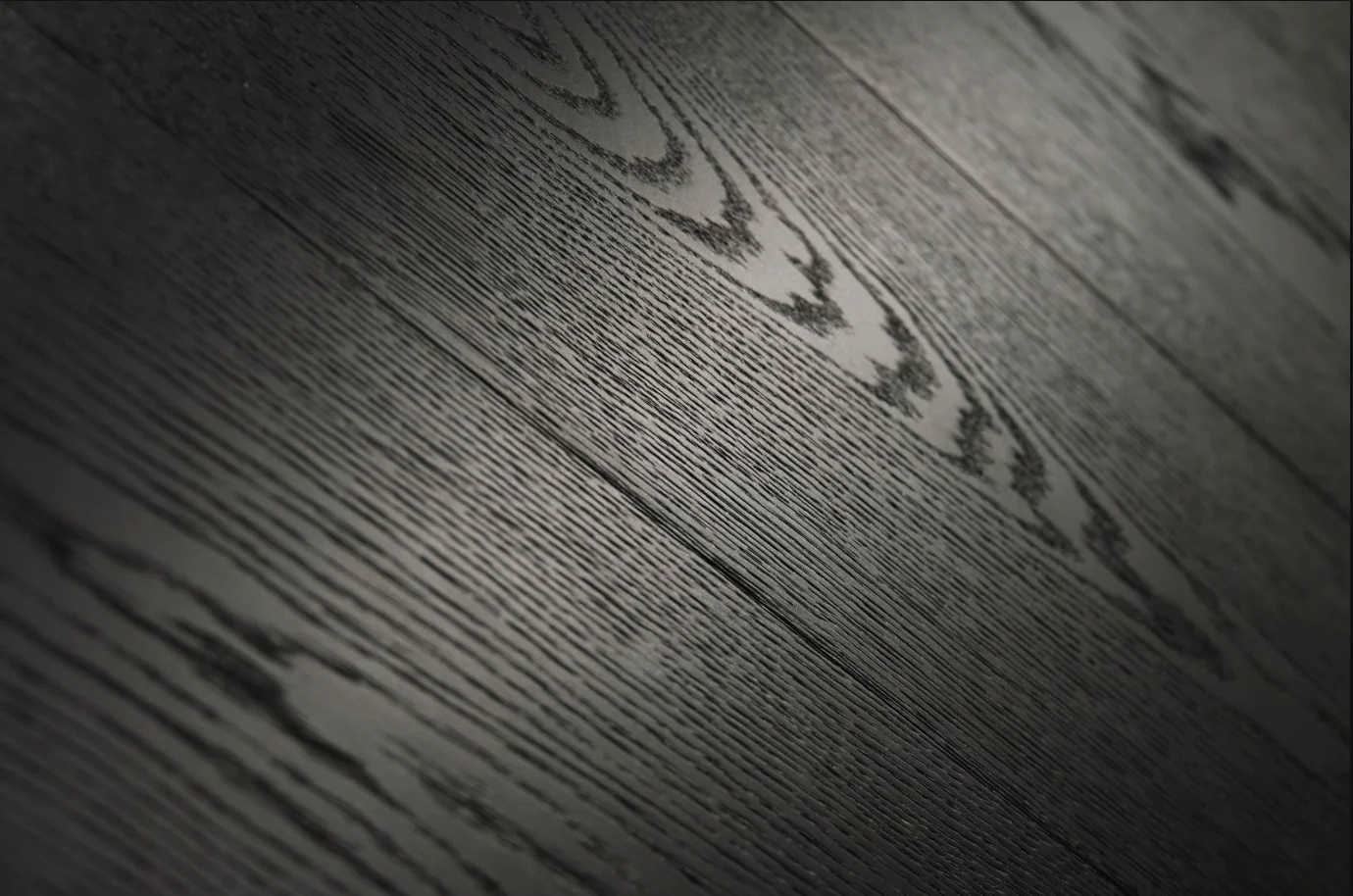
Within the 1900 straight-board group, Champs-Élysées and Rebecca list hand-scraped or blunt-tool finishes, Camilla cross-sanding, and Chloe and Zoe brushing. Their comparable formats and constructions support different finishes. Change viewing angles to examine relief and grain in oblique light, then compare colour from the front, avoiding grain shadows being mistaken for colour differences.
Names such as Smoked Oak and Fabric-textured Oak suggest appearance directions but are not complete processing specifications. Request the relevant product documents to establish production steps, coatings or cleaning methods. Do not expand 'smoked' into an entire processing sequence or interpret 'fabric-textured' as an additional fabric covering. Descriptions must respect what the original page actually supports.
Coating records are not performance rankings
The original pages for the 2400 long, wide-board group describe Italian water-based lacquer and hand production; the square-parquet group lists nine primer coats and two topcoats. These descriptions apply to their respective designs and cannot be extended to every plank and shaped module. Even a stated coating-layer count does not establish an abrasion, slip-resistance or environmental test result. Performance requirements still need supporting documentation for the relevant product.
Confirm the finish alongside daily use. For cleaning, local maintenance or later refurbishment, explain the actual setting and intended management approach, then check recommendations for the final surface system. A matt or glossy appearance does not establish that the same care product is suitable. An inappropriate maintenance method may conflict with the approved finish requirements.
Which details should sample records retain?
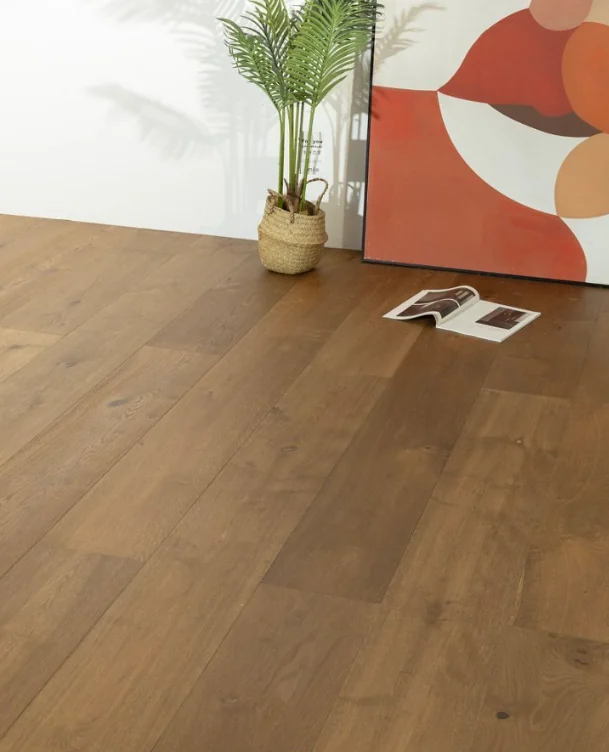
When approving the design, also record the product reference name, colour direction, sheen, texture treatment and sample number. Comparing several samples under the same light helps establish an acceptable range of variation; one ideal grain pattern cannot represent the whole supply. If the finish or colour changes, approve the corresponding sample again rather than continuing to use an earlier image as the final selection reference.
HUAGE catalogue fields explain finish differences; confirm current finishes per project. Retain final finish information in overseas supply and local installation records for maintenance handover. Processes should suit the space and use: more terminology does not mean a higher specification, and promotion is not unconditional performance assurance.