














For overseas solid wood selection, local contractors need identifiable joints, finish and installation conditions as well as dimensions. Catalogue names locate references; mutually approved product documents and samples should form the delivery basis.
Three records, each with its own material identity
In the original PDF, Burmese Teak No. 2 is solid teak; Malashengxia and Shabamengxue are solid wood with acacia recorded as the species. All three list length 910 mm, width 125 mm and total thickness 18 mm. Names correspond to original records; species, current supply information and order names must remain aligned with the actual selection.
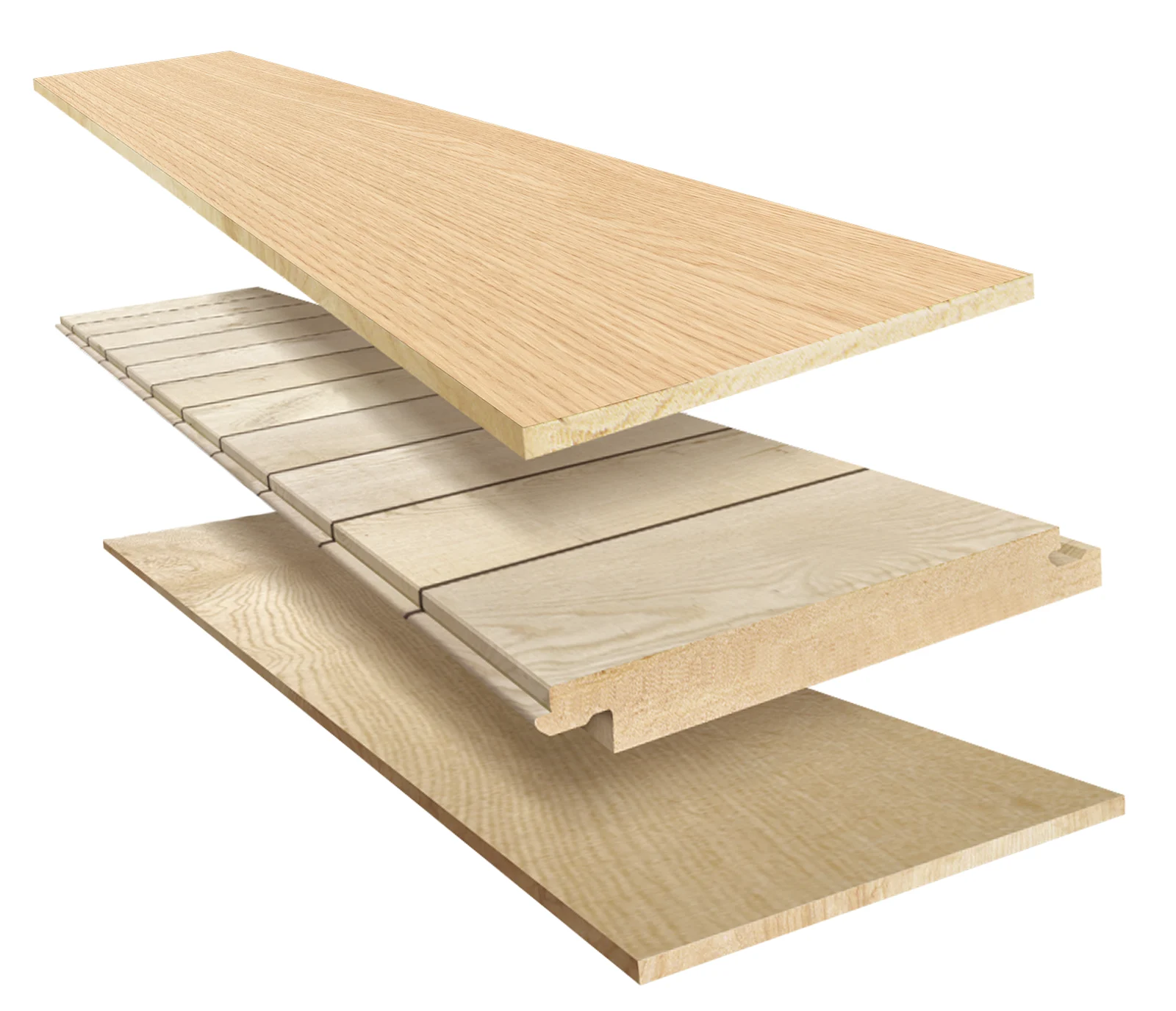
The solid wood construction page describes machining from one piece of natural timber, distinct from a timber face combined with a multi-ply core. Do not assign core information or top-layer measurements from other engineered products to these three solid wood boards. Malashengxia and Shabamengxue are source design names; they do not establish precise botanical species or raw-material provenance.
Confirm patterns against board ends and joint conditions
Shabamengxue's interior shows herringbone. It suggests style, but installation needs checks of end/side joints, left/right boards and direction. Identical length and width do not mean every supplied board forms the pictured pattern; match supply specifications with the contractor's board type before ordering.
Straight installation also needs starting directions, continuity between rooms and doorway edges. Changing to herringbone is not simply a site direction adjustment: layouts, cuts and quantities may change. Mark starting references, doorways and fixed furniture on plans before confirming board formats, quantities and conditions required by the pattern.
Beyond the 18mm board thickness: the complete floor build-up
Board thickness is only part of the finished floor level. When timber battens or other methods are used, include the subfloor, moisture-control layer, fixing build-up and flooring in the height check. Door clearance, thresholds, the first stair riser and junctions with adjacent stone or tiles must be coordinated against the actual build-up. The original catalogue provides batten-installation and other solid wood flooring references; the product and site conditions determine the specific proposal together.
Check subfloor soundness, flatness, dryness and moisture interfaces, then perimeter and intermediate movement allowances. For heating, confirm product/system suitability separately, not from solid wood or species names alone. Record results, materials and responsibilities in the proposal as acceptance references.
Discuss appearance and subsequent use for the same actual board
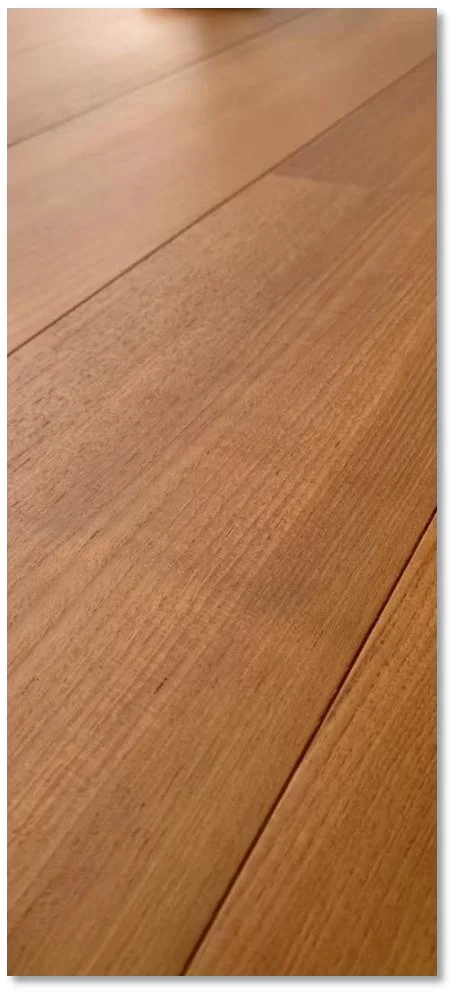
Compare several physical boards under the same light for colour variation, grain and knots, agreeing the appearance range. Framing, lighting and screen differences prevent one photograph replacing physical layouts. Discuss designs and batches before replenishment; one colour name cannot require old and new timber to be identical.
Whether and how solid wood flooring can be refurbished depends on wear, remaining treatable thickness, joint position and existing finish. An 18mm overall thickness is not all available for repeated sanding and does not support a fixed refurbishment count. Keep product and installation records at handover and confirm cleaning, furniture protection and repair methods to match maintenance with the chosen material.
Before overseas ordering, confirm board format and local installation proposals, stating transport, arrival checks and installation responsibilities separately. Actual board condition determines refurbishment or local repair, not a predetermined count based on overall thickness.