














For overseas three-layer engineered wood discussions, translate construction information into documents usable by both supplier and local contractor. Layer diagrams show composition; match timber, thickness, joints and finish individually to the supply choice.
First understand what each of the three layers means
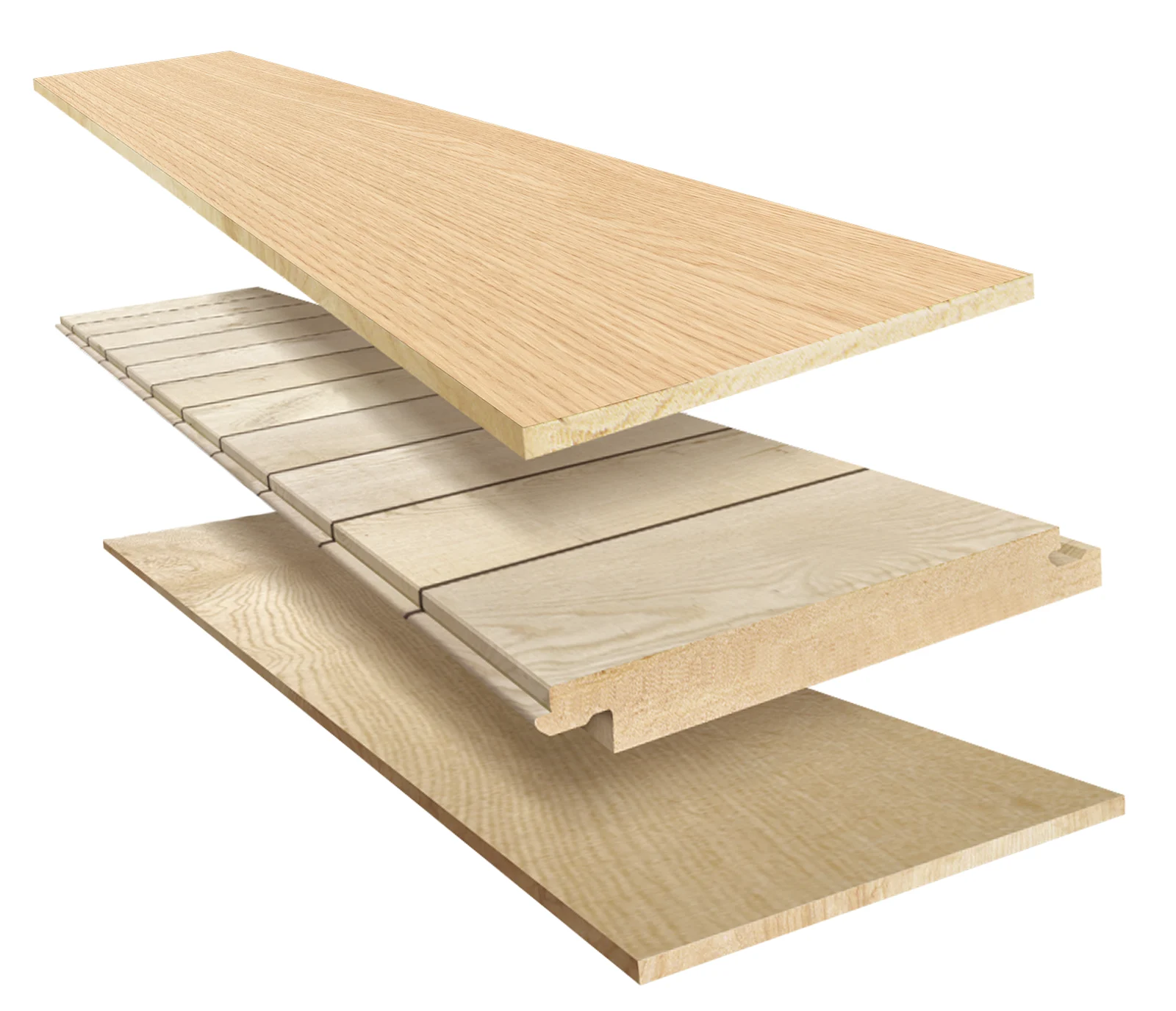
Read the original exploded diagram through the following three positions and compare it with actual sample cross-sections. The diagram explains layers; do not estimate their thicknesses from its proportions.
- Solid wood top layer: the exposed surface. Check the species, grain, colour and finish, and compare physical samples for appearance and feel.
- Solid wood core layer: the middle layer. Its material and thickness must match the specific product information; do not transfer parameters from other designs or the proportions in a construction diagram.
- Veneer balancing layer: the bottom component of the catalogue's three-layer construction, together with face and core. Check the actual material combination during selection.
Which fields are still needed between a construction diagram and a selection schedule?
Three-layer and multi-ply products both need material breakdowns; layer count alone cannot rank them universally. Faces, cores, dimensions, joints and systems may differ. Compare these fields under the same application conditions rather than turn the two labels directly into price or quality conclusions.
The selection schedule should state overall length, width and total thickness first, with top-layer thickness and species separately. Core and balancing-layer materials must also match the supply specification. HUAGE's original materials explain three-layer construction, while actual selection follows confirmed project product information. Dimensions from other multi-ply long boards or parquet records cannot be used directly for three-layer products.
Record surface colour, sheen, feel and jointing form separately. The same construction diagram can accompany different surface appearances and is not a physical sample of every colour. For herringbone or chevron layouts, also check board-end geometry, left/right boards and joint requirements. Three-layer construction alone does not establish which pattern is possible.
Check bonding, environmental performance and use conditions separately
Construction descriptions cannot replace adhesive and product-testing information. Ask about the actual material system and review documents matching the model, manufacturer and supply scope. Interpret environmental grading through applicable standards and methods. A solid wood core or other description does not mean no adhesive or no formaldehyde emissions.
For heating, wide temperature/humidity variation or moisture needs, give actual conditions to supplier and contractor. Flooring, subfloor, adhesive/underlay and operating system must work together. Catalogue environments guide discussions; actual proposals define acceptance.
Keep installation choices aligned with construction
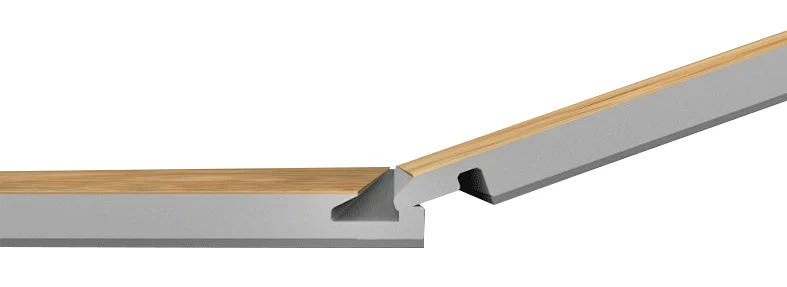
The catalogue includes floating, full-spread glue-down and adhesive-bead references for three-layer engineered wood. Their build-ups and accessories differ. Check joints or click-lock profiles, subfloor materials, finished heights and perimeter details. Approve the method before calculating material and work scope so board format matches site execution.
Sample approval should retain more than a front photograph. Archive faces, cross-sections and connections with the specification identifiers. At delivery, keep batch information, installation records and care instructions so later colour, connection or local repair issues can be discussed within the same product and construction scope. The value of three-layer construction thus becomes a specific material choice that can be understood, handed over and maintained.
For UK and other overseas projects, provide cross-sections, board-end details and specifications to local installers before ordering. Confirm applicable market documents and installation responsibilities separately for each project.