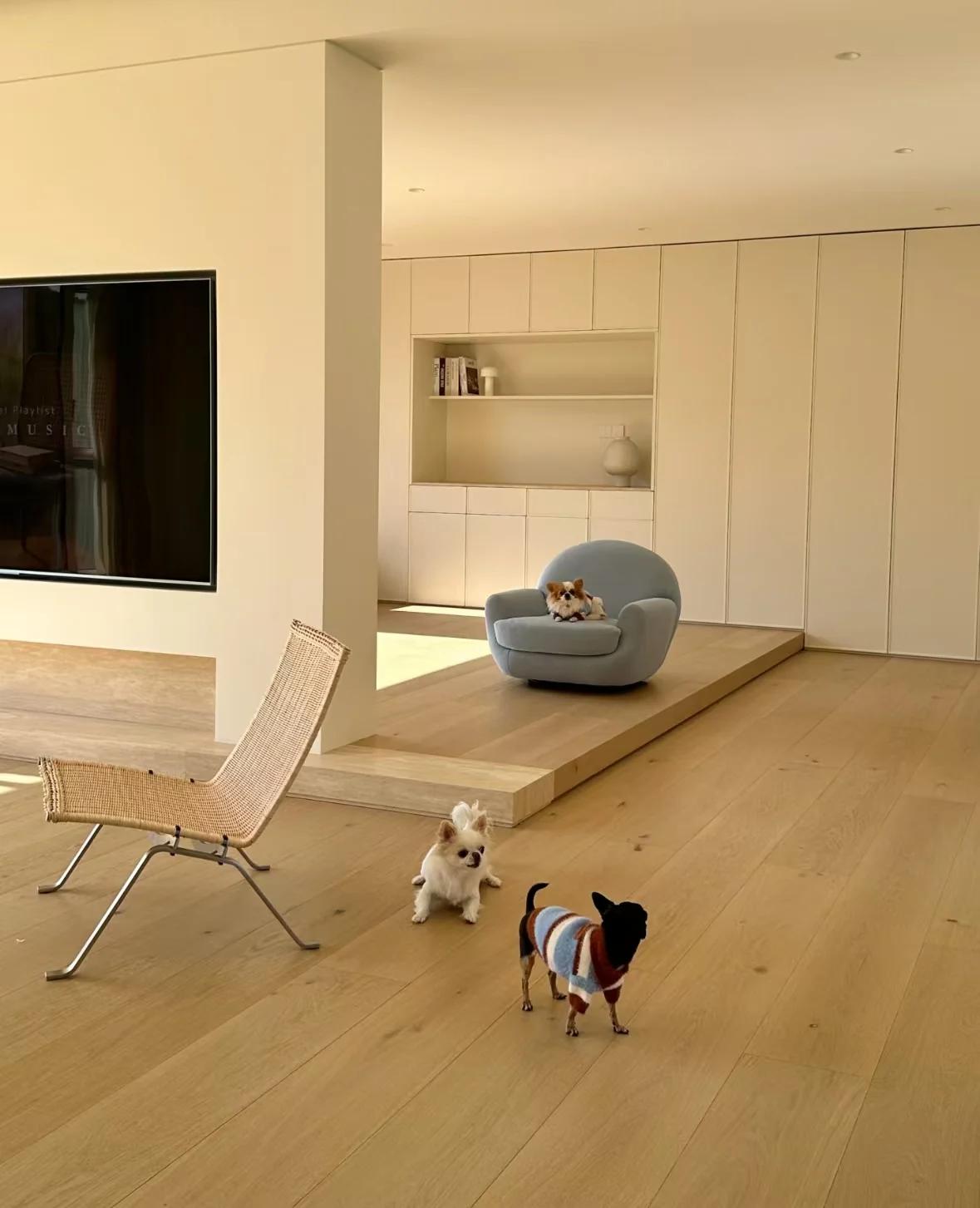
For wood flooring overseas, clear product and installation records support care discussions between suppliers and local contractors. HUAGE recommends agreeing finish, routine cleaning and issue-recording methods at handover, then selecting repair or refurbishment against the actual material.
Create a record first: retain product and installation information
Keep product name/specifications, construction, top-layer thickness, finish, batch, laying method and approved sample. Catalogue processes apply to specific designs: long boards and parquet may have different coatings. Do not assume one finish system for all flooring. Check compatibility with the actual surface before buying cleaners or care materials.
Where supply and installation parties differ, retain subfloor, moisture-control, adhesive/underlay and edge records. Surface, connection and environmental issues may have different remedies. Complete documents identify components and materials before deciding on sanding or replacement from one close-up.
Daily use: clean and observe according to the actual finish
Clean according to the selected product and finish. Remove dust promptly and use a wood-floor setting on vacuums. Treat spills promptly with a dry or slightly damp cloth, avoiding wet and steam mopping. Match cleaners to the coating and consider furniture contact/movement. One generic method is not a universal wood-floor procedure.
Assess environmental changes against product conditions. Near balconies, kitchens, bathrooms, external walls or damp-prone areas, inspect edges and neighbours; heated-floor projects follow approved product/system guidance. Maintenance cannot replace subfloor or moisture-control build-ups. Investigate persistent damp, loosening or unusual changes before treating the surface.
After an abnormality appears: locate it before choosing local treatment
Minor marks, coating damage, loose joints and moisture-affected boards may involve different materials and operations. Identify the issue before discussing local repairs.
- Record observations: location, extent, service environment and sequence, for assessment by the responsible supplier or contractor.
- Check the affected component: distinguish surface, joint and subfloor issues. A similarly coloured touch-up material does not resolve a joint or subfloor cause.
- Then choose the method: explain causes and treatment scope first, avoiding surface coverage that conceals issues needing prior resolution.
Assessing repair and refurbishment: check replacement materials, thickness and board condition
For local replacement, check construction, dimensions, connections and finish, accepting possible visual differences between new and existing wood. Compare samples or spare material first and define the expected repaired appearance. Maintenance should match the intervention to the issue rather than prescribing 'touch-up coating' for every situation.
The overall thickness of solid wood flooring is not entirely available for sanding: joint position, existing wear and fixing must be considered. Engineered flooring also requires checking its solid wood top layer and remaining condition. A professional familiar with the actual product should inspect it before choosing full sanding, local repair or another method. Do not promise a fixed number of treatments from board thickness alone.
Existing finishes affect subsequent options. Before refurbishment, confirm compatible materials, work scope, colour changes and handover conditions. The HUAGE catalogue describes an after-sales maintenance service direction; the agreed project scope and actual material govern the specific work. Clear records, prompt reporting and compatible treatment support continued use more effectively than treating wood flooring as maintenance-free.
UK and other overseas projects must confirm supply, local installation and subsequent maintenance responsibilities separately, using treatments suited to the product. Do not infer refinishing counts or free services from total board thickness.