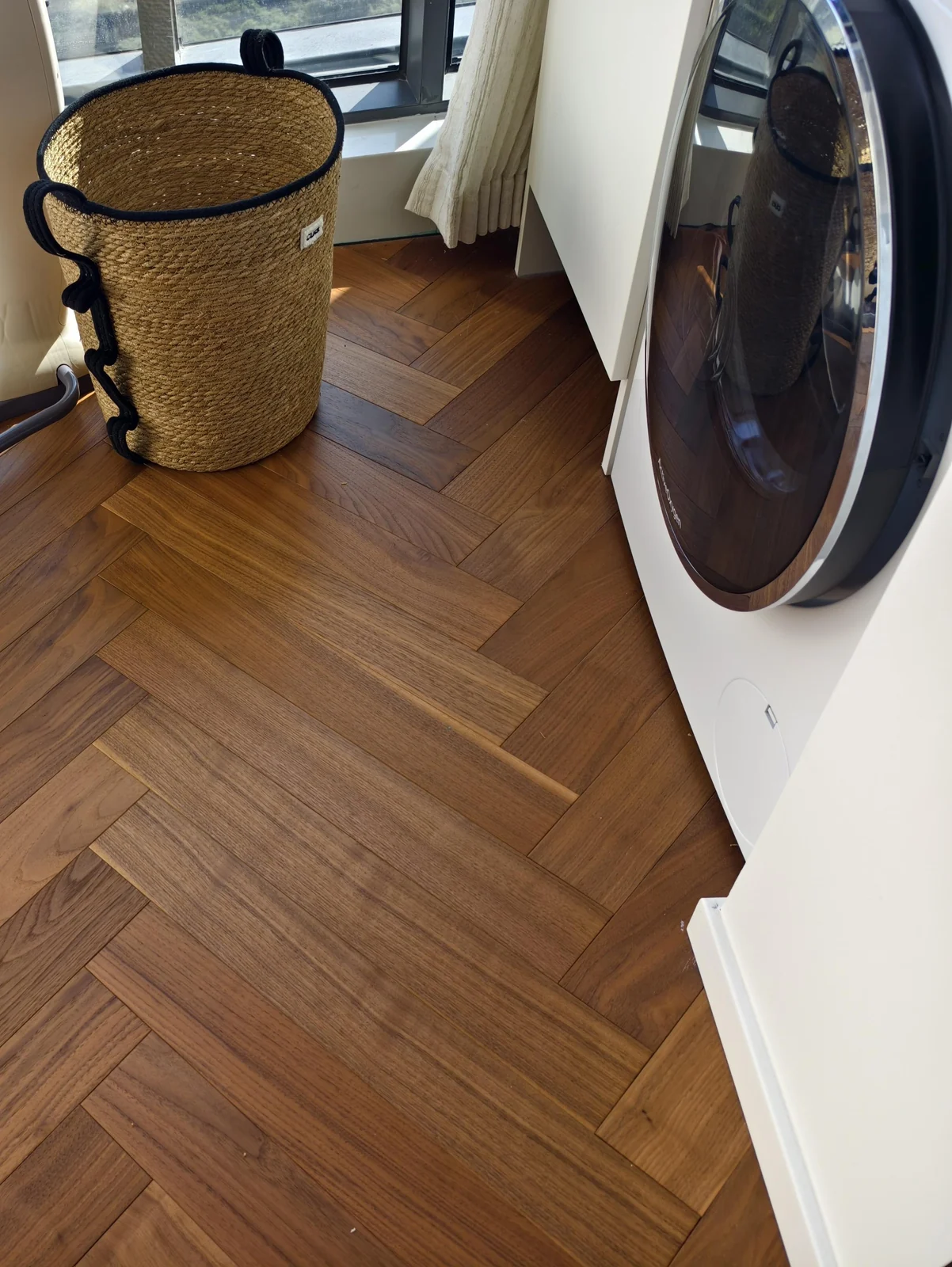















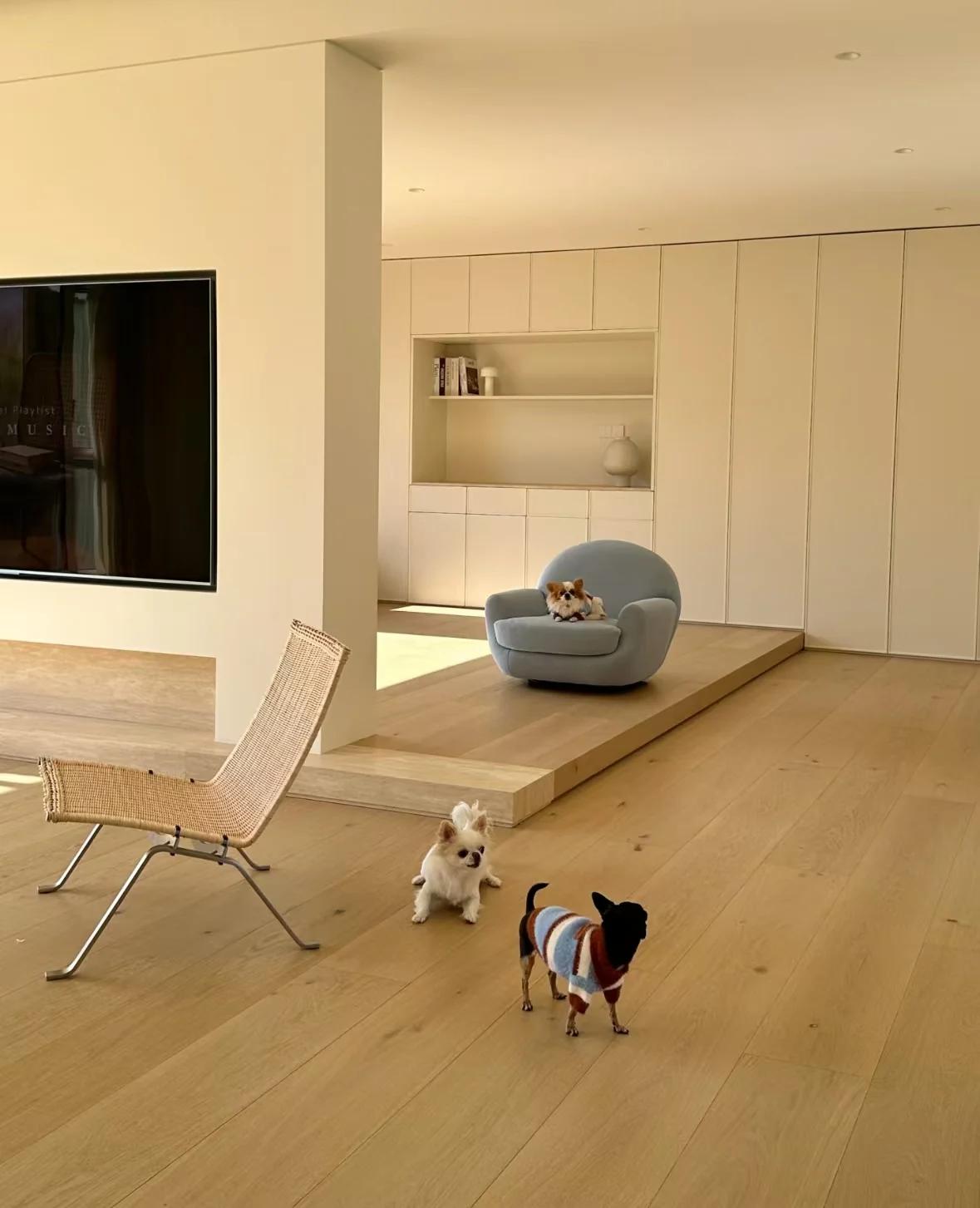
When reading Chinese flooring documents for overseas procurement, establish product identifiers and dimensional units, then check length, width, overall thickness, top layer and construction. Complete readings help samples, quotations and destination contractors refer to the same supply configuration.
First identify the item associated with that specification row
Begin a specification with an identifiable product name or number, then construction, timber and finish. HUAGE Champs-Élysées catalogue information separately identifies European white oak face, Russian all-birch plywood core and multi-ply construction. Preserve these distinctions: all-birch does not mean the board face is birch, and wide-plank format does not describe construction.
A product name may also list several configurations. Some oak designs in the PDF offer different length, width and top-layer combinations. Confirm which combination the quotation selects rather than combining favourable figures from different rows. If samples, quotations and documents use different names, establish their correspondence before comparing unit prices and processing.
Length, width and total thickness answer different questions
Length and width describe finished-board scale in relation to room proportions, patterns and cuts. Total thickness describes the board and must be considered with ancillary layers and adjoining levels. For original Champs-Élysées, 1900 × 190 × 16 mm means length, width and total thickness; the separately listed 4 mm top layer is not a fourth external board dimension.
Read module dimensions consistently. Dorothy lists 800×800×18mm and a 3mm top layer: 800×800 describes the module outline, not every internal strip. Where shaped patterns have images but no full specifications, confirm outline, module dimensions and construction first rather than fill fields with neighbouring parquet figures.
Include the surface, joints and applicable installation method in the check
Length, width and thickness alone do not complete an order specification. Finish, the governing colour sample and permitted appearance variation matter too. Read catalogue hand-scraping, brushing, water-based lacquer and parquet coating descriptions design by design. Shared oak or multi-ply labels do not establish identical configurations.
Installation requires actual interfaces and compatible systems. Herringbone and chevron describe arrangements or ends, not complete construction, joints or methods. Confirm left/right boards, joint compatibility, subfloors, accessories and edges. List outstanding items in specifications to connect sampling with schedules and construction drawings.
Keep a complete record for quotation checks
Record product identification, room, timber and construction, length, width, overall thickness, top layer, finish, sample version, quantity and service scope. Every field must refer to the same configuration. Ask explicitly about unresolved items rather than copy another design. This explains pricing and locates changes when versions are revised.
If documents and quotations show different figures, ask the supplier to explain them through the final approved product documents, then align samples and schedules. Catalogue displays support initial understanding but cannot replace formal supply confirmation. Reading specifications fully is not about learning more terminology; it ensures design, purchasing and installation discuss the same product with traceable references.
Overseas projects can consolidate final specifications in one material schedule for procurement and local contractors to review interfaces, systems and required documents together. Catalogue dimensions do not establish destination suitability; confirm local requirements separately.