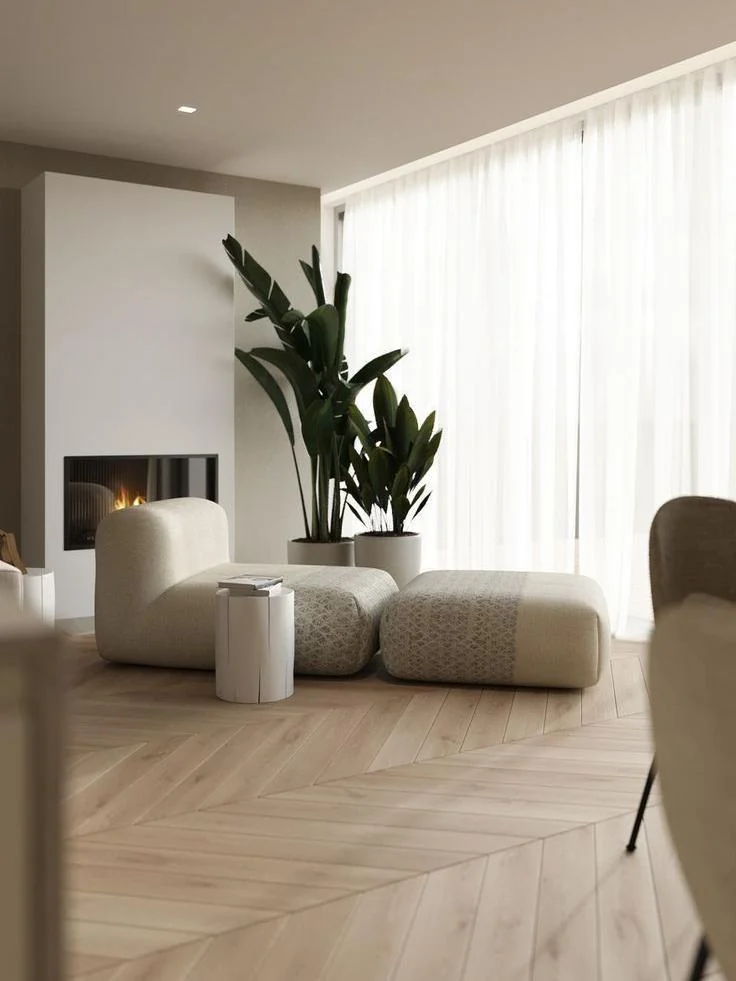















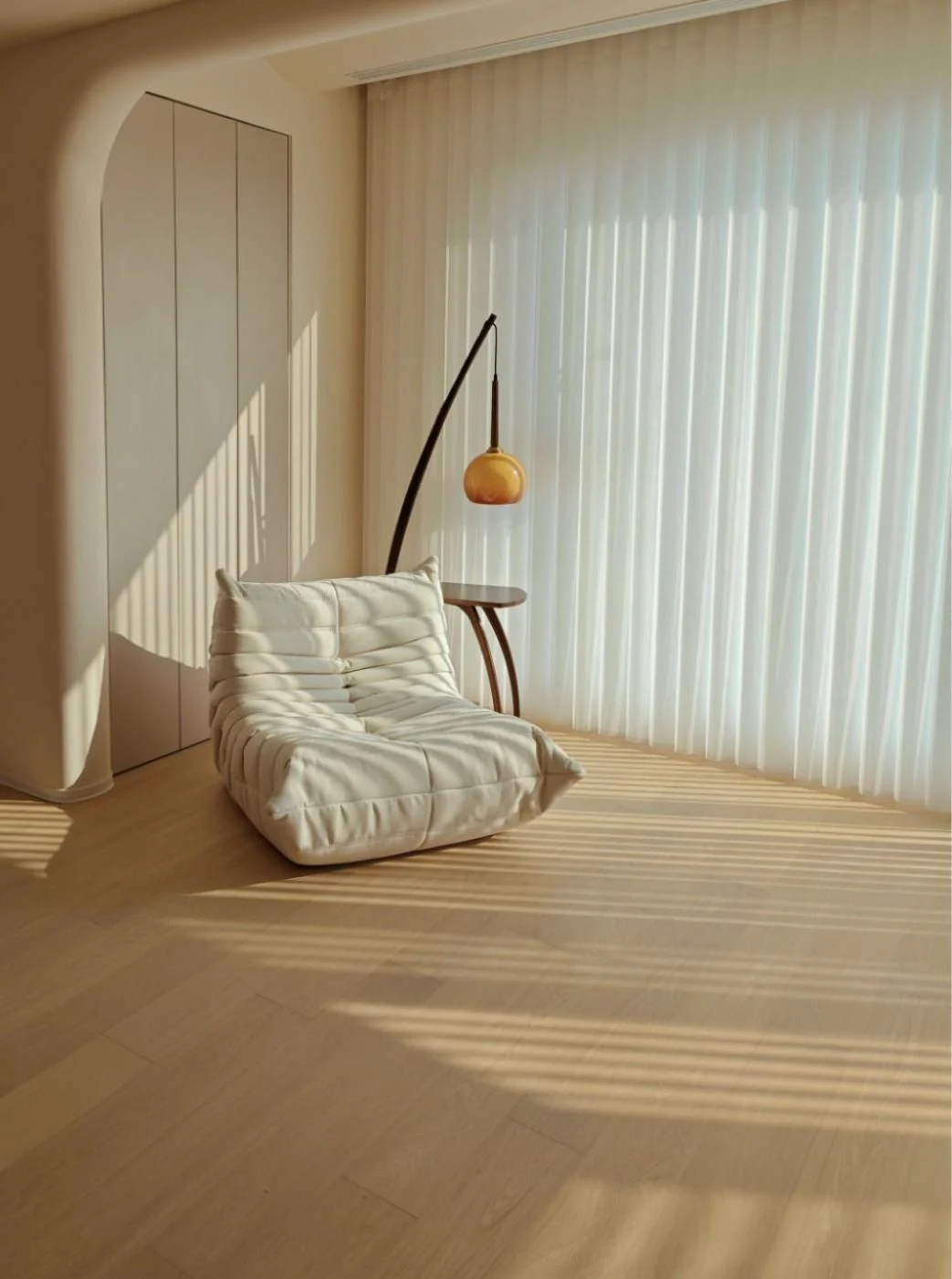
The visual rhythm of close joints often draws attention first to narrow-board appearance. HUAGE's records list Mid-century Oak and Classic Black Oak as 610 × 55 × 16 mm boards with 4.0 mm solid wood top layers and all-birch plywood cores. The 55 mm figure is board width, not the name of an installation pattern or a substitute for the complete product information.
Identify the board format before viewing interior images
Both catalogue interiors show herringbone, while narrow-board describes format. Other patterns require joint, matching-board and installation checks; straight-board appearance does not permit arbitrary arrangements. Herringbone can also use different widths, so not every herringbone page belongs to this narrow-board specification group.
Use plans and several physical samples together to see the number of joints across a width and how patterns end at doorways and corners. Lenses and furniture can distort scale in photographs; sample layouts reveal actual density. For quieter grain, compare actual combinations rather than judging only by 'mid-century' or 'vintage' labels.
Differences retained in the two designs' records
Mid-century Oak is described through a narrow-board style, while Classic Black Oak emphasises a dark interior atmosphere. Colour names locate information and support initial sampling; current colour and finish still follow approved samples. Shared historical dimensions do not remove checks on sheen, grain and selection range, and a colour in a name is not a precise universal colour code.
The original Classic Black Oak page also mentions walls, while Mid-century Oak is recorded primarily for floors. Retain this difference in whole-home schedules; identical widths and construction do not establish identical wall configurations. Elevation proposals must separately describe fixing, corners and openings, and floor layout intentions cannot simply be copied as wall installation construction.
Complete the design choices before requesting a quotation
A narrow-board brief should at least identify the application, original catalogue reference, final sample, board dimensions and intended pattern. Where straight and patterned areas coexist, draw their starting points and connections separately and confirm quantity calculations. Assess quantities, cutting and spares against actual plans rather than applying a universal wastage percentage to a single inspiration image.
HUAGE source materials identify product directions; current availability and UK conditions need confirmation. Separating narrow-board width from laying method helps designers compare rhythms and buyers request the correct configuration. Retain selection logic and traceable samples rather than treat one style photograph as complete ordering instructions.