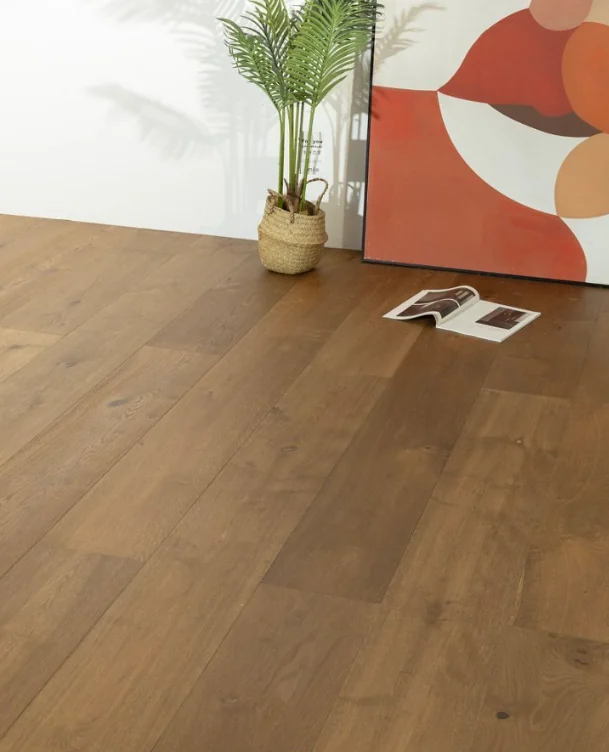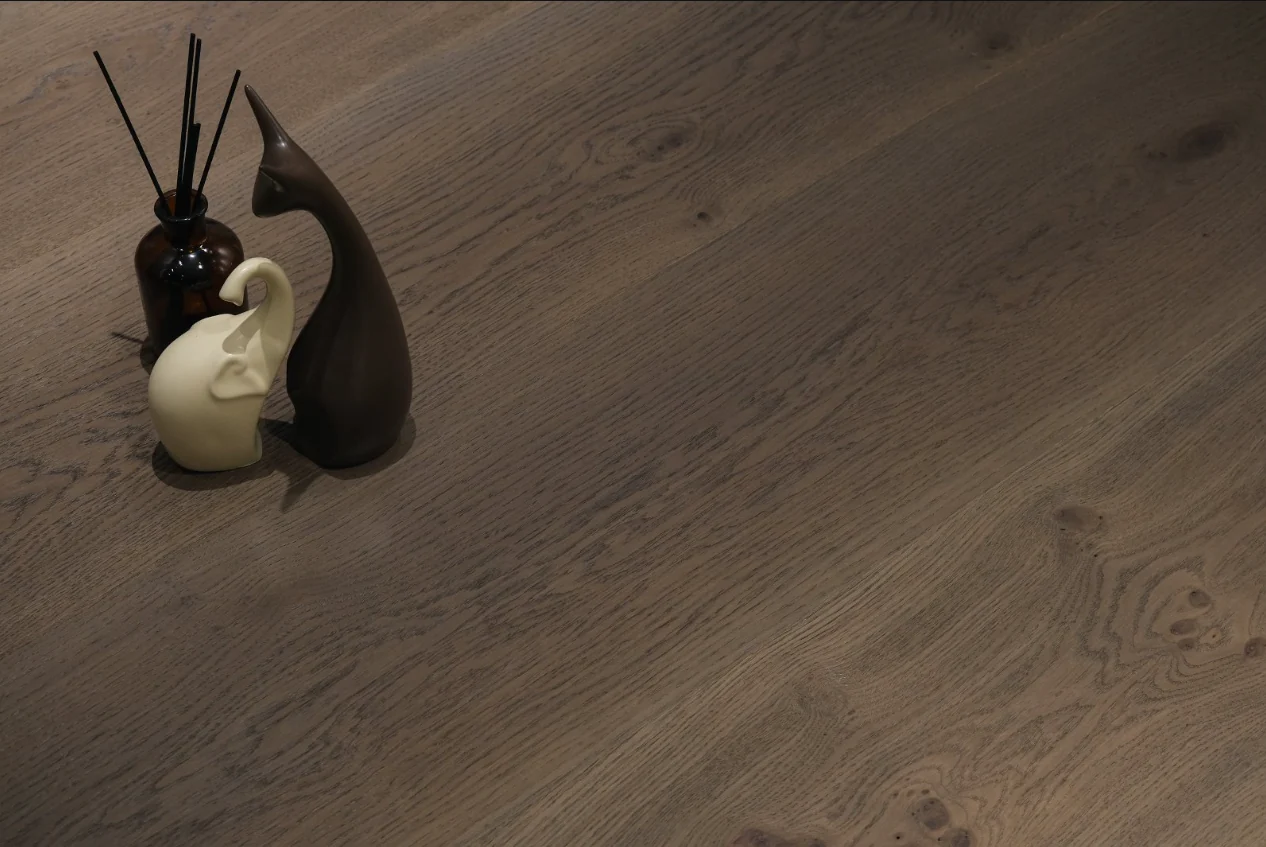
A flooring image may convey an interior atmosphere or only a local texture. HUAGE presents product information, application references and China project records in their respective contexts so readers use appropriate evidence without deriving unsupported technical conclusions from images.
Interior product images help identify appearance
Interior images in the original product catalogue show wood colour distribution, board rhythm and furniture coordination; texture and sample images support surface comparisons. Interior images and narrow strip samples for the same product serve different purposes. Read their captions and do not treat a cropped sample's proportions as the overall installed room effect.
Match specifications with photographs
Placing images beside parameters does not mean an image independently proves every parameter. Check the corresponding product text for the wood top layer, core, overall board dimensions and coating process; confirm the current supply configuration against samples and orders. Lighting, photography and displays also affect colour. Images help narrow the direction, while final colour selection requires physical materials.
Application images support design intentions
Wall, ceiling and stair records help discuss grain, joints and connection positions. Do not invent unseen fixing systems, species or performance. Matching colours across applications does not permit identical systems; approve materials and installation separately.
Old-wood and some parquet references also express design intentions. A vintage texture does not establish reclaimed origin, nor a composition a fixed current model. HUAGE retains these aesthetic discussion topics, then uses product documents and samples to identify proposals with clear project configurations.
Keep project records in their actual context
HUAGE China project records show application photographs from the supplied materials. Read project names, applications and installation months in context. Installation months are not publication dates, and images do not establish overseas completion. Use them to observe material-space relationships without adding unlisted specifications or services to a case.
Build complementary selection references: interior images explain the direction, product pages establish attributes, samples compare colour and details explain installation. Giving each source a role prevents one photograph from carrying every claim. When browsing HUAGE's gallery, identify captions and sources first, then ask about the specific product.