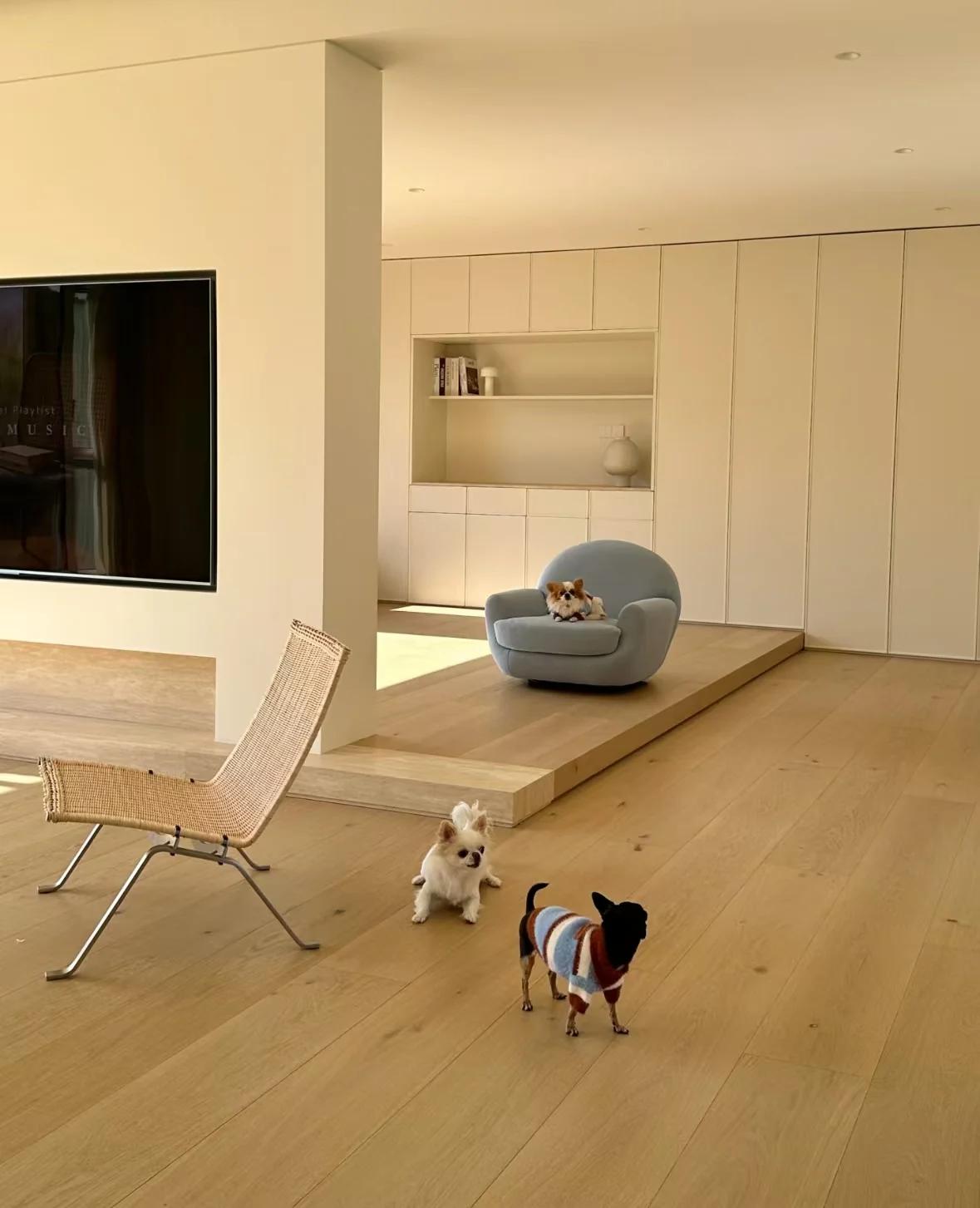















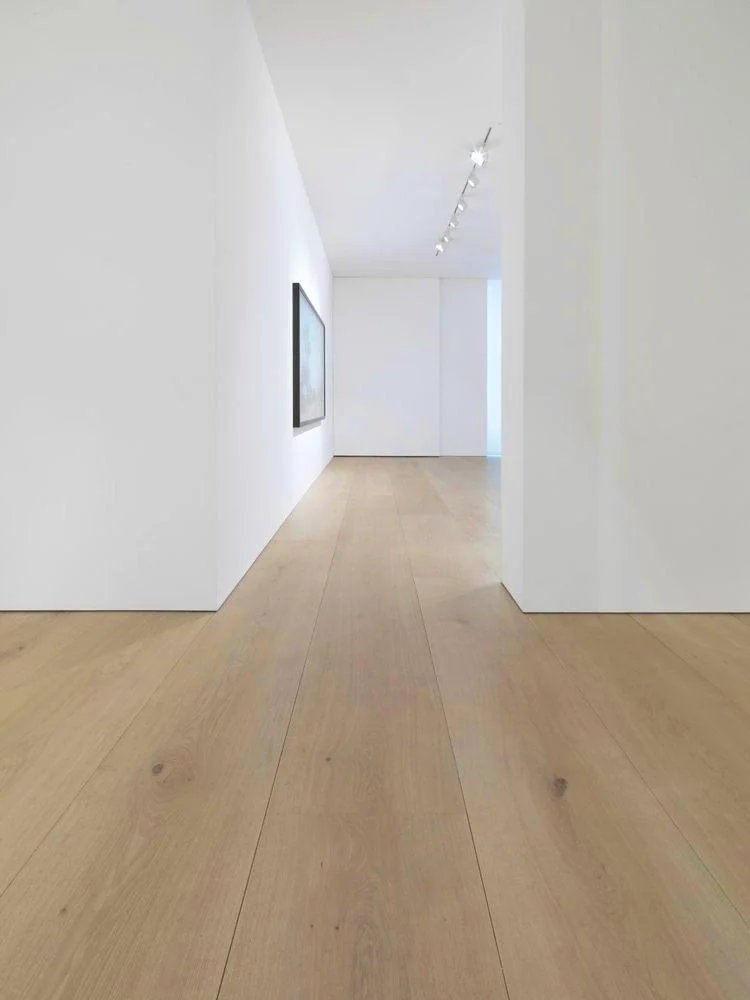
Beds and rugs often cover much of a bedroom floor, while curtains and bedding affect perceived wood colour. Map the floor that will actually remain visible before comparing samples rather than relying on an empty-room rendering. Light straight boards and narrow boards in HUAGE's original catalogue provide different rhythms; suitability still depends on the full material relationship.
View the floor from the bedside and entrance
After marking beds, bedside units, wardrobes and rugs, entrances, bedside zones and routes may become the main visible floor. Compare formats/patterns at actual scale there. Limited exposed areas need not copy a complete central motif from a reference; identify details worth retaining in daily views.
Where curtain folds, fabric textures and furniture lines already create rhythm, compare calmer floor tones or finer board formats. There is no fixed answer for every bedroom. View samples with bedding and curtains in the same setting so real materials guide the decision. Names such as cream white, vintage or French style cannot establish whether a combination meets expectations.
Light and finish change material relationships
Bedroom daylight and evening lighting often differ. Compare candidate wood colours in both, observing warmth, coolness, sheen and grain. Similar light materials may show different surface relief under oblique light. Record these as observations rather than treating a photograph at one moment as a precise colour code. After sample approval, also state the acceptable range of natural variation.
Visual calm and acoustic performance are different matters. Soft wood colours and simple imagery do not prove a particular sound-insulation performance. If the project has requirements for footfall noise, underfloor heating or other performance, request applicable information for the proposed product and complete installation system. Furnishings can influence the overall experience, but cannot replace checks on material and construction documents.
Keep furnishing changes aligned with material evidence
Create a bedroom material board with floor, wall, main furniture and textile samples, numbering approved items. Later curtains or bedding can be compared against the same colours without replacing the entire scheme. State flooring construction, dimensions and finish separately in supply schedules, linking colour records to products through identifiers.
HUAGE catalogue images explain grain and format directions; confirm current samples, supply and UK use conditions for the project. Bedroom selection should consider real furniture, light and use together. Separating visual choices from technical requirements supports later furnishing changes while preserving a stable purchasing basis.