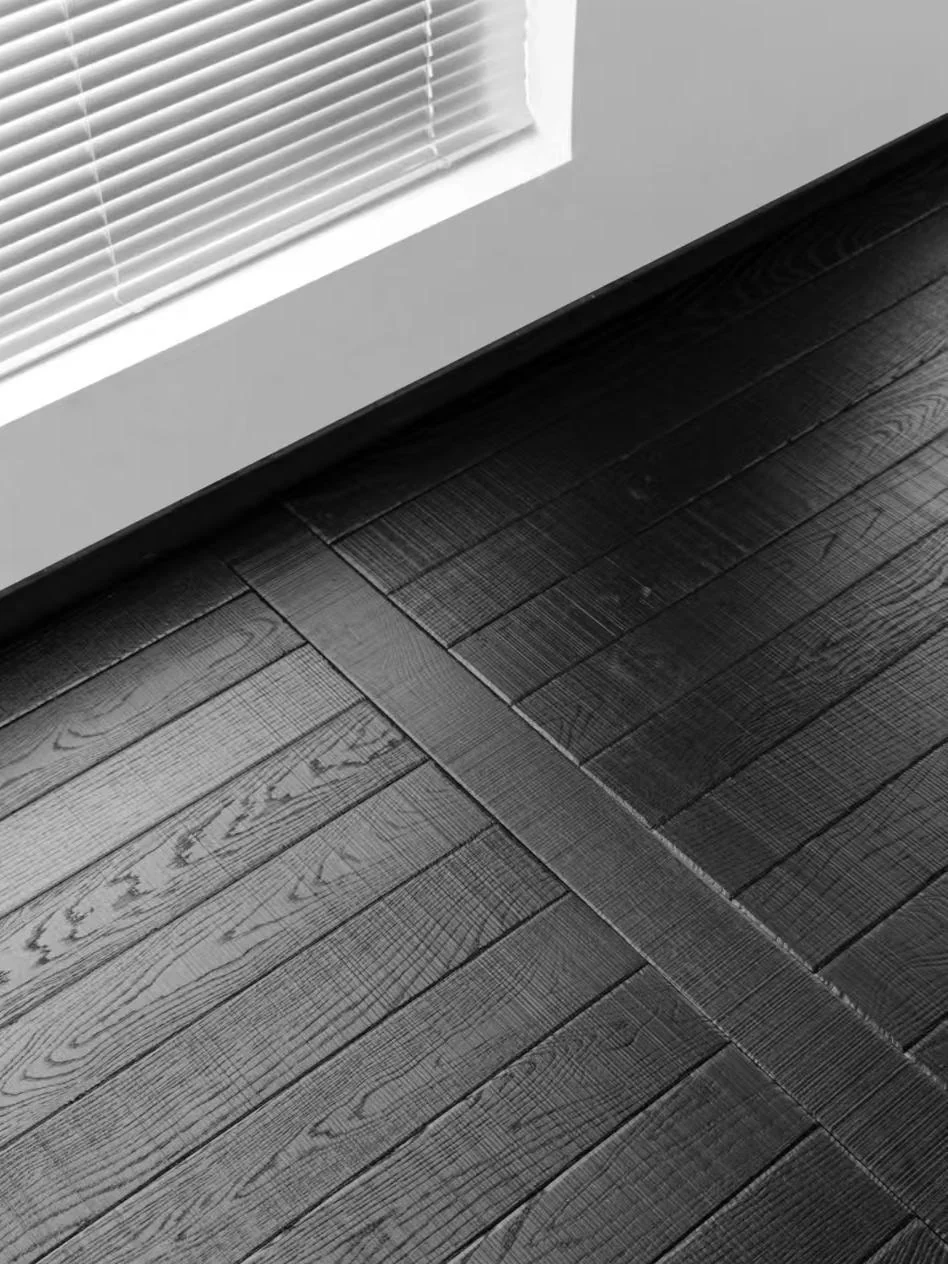















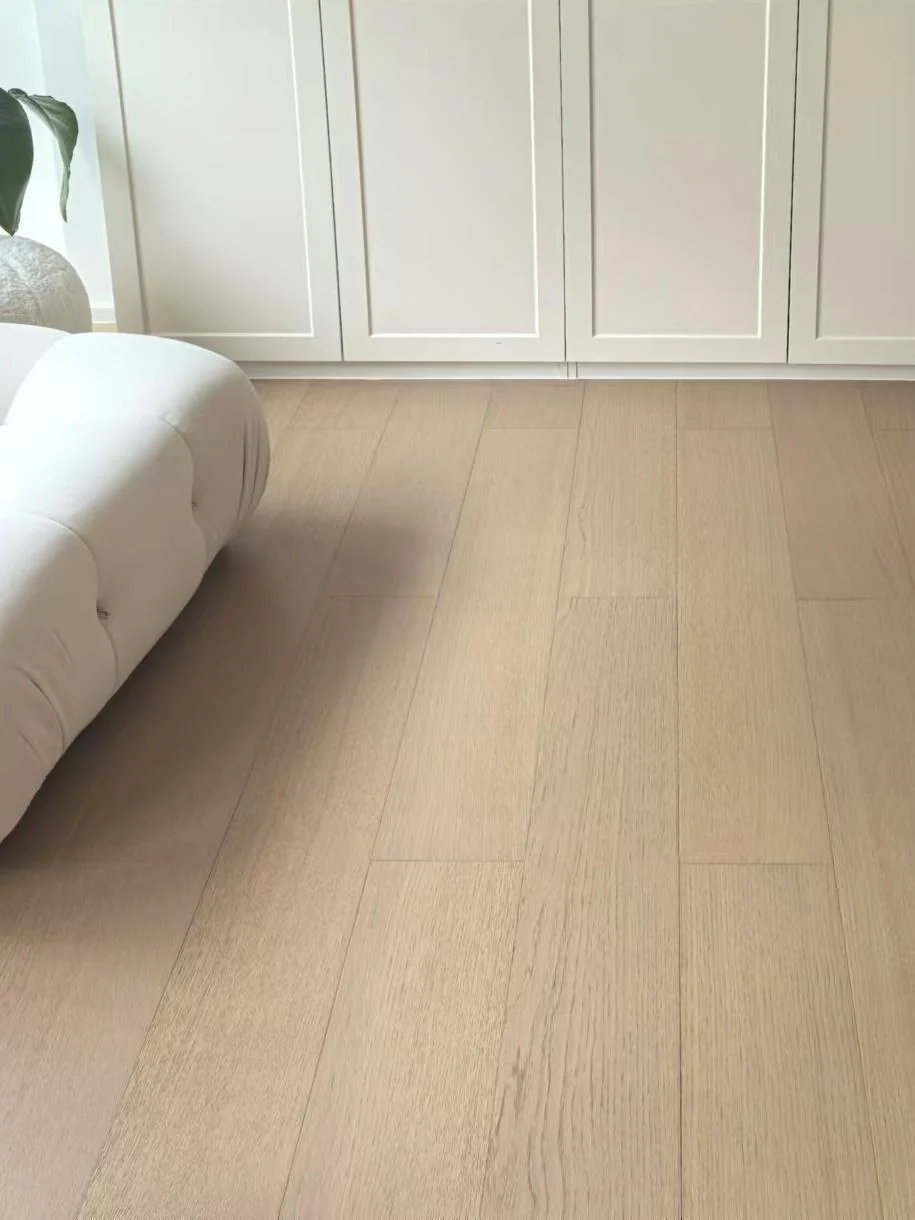
Pale flooring selection is not about photograph brightness alone. Baixue No. 1 and Cream White Oak offer different directions, with appearance also depending on daylight, walls, lighting and finish. Comparing materials in the real space is clearer than differently photographed images.
Assess the base colour first, then grain and sheen
Compare samples with planned wall paint, stone and textiles under daylight and intended interior lighting. Warm/cool differences in pale samples may emerge only beside neighbouring materials. Record observations such as warmer, greyer or softly coloured rather than turn subjective impressions into universal exact colour codes.
Sheen and grain relief affect perceived lightness. Samples that look similar straight on may differ under oblique light, so compare from several angles. Catalogue names suggest an appearance but do not guarantee identical supply under all lighting. For consistency, agree an acceptable range across several boards rather than choose the palest one alone.
Assess brightness separately from material suitability
Pale colour integration depends on the whole scheme, not one name. Pale walls, cabinets and floors may be layered or distinguished through grain/furniture, but no combination universally enlarges every room. Exposure and editing influence photographs; observe actual daylight yourself.
Colour does not determine construction, dimensions or conditions of use. Baixue No. 1 and Cream White Oak have different catalogue configurations. After choosing a pale colour, confirm overall thickness, top layer and finish. Kitchen adjacency, underfloor heating and other special conditions require checks against the specific product and installation proposal; ‘light modern style’ is not a technical suitability statement.
Turn colour choices into traceable samples
Number approved samples and record the viewing space, adjacent materials and accepted grain/colour variation. If furniture is undecided, keep a few clearly different candidates with their intended colour combinations rather than accumulate similar samples without criteria. Update both schedule and physical sample at final selection so old photographs are not mixed in.
HUAGE pale-product references support selection; confirm current colours, configurations and supply for the project. Overseas projects should link physical samples with final supply records so designers and local participants share one basis. A gentle atmosphere comes from material coordination; recording comparison conditions lets later changes follow the same judgement.