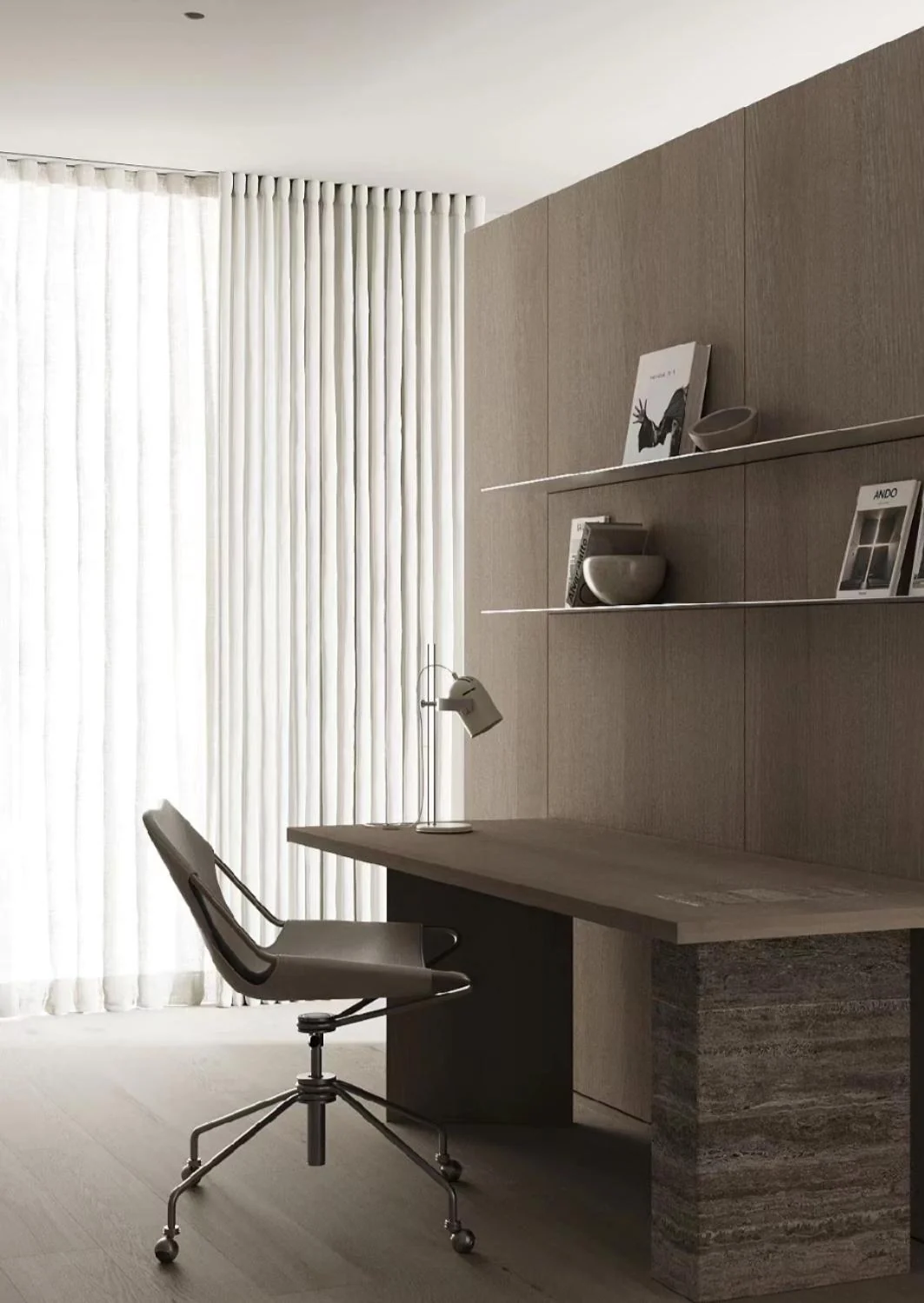















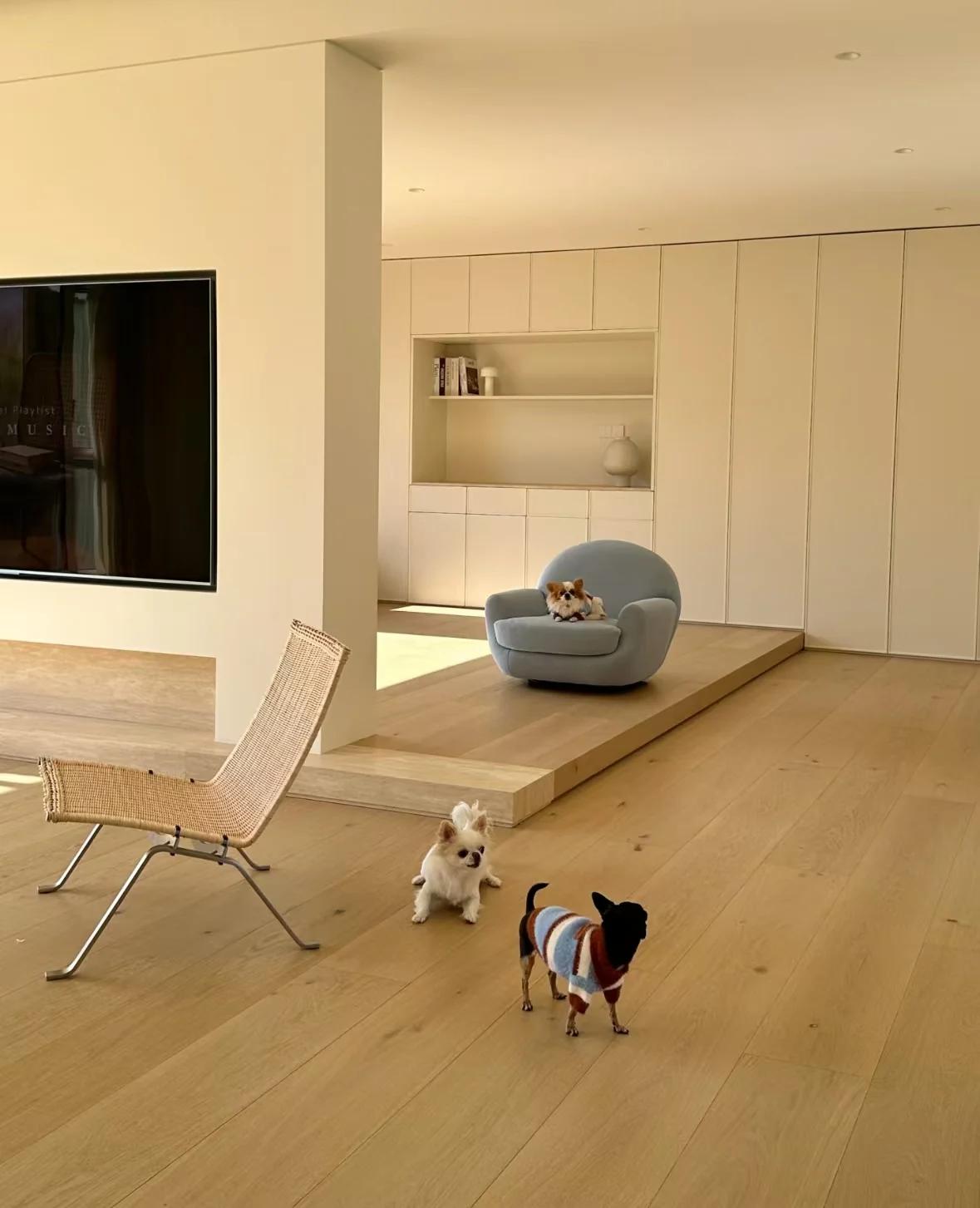
When you like a case image, ask what should be retained: wood colour, scale, pattern or wall-floor relationship. HUAGE China project materials and catalogues serve different roles. Photographs support observation, not a technical file automatically containing every model, build-up and current supply specification.
Extract observable relationships from an image
First record visible board/pattern directions, wood-wall lightness relationships, furniture coverage and doorway/edge terminations. These inform intent without assigning product names immediately. If ends or joints are unclear, retain uncertainty rather than force a herringbone/chevron identification from a low-resolution crop.
Lenses, lighting and framing also affect photographs. Close-ups can emphasise grain; wide angles can alter perceived scale. A board that looks wide cannot be dimensioned by appearance. Check explicit catalogue parameters and samples, distinguishing liking a spatial relationship from having identified the exact material shown.
Connect project records with product information
An original catalogue record can establish a displayed product's construction, species and dimensions, while project photographs show specific interiors in the supplied materials. Unless the source explicitly links them, a case image cannot be assigned directly to a named product. Check wall, ceiling and stair colours separately; similar colours in one photograph do not prove the same flooring product was used everywhere.
Retain the original meanings of project locations and recorded installation months. China projects cannot become completed UK references, and installation dates cannot arbitrarily become article publication dates. Do not add unauthorised people, door numbers or other private details for storytelling. Official descriptions should concern material and interior information confirmed for public use.
Turn reference images into clear briefing material
When submitting an intention, mark the preferred parts of an image and why you like them, then include your own plan, application location and samples to compare. List anything a photograph cannot establish as a question, such as species, total thickness, finish or edge details. This gives design and purchasing discussions a specific subject rather than an expanding image collection with no confirmable selection.
HUAGE uses traceable images and product fields for selection, with configurations and overseas delivery confirmed for each project. References express intentions and identify the evidence needed next. Distinguishing observations, assumptions and approvals preserves preferred spatial relationships while keeping product descriptions accurate.