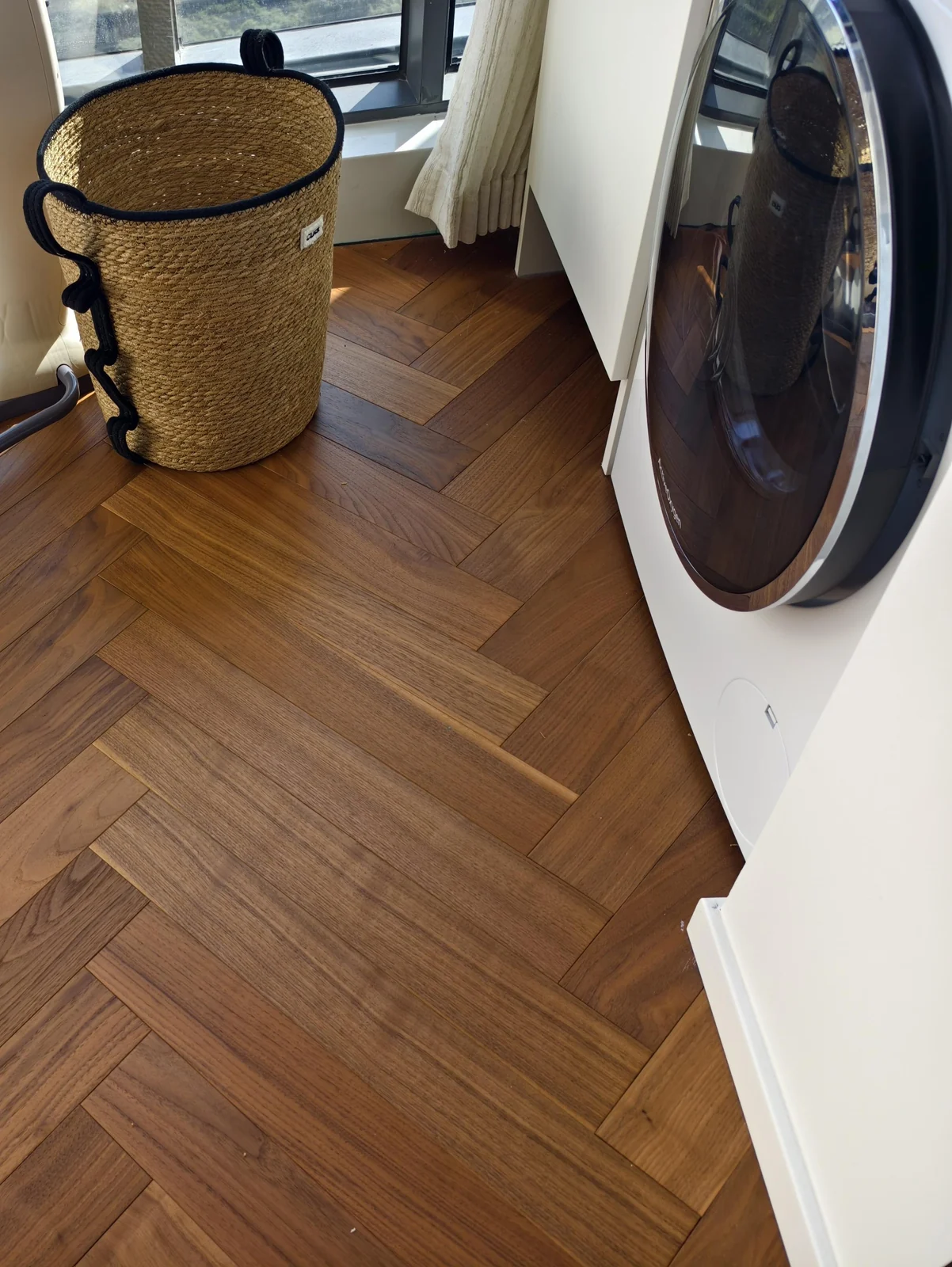
Malashengxia and Shabamengxue are two HUAGE-supplied product names, both listing acacia and solid wood construction. No botanical species is provided, so names locate records but do not establish precise species or origin. Keep material identification clear alongside design selection.
Fields available on the original page
Both pages list 910×125×18mm boards. Malashengxia describes a brown sheen; Shabamengxue describes slightly interlocked or wavy grain and includes herringbone records. Appearance descriptions suggest questions but do not replace samples. Shared acacia names do not establish identical grain or tone.
Here, solid wood describes a single-piece natural timber construction and must not be confused with an all-birch plywood core. The catalogue provides no separate engineered top-layer field and quantifies neither refurbishment counts nor service life. Ask about maintenance against the final finish and actual product rather than convert overall thickness directly into a long-term service promise.
The two designs show different patterns within one construction. Herringbone describes arrangement; board names locate records. Projects using Shabamengxue patterns must check ends, joints and layout dimensions together. Choosing Malashengxia by colour does not grant unconditional compatibility with the same herringbone scheme.
Assess material traceability and spatial design separately
For specific timber identity requirements, request botanical names, origins or supply-linked documents in enquiries, stating applications and purchasing purpose. Website names are catalogue records, not proof beyond their content. Confirm required documents and available scope against the actual configuration.
Compare several samples to assess colour/grain distribution, especially pronounced contrasts, agreeing the natural variation to retain. Furniture and rugs affect visible flooring, so assess direction in plan. Photographic atmosphere is a reference, not a promise that every delivered board matches its grain.
HUAGE retains original names and known fields as retrievable material references. Confirm current UK supply, transport and local installation separately. Records should include reference name, timber description, construction, dimensions and the final sample. Asking directly about missing information advances procurement better than seeking unproven answers in a name.