American Black Walnut Herringbone lists multi-ply construction, an all-birch plywood core and 610×95×15mm overall dimensions, with separate 1.2mm and 3.0mm solid wood top-layer records. Selection must establish not merely whether herringbone is wanted, but which top-layer configuration the enquiry and sample concern.
First distinguish the two configurations under one product name
Two records share length, width and overall thickness but list different top layers. Separate ‘overall 15mm; top layer 1.2mm’ and ‘overall 15mm; top layer 3.0mm’ under the catalogue name. These are not two thicknesses on one board or an arbitrary range; confirm which configuration is currently available for the project.
Different top-layer figures do not justify a universal ranking. Compare actual surfaces, configurations, suitability and budget. The source provides no full independent performance results for both options, so this article derives neither refurbishment counts, service life nor UK suitability. It first clarifies comparable product fields.
After selecting the board format, check the pattern and wood colour
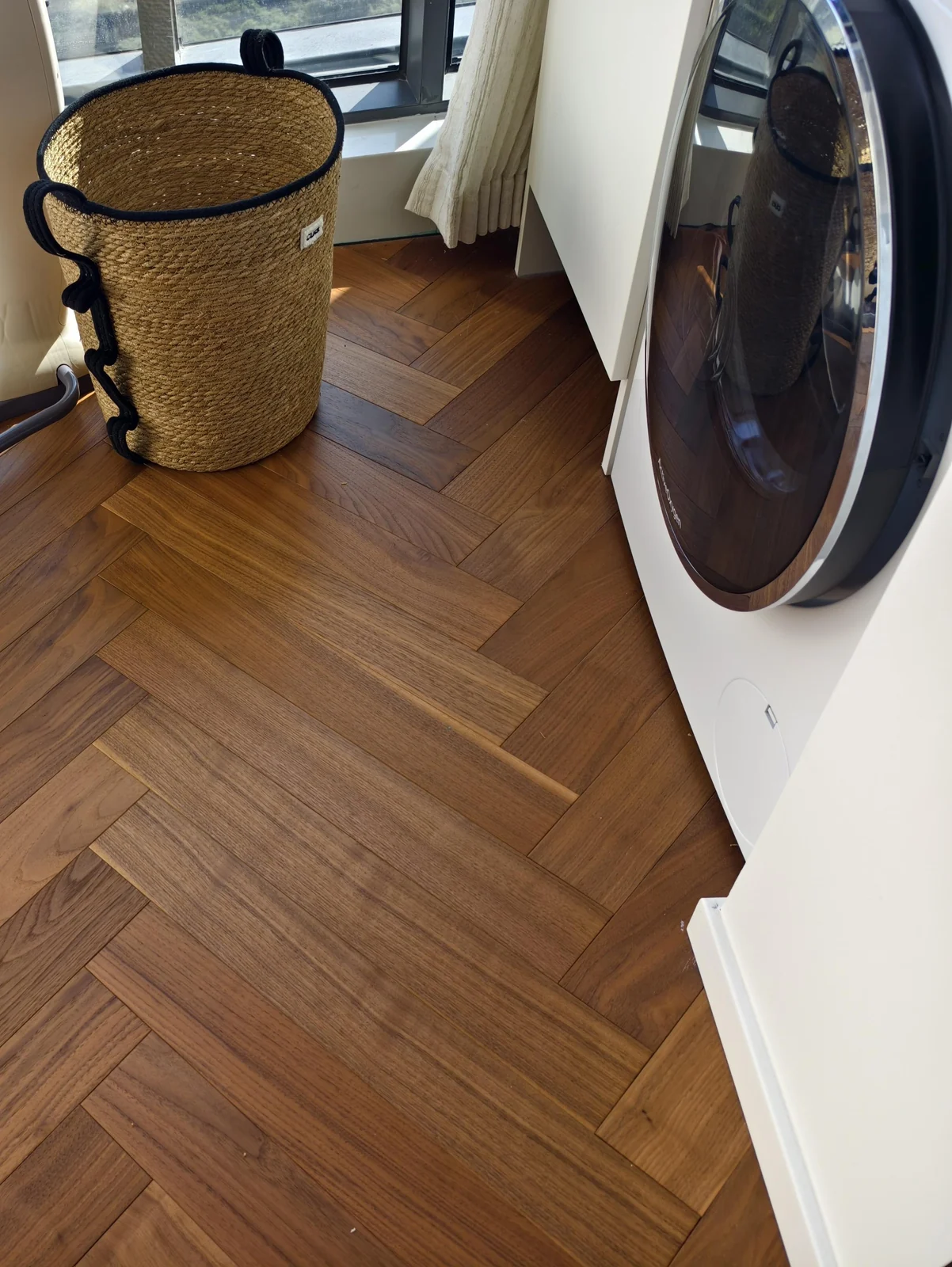
This record identifies American black walnut as the face timber and herringbone as the pattern: species, construction and pattern are separate fields. Herringbone staggers rectangular board ends. A similar-looking chevron image does not permit transferring angled ends or dimensions to this material. Draw actual 610×95mm units in plan to compare direction with entrances and doorways.
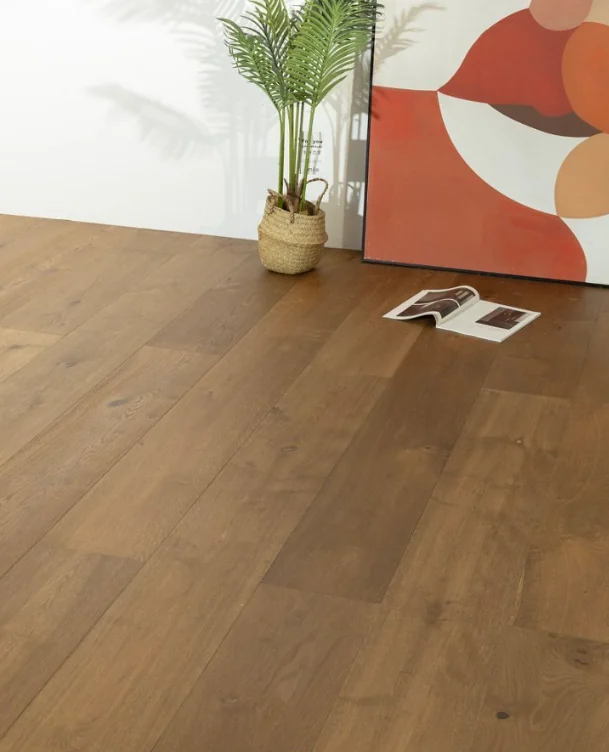
Original interior images illustrate black walnut colour, grain and continuous installation, but physical comparison still needs several samples. If the two top-layer configurations have different samples, retain separate identifiers and confirm colour, sheen and finish together. A shared display name does not make them interchangeable. Photographs cannot prove identical grain on every board; define acceptable variation during selection.
Put configuration choices into a complete brief
Enquiry materials can list the original catalogue reference, selected top layer, overall dimensions, rooms and intended direction, with current samples and drawings. For borders or connections to straight flooring, separately list component construction, tone and finished levels. Total thickness describes only the board; the installed height requires the actual system. A 15 mm figure cannot establish every detail.
HUAGE preserves both source top-layer records so projects can identify their choice accurately; continued availability of those specifications and supply terms require separate confirmation. UK projects should also state destination and local installation needs, separating configuration from suitability. Explicit differences under one name prevent samples, quotations and orders referring to different configurations.