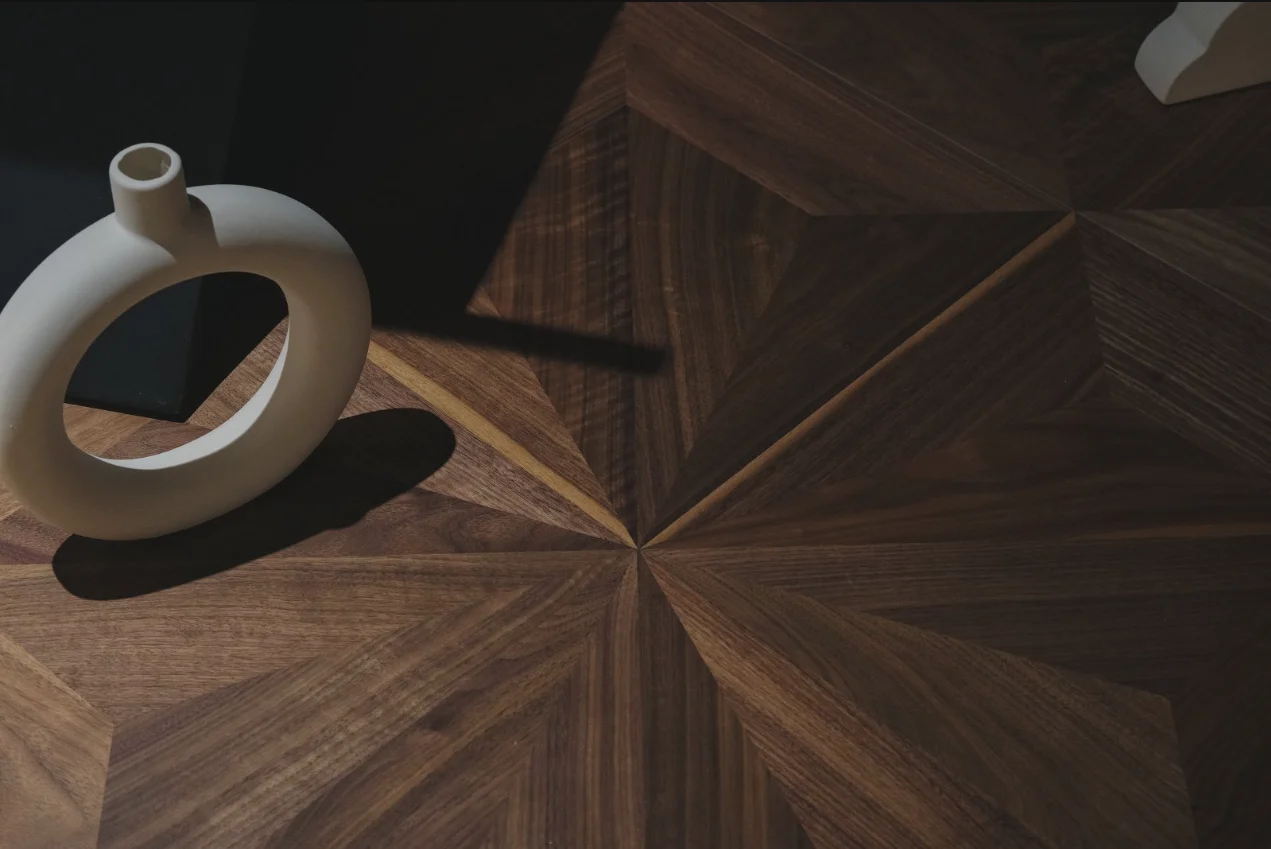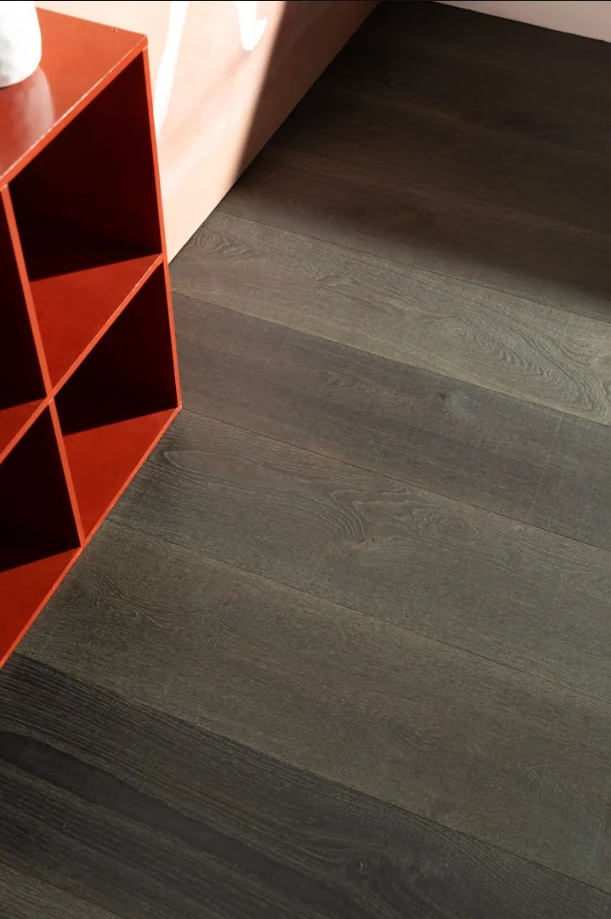
For overseas oak-finish comparisons, use identifiable physical samples to approve finish and sheen before supply. Three European white oak catalogue records provide a starting point. Communicate processing, colour and coating as separate fields to designers and local contractors.
Read the three design records on the same basis first
The original specifications for Champs-Élysées, Camilla and Chloe all list a European white oak top layer, Russian all-birch plywood core, 1900 × 190 × 16 mm board, 4 mm top layer and ABCD appearance group with knots noted. These similarities help focus attention on surface differences, but each design's finish must follow its own record. Matching species and dimensions do not make them the same product.
Hand-scraped or blunt-tool finishes, cross-sanding and brushing describe the surfaces of specific designs. Compare the direction, relief and feel of the treatment with the wood grain, then assess its appearance in the overall interior. Finish names aid discussion but do not establish a particular roughness, wear-resistance class or slip-resistance result; these require a link to the actual product and documents.
Assess through front viewing, side viewing and touch
View sample colour and grain first from a normal viewing angle, then examine surface relief and sheen in side lighting before touching the surface. Comparing several samples under the same light reduces differences caused by photography. Photographs from different rooms can confuse lighting, exposure and screen display with the effects of surface treatment.
Consider samples at project scale. Prominent grain on one board can create a different rhythm when installed; furniture, walls and lighting also shape perception. Combine flooring with wall materials, stone or wood finishes, deciding whether the aim is a quieter surface or more visible grain and texture, then record the accepted range of board faces.
Do not conflate colour, wood selection and coatings
A board's tone cannot fully explain its processing. Record catalogue colour or style names separately from explicitly listed treatments; photographs cannot directly establish smoking, staining or coating sequences. List colour, selected appearance, surface processing and final coating separately so proposal differences can be traced to their actual sources.
Other groups have their own finish scope: 2400mm long boards list Italian water-based lacquer and hand production, while square parquet lists 9 primer coats and 2 topcoats. These cannot be transferred to three 1900mm boards merely because all are HUAGE. Coating counts alone do not establish service life or tested scratch performance.
Move from sample selection to a maintainable finish system
Retain sample identifiers for product, colour, sheen and process when approving appearance, including cleaning and care in handover. Actual instructions and board condition govern local repairs, recolouring and later treatment; one generic care product cannot cover every wood floor.
For substitutes, recheck processing and coatings rather than find only similar colour. HUAGE uses specific catalogue designs for comparison and physical approval for final appearance, so differences are visible and supply, acceptance and maintenance refer to the same finish.
Retain approved samples and finish identifiers for overseas supply, checking arrival appearance and care requirements. Confirm local repair methods for the actual product; similar colour does not mean the same finish.