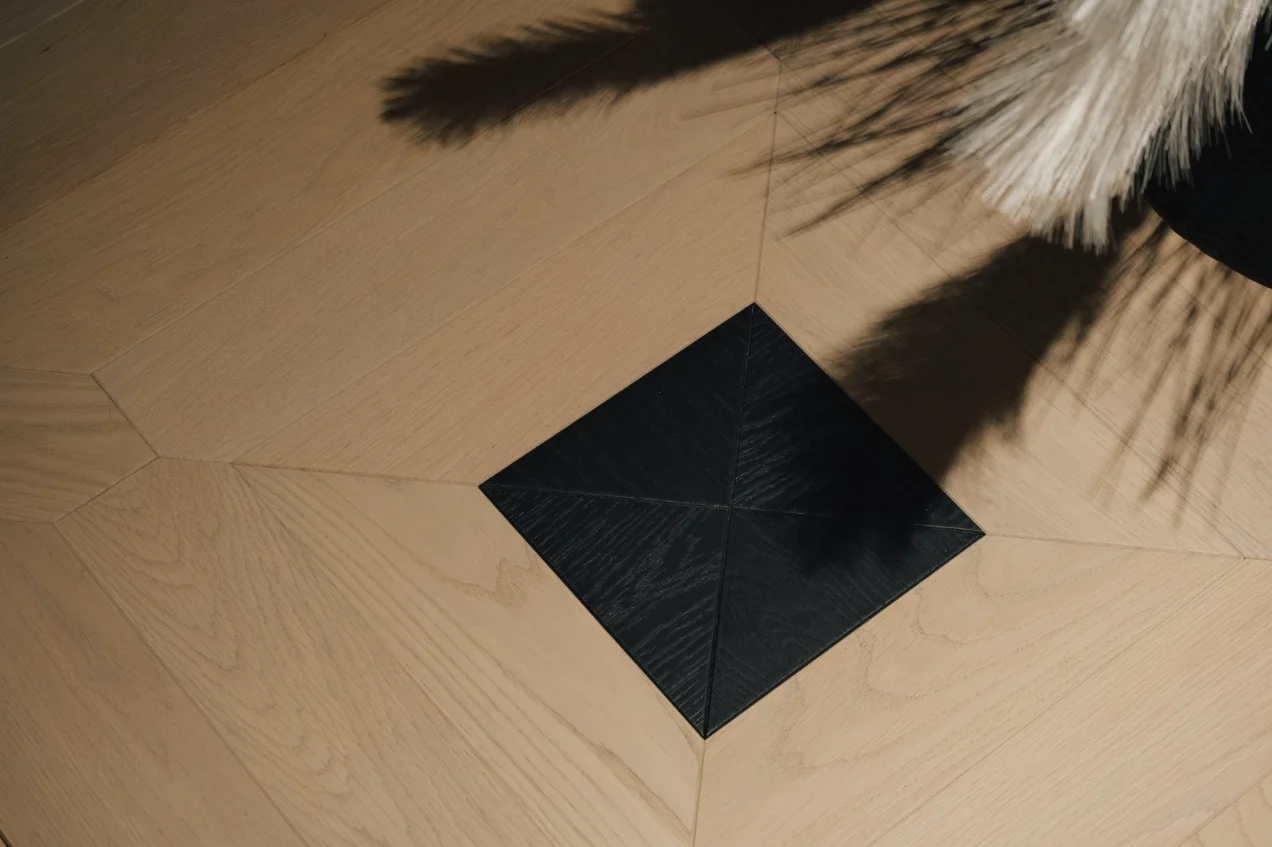















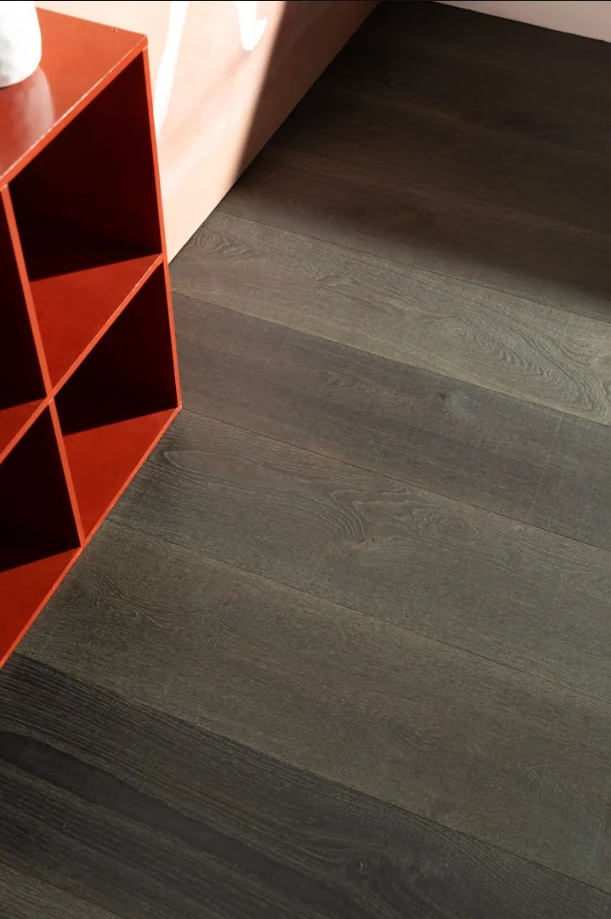
Product names, approved samples and supply records remain useful after flooring enters a space. HUAGE values continuity of material identity in project discussions, carrying selection decisions into supply and use and providing a clear route for later enquiries.
One record connects different stages
Selection focuses on wood colour, grain and interior relationships; enquiries establish construction, dimensions, quantities and scope; supply requires identification of actual products and packaging. Though their priorities differ, all stages should follow the same material record. Repeated renaming makes it difficult later to connect photographed flooring with ordered materials.
Create records by room, retaining original catalogue references, selected samples, final specifications and application areas. Natural wood appearance varies; sample photographs aid identification but cannot replace actual checks across board faces. Documenting accepted colour and grain features helps later participants understand the selection without filling gaps from memory.
Record packaging identifiers and discrepancies on arrival, and retain location photographs before and after installation. Images should identify the location without excessive detail or unlocatable close-ups. For staged deliveries, link each record to its area and date, retaining the relationship between material and space for later enquiries.
Records support later decisions
For additional matching materials, first verify the original material identity, finish and dimensions, then availability. Similar website colours do not prove a match to the original batch. Repairs or refurbishment also require the original installation method and site conditions. A design name cannot establish every construction detail or replace actual checks before selecting a remedy.
Project records also need privacy boundaries. Public cases illustrate interior applications without fully disclosing residents' personal information or door numbers; internal material records follow the actual collaboration scope. China project records on HUAGE's website retain their original context. Public display and project execution documents serve different purposes and should not be mixed.
Records keep material information identifiable as people change and time passes. HUAGE uses catalogues for retrieval, samples/specifications for approval and supply/site records for applications. Retaining necessary leads at every stage supports maintenance better than guessing later from similar photographs.