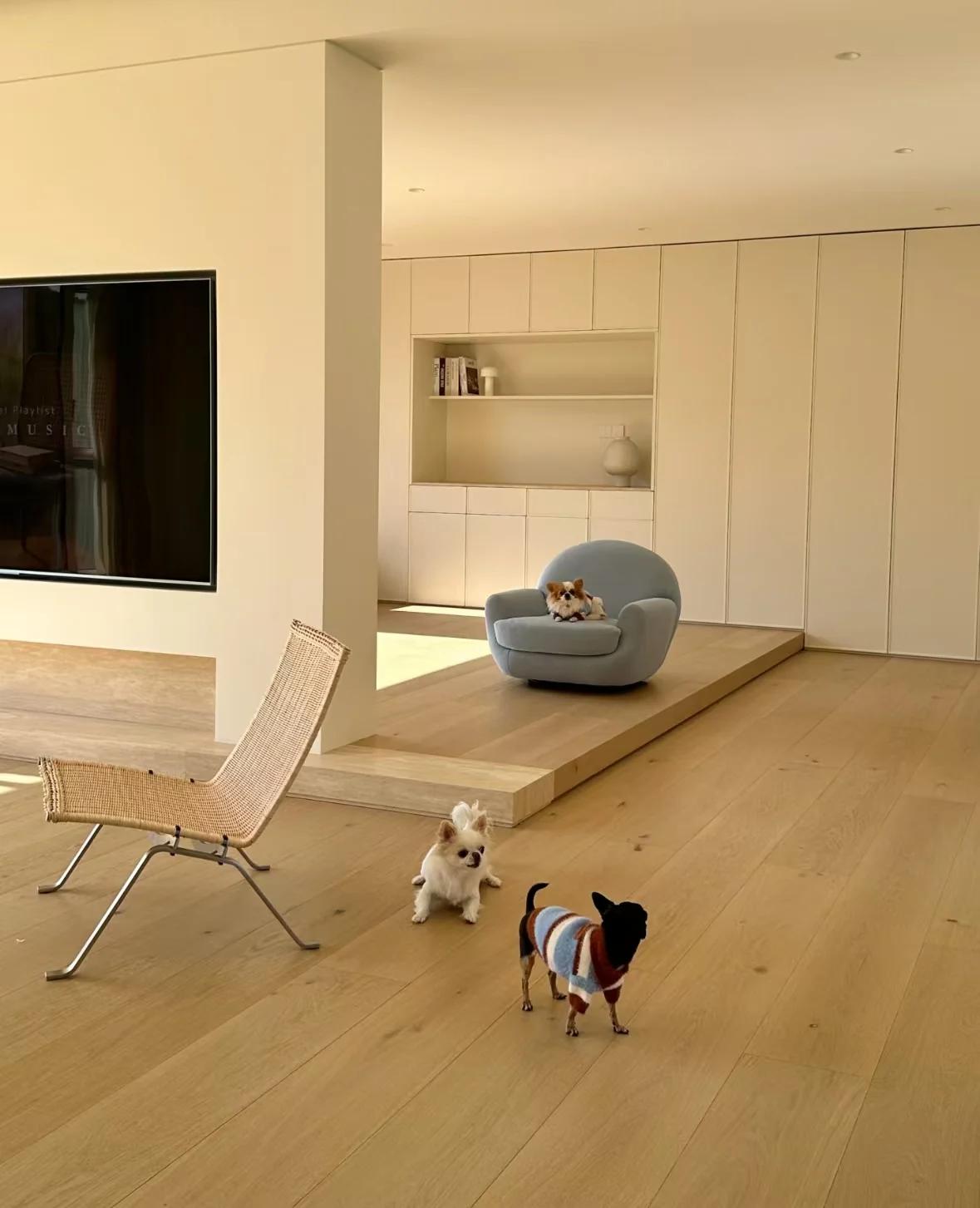
Overseas wood flooring quotations must explain the scope between Chinese supply and destination delivery. HUAGE can discuss products, customisation and quantities; agree international transport, customs clearance, local works and related charges individually.
Match material names with actual configurations
A product name helps both parties find a reference design but cannot describe the full supply scope. An enquiry can also state construction, face timber, length, width, overall thickness, top-layer thickness and finish. Similar oak appearances may belong to straight boards, multi-ply or solid wood products and different laying patterns. A similar interior image cannot replace the selected product configuration.
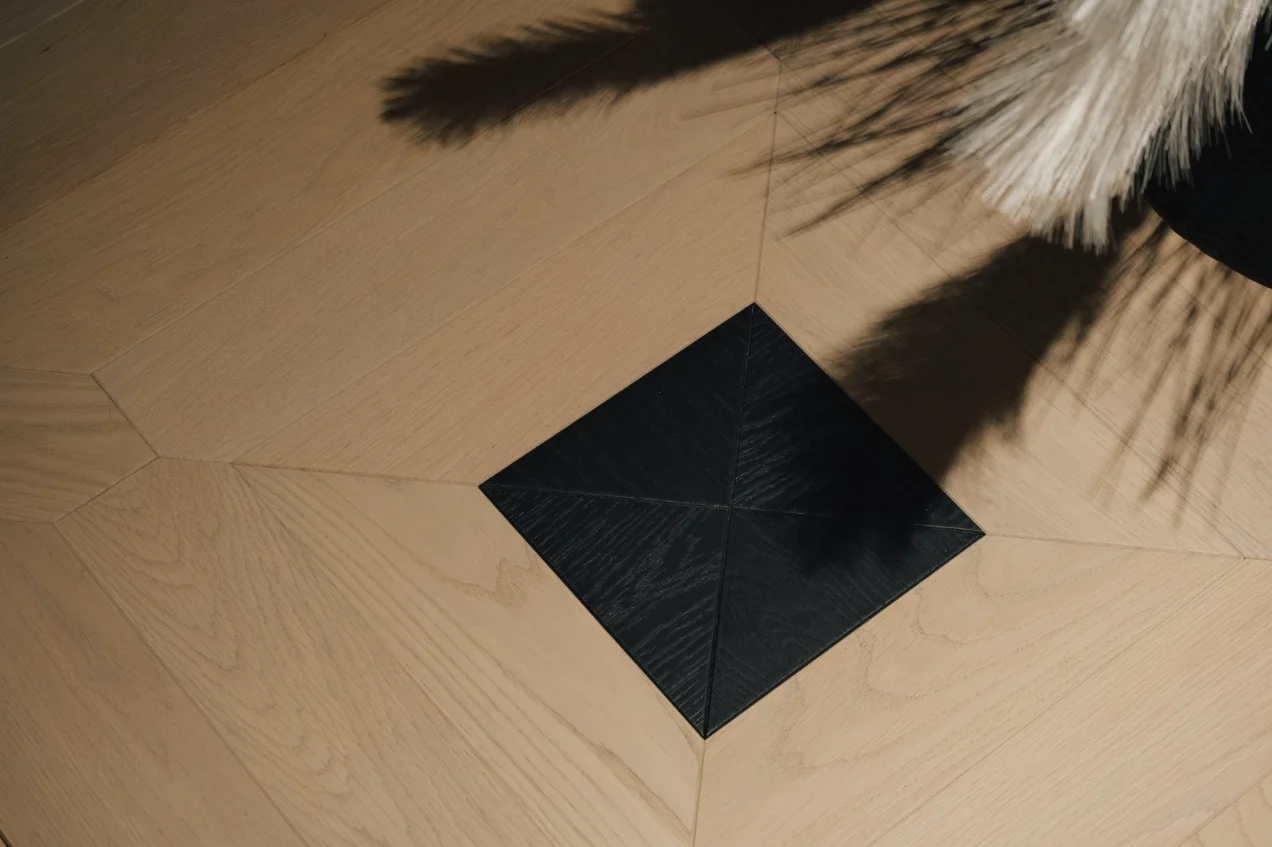
For bespoke colours, formats or parquet, state retained catalogue features and project changes. Record colour samples, pattern drafts, borders and special cuts with quotation versions. This keeps changes separate from standard display names and identifies impacts on materials, fabrication or quantities.
Distinguish floor area, chargeable quantity and additional allowance
Design area, measured site area and order quantity serve different purposes. The HUAGE installation guide bases quantities on actual site measurement plus wastage without a universal rate. Initial enquiries may use estimates, but orders should explain measurement boundaries, calculation and pattern so quantity corresponds with the project limits.
Discuss wastage and spare quantities separately. Cut edges, pattern layouts and doorway connections can affect material utilisation; reserving boards for later repairs is another decision. Quotations can list items measured by area or other methods and explain how quantity changes will be handled. Without clear measurement rules, comparing totals alone makes the source of price differences difficult to identify.
Do not omit ancillary materials, edge details or site preparation
Mark floor junctions with walls, tiles, thresholds or stairs on drawings and state the planned skirting, trims or alternatives. Visually seamless and trimmed solutions need separate confirmation of site conditions and work scope. A quotation for whole-home wood flooring must not omit boundaries, and a rendering cannot establish that every ancillary material is included.
An installation proposal may also require coordinated subfloor inspection, moisture-control layers, primers and adhesives. The service scope should state which items the supplier provides and which the site contractor handles. The original materials list installation on timber battens, floating installation, full-spread glue-down and adhesive-bead installation. The appropriate method depends on the actual product, subfloor and service environment, rather than the wording of a quotation alone.
Delivery conditions are part of the quotation
Discuss the delivery location, site access and installation arrangements alongside the quotation. Delivery to the stated address, unloading and handling arrangements, and when the site must be ready are practical questions that define scope. Production, delivery and installation are separate stages. Recording their timing conditions and costs separately helps prevent 'supply completed' being mistaken for 'all work completed'.
HUAGE quotation discussions should use approved material schedules, quantities and responsibilities. Retain revisions to identify which sample and drawing version each price covers. Read after-sales and warranty terms for the relevant product and project. Clear scope makes the relationship between budget, materials and services explainable.
Overseas enquiries should identify destination, estimated quantities, sample version and delivery requirements, with responsibility for each stage. A Chinese material quotation must not be read automatically as a delivered total including unloading, taxes and local installation.