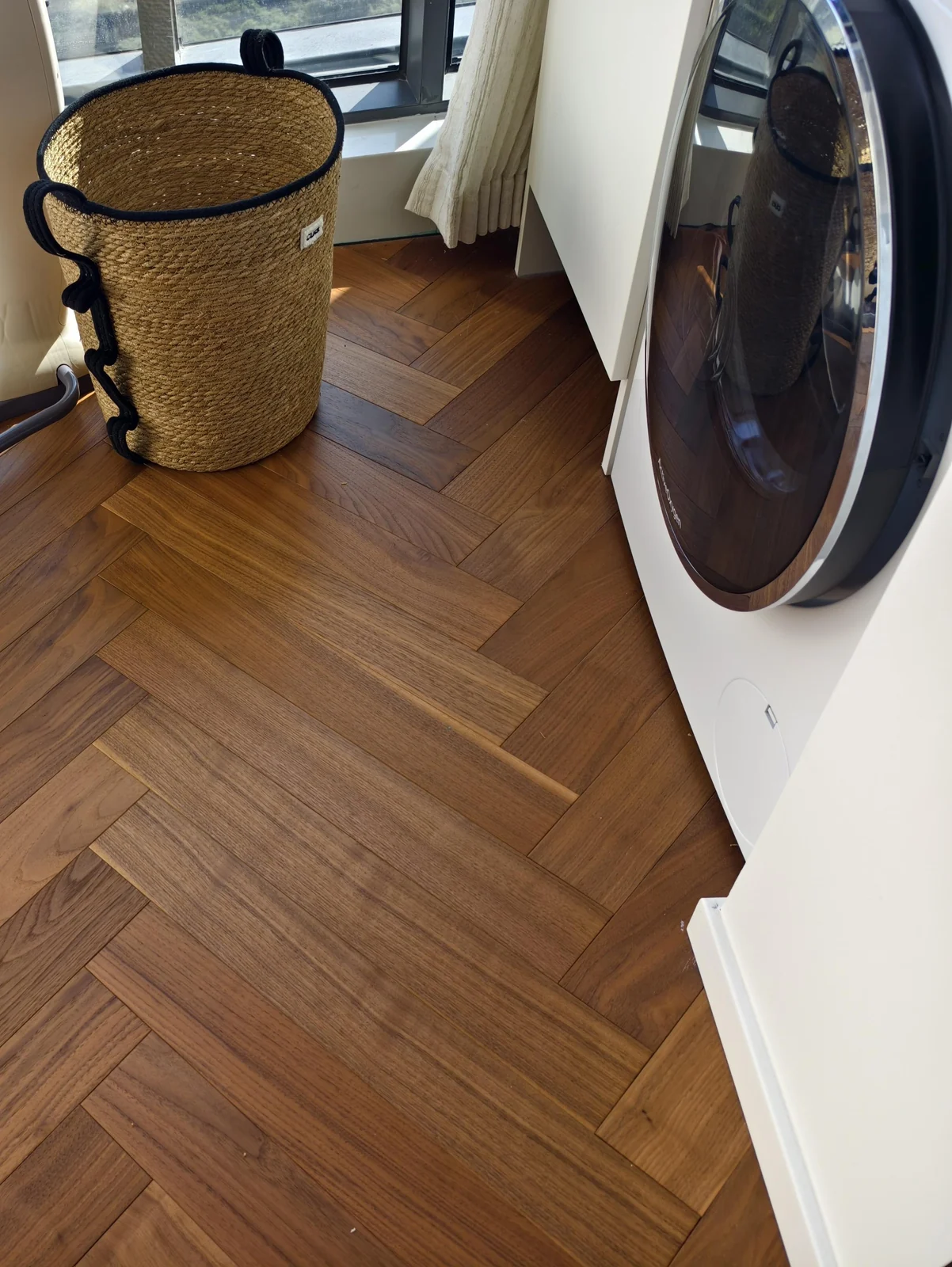
Overseas flooring purchases involve international transport and destination work beyond material prices. First align products, quantities and delivery scope when comparing Chinese supply proposals, then check responsibility for freight, taxes, unloading and local installation separately.
Find actual differences behind apparently identical names
A material name usually describes only part of a product. Oak indicates timber, herringbone an arrangement, multi-ply a construction and wide plank a scale; these terms can coexist. List face timber, core, construction, length, width, overall thickness and top layer separately, then compare quotations for the same combination. Similar names must not conceal configuration differences.
A named design may have different specifications. Some oak products in HUAGE's original catalogue offer several length, width and top-layer combinations, so an enquiry must select a specific configuration. If proposals use different dimensions or constructions, those differences can remain in the comparison, but identify what changed rather than attributing a higher or lower unit price directly to brand or quality.
Align quantities and pricing methods first
First check that each quotation covers the same rooms, areas and application locations, then examine items priced per square metre, linear metre, piece or another unit. Flooring, skirting and special trims may use different measurement methods. Reducing them to one total obscures the reasons for price differences. Material quantities relate to site measurements, patterns and boundaries, and estimates must be distinguished from order quantities.
The original guide calls for actual measured quantities plus wastage, with no universal percentage. Check whether quotations distinguish wastage, spares and special cuts and how quantity changes are charged. Identical unit prices can yield different totals where areas or spare scopes differ; clarify these first.
Beyond materials, check included work and extra charges individually
Samples, custom colours, pattern fabrication, ancillary materials and edge details can be listed differently in quotations. Put approved samples, finishes, borders and edge locations in a comparison table, identifying inclusions and items to arrange separately. If an item says 'components', specify the actual items and quantities rather than assuming a vague description covers every detail.
Check transport and site scope as well: delivery location, unloading, handling, subfloor work, moisture control, adhesives and installation responsibilities. Catalogue installation options do not mean the quotation includes that work. For optional items, retain material-supply and other-service scopes separately so budget changes have clear reasons.
Finish by reviewing timing conditions, after-sales arrangements and change rules
Prices usually relate to one material/quantity version; keep approval dates and validity conditions together. If samples or measurements are unfinished, identify what may change. Confirm production, delivery and installation separately. ‘Fast’ on a quotation does not establish identical completion dates across proposals.
After-sales support and warranties also require comparison of the specific product, scope, territory and costs, rather than duration alone. After these checks, summarise the materials and work actually included in each quotation and choose with the budget in mind. Professional comparison does not force every proposal to be identical; it makes differences identifiable so distinct deliverables are not treated as the same product.
For overseas quotation comparisons, define delivery milestones and local responsibilities. A Chinese material price cannot be compared directly with a price including destination installation. Differences become meaningful after project requirements and charges are confirmed individually.