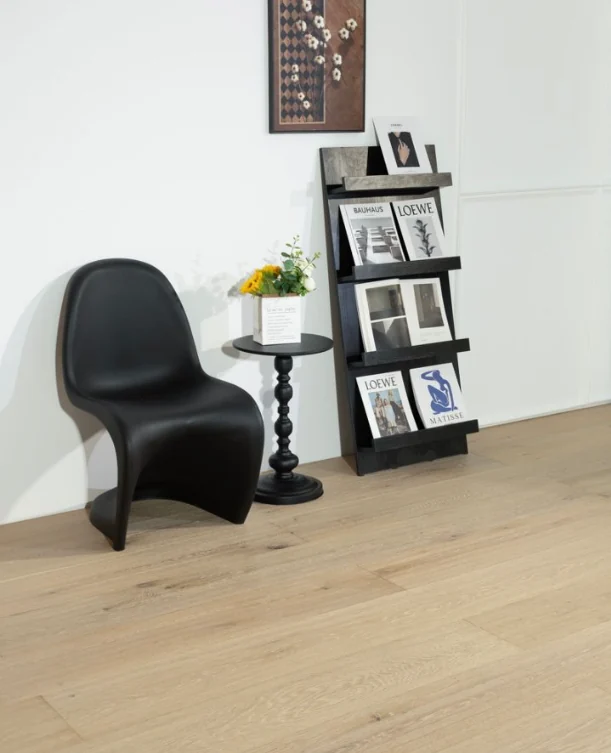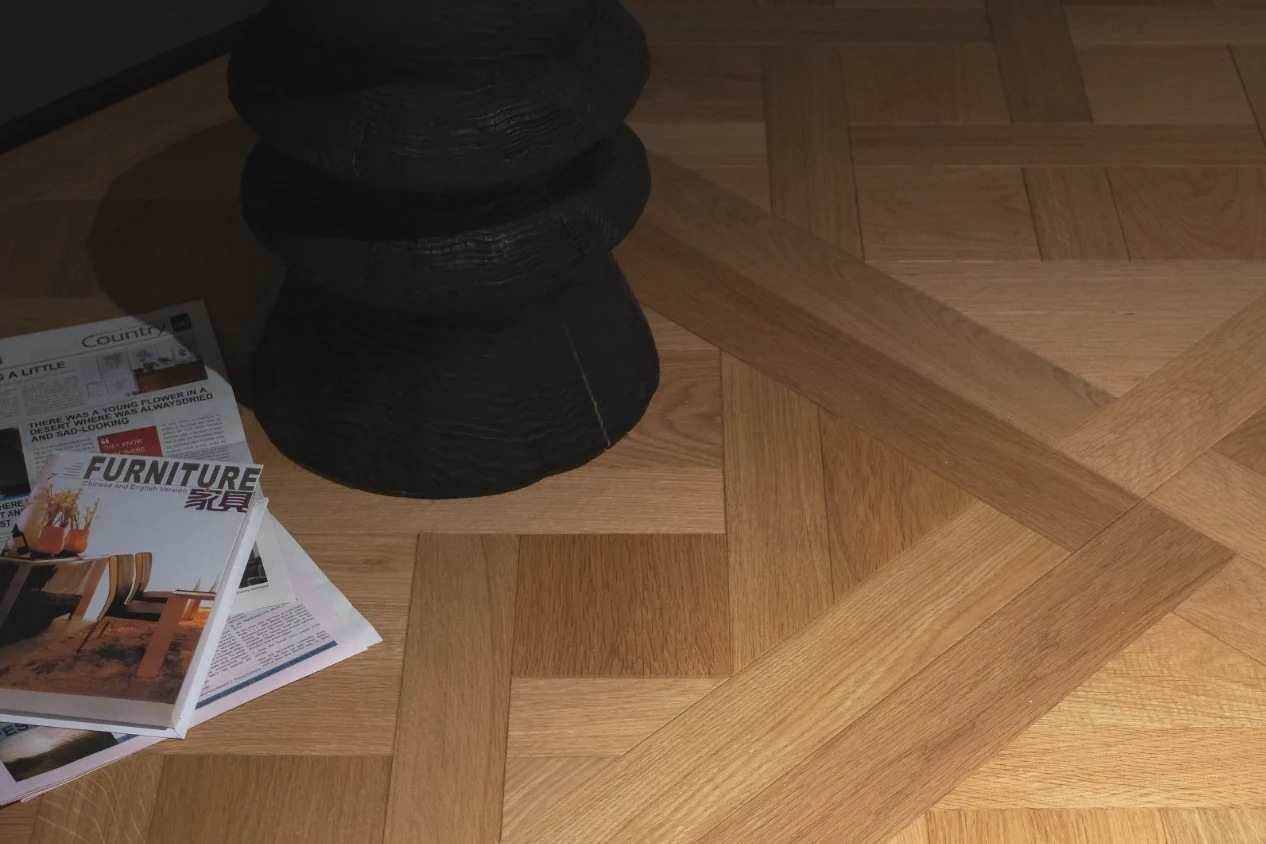
Parquet introduces pattern, but buying requires more than composition. Square catalogue parquet includes single-timber faces and timber combinations. Check pattern, timber and construction separately to understand the actual selected material.
Continue from the pattern to material details
Some square modules in the original catalogue use North American black walnut, some European white oak, and another record combines North American black walnut with Canadian maple. Assembled parquet does not mean every design has the same top-layer material. Tonal blocks may reflect species differences, colour treatments or photography; images alone cannot determine the cause.
Original names locate corresponding documents; they do not automatically prove authorisation or import relationships with other brands. After pattern selection, confirm top-layer wood, core, total thickness and top-layer thickness individually rather than copying another parquet's parameters. Missing shaped-module information especially cannot be filled with square-module dimensions or construction.
Samples need to show combined relationships
A colour swatch introduces one material, but the complete pattern also involves module joints, orientation and neighbouring modules. Review local materials and repeated combinations together when approving samples, discussing tonal changes, joints and frames. For mixed timbers, identify each component in the approval record rather than retain only an overall photograph.
In large spaces, furniture, light and pattern centres affect visual emphasis. Adjust layout direction accordingly, but do not equate rendering colour differences with real timber tolerances. Samples, floor layouts and actual configurations serve different purposes. Keeping them matched prevents pattern approval and material approval from referring to different things.
Relate supply and technical requirements to the specific configuration
Parquet appearance does not replace coating, joint, subfloor or system approval. For heating or special requirements, check actual product/system documents rather than extend one range's performance descriptions to all patterns. Reassess samples and documents when materials change.
HUAGE presents pattern, species and construction separately to connect visual and technical choices. Final quotations should define current configurations, layout scope and accessory responsibilities. Catalogue images are material and composition references, not proof that every combination is stocked or of completed UK projects.