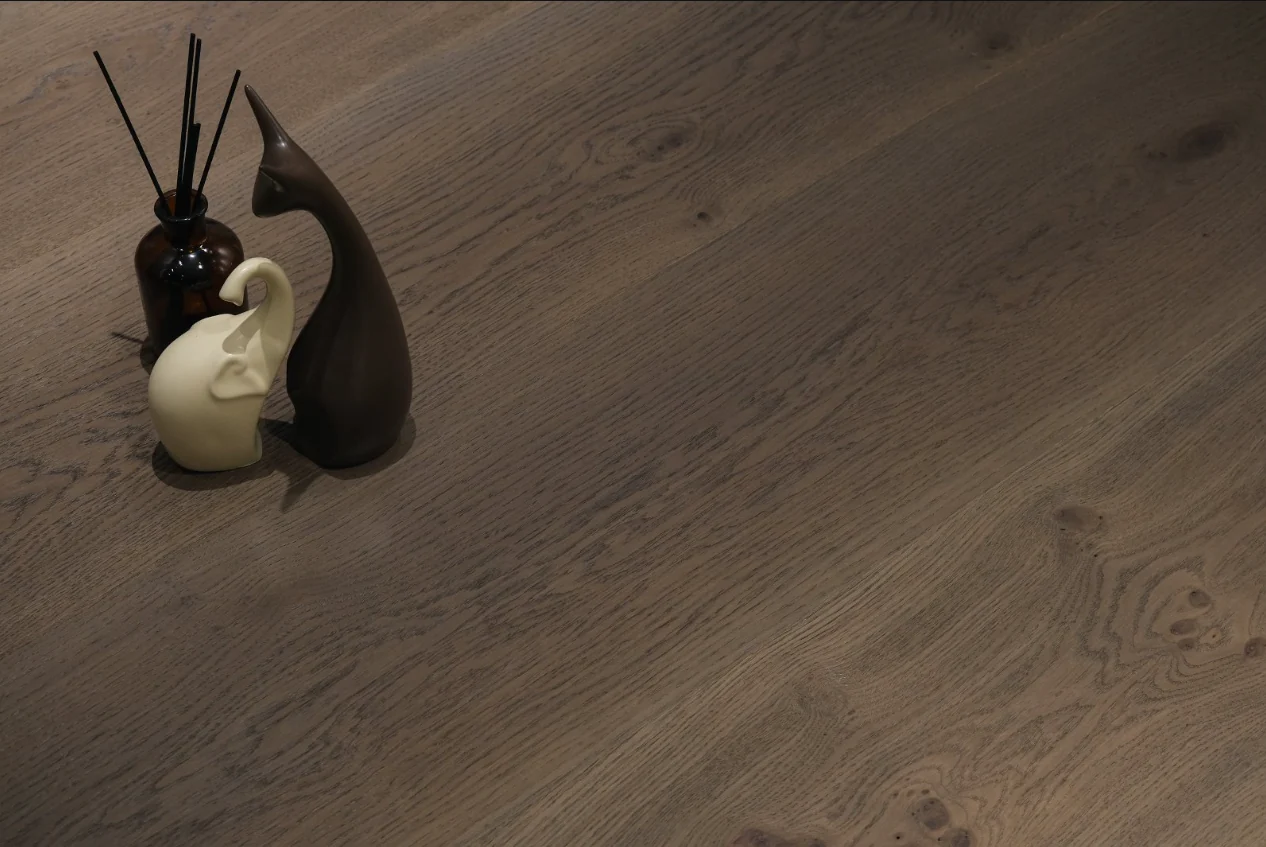
When reselecting flooring because of design changes, availability or budget, colour similarity alone does not justify direct replacement. HUAGE recommends identifying essential original conditions and comparing new candidates field by field, giving substitutions a specific basis that can be passed to later stages.
First identify the essential conditions in the original proposal
The original priorities may concern colour, width, parquet composition or construction, varying by project. Before replacing materials, review samples and approval records, distinguishing design objectives from site constraints. If only an image exists, first add application locations, actual specifications and construction conditions rather than immediately searching more images for similar appearances.
Compare construction, face timber, overall thickness, solid wood top layer and joints separately. Similar engineered and solid wood appearances do not remove construction differences; herringbone and chevron are not one interchangeable pattern. State changes in substitutes rather than describe them only as equivalent or similar.
Similar appearance still requires site interface checks
Changes in board width or length may affect layout and cutting; thickness changes may affect door openings, stairs and stone junctions; finish changes may affect feel and maintenance. Design and construction participants should check the relevant conditions. Do not assume that all details in an existing drawing remain valid when a new material is substituted. Overseas projects especially require the local implementer to confirm the site system.
Compare samples under the same conditions. Similar colour does not mean identical sheen, grain or natural variation. Establish which appearance features the new proposal retains. If the original approval no longer applies, define the new sample identifier and scope so purchasing does not keep using old photographs while site teams prepare for new materials.
Establish a complete revised execution arrangement after changes
Quantities, costs, timing and components may need new responses for the revised proposal. Before confirmation, check the original order or stock-preparation status rather than assuming a proposed replacement has already changed execution. Use matching versions of quotations, schedules, drawings and sample records, retaining the change reason and accepted differences so everyone understands the implications.
HUAGE product information and bespoke discussions support candidate comparison; check actual availability per project. Replacement is complete when the new material's properties, sample and interfaces are understood, not when a similar image is found. Retained comparisons and revisions identify the adopted configuration at arrival and during use.