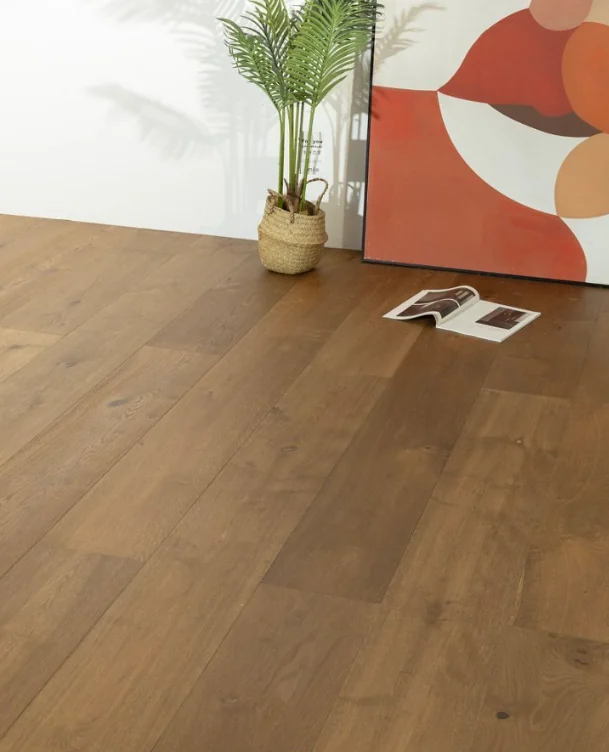















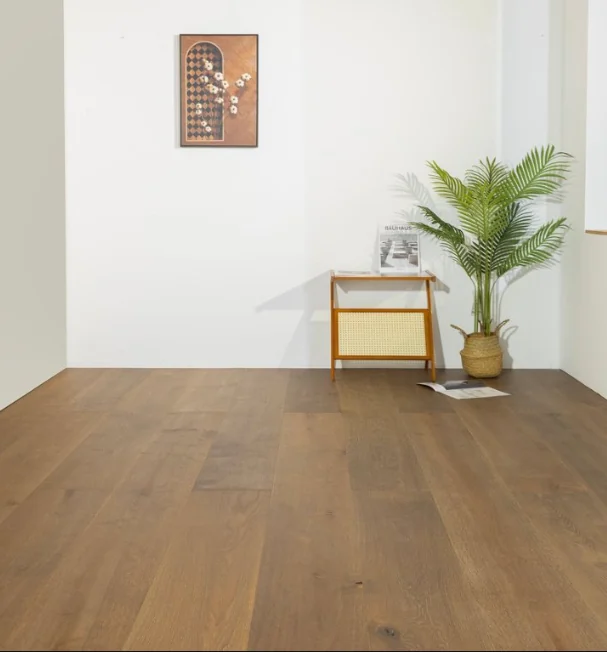
More samples do not necessarily make decisions easier. HUAGE recommends placing candidates under the same comparison conditions, defining the use and essential requirements before colour, grain and finish. Results should explain why a selection was made, rather than merely recalling which looked more appealing at the time.
Establish comparable construction and use conditions first
Solid wood, multi-ply engineered wood and SPC are different constructions or material systems. Similar sample colours are not sufficient grounds for treating them as directly equivalent. Check face timber, core and solid wood top-layer thickness separately. For different applications, such as floors and walls, establish suitability individually rather than replace judgement with an overall ranking.
Focus this comparison on clearly defined differences
After essential project conditions are met, compare format, pattern, colour and finish separately. Large and narrow boards have different proportions, and herringbone and chevron different arrangements. If every sample changes several variables, identify the current priority; an apparently firm preference may otherwise reflect lighting or sample size alone.
Observe actual samples under matching conditions
Compare samples in the same light, background and orientation, rather than one in direct window light and another in shade. Record overall colour, grain variation, knots and sheen, then view with walls, doors and furniture. Photographs retain context but do not replace physical samples or justify using different filters to favour one candidate.
Inspect feel and local finishes closely, but use broader references for the rhythm of boards across a room. Catalogue application images explain spatial relationships; the actual proposal still requires drawings and samples. For natural timber, discuss the acceptable variation range rather than demand that every supplied board reproduce one small part of a sample.
Keep the reasons for selection and outstanding decisions
Comparison records can state the reference number used, the appearances approved and the specifications still needing confirmation. If the colour is approved but construction remains unchecked, label these separately. Briefly retain the reasons for rejecting candidates so that later changes do not reopen resolved questions and design and procurement teams understand the conditions behind this selection.
HUAGE catalogue and physical-sample discussions narrow selection, with supply conditions confirmed per project. After comparison, connect final sample numbers with products, drawings and quotations. Stable observation conditions and clear reasons support orderable decisions more effectively than simply adding samples.