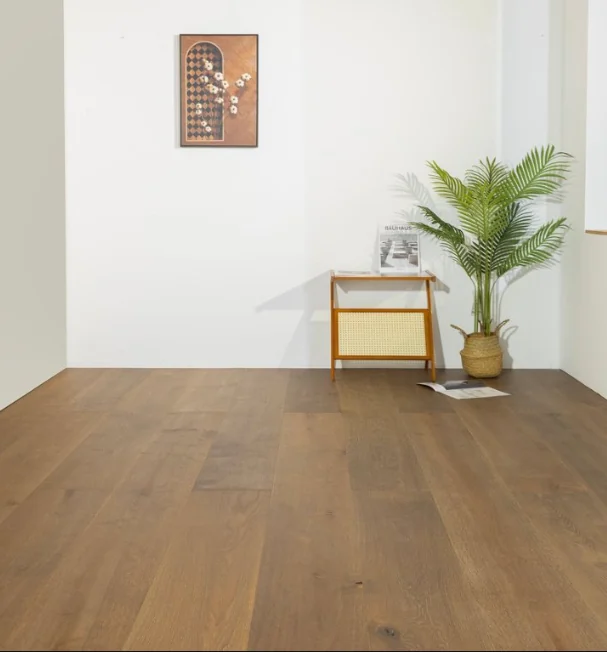















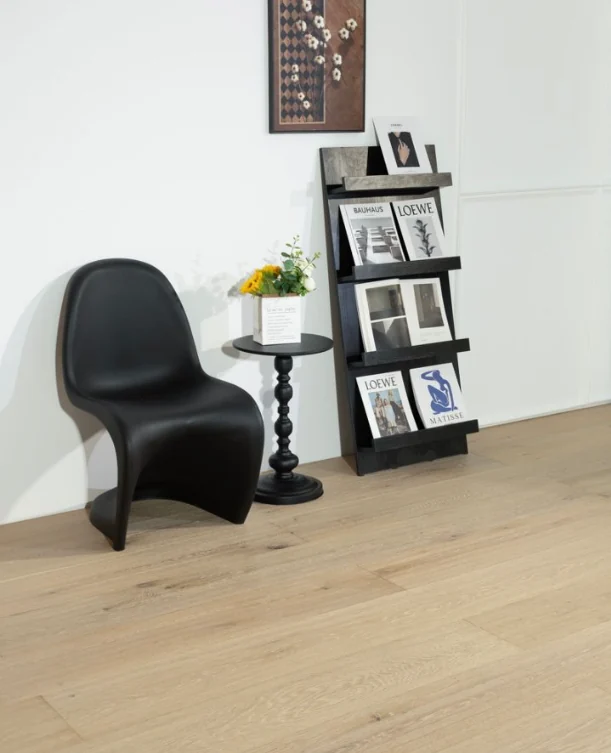
Bespoke flooring colour involves more than a colour name. Timber undertone, grain and processing affect appearance together. HUAGE recommends defining direction with images, then comparing actual samples and identifying features to retain or adjust.
Images explain the direction; samples reveal the material
Submit reference images with notes on warmer or cooler tones, the desired lightness and acceptance of prominent knots. Do not replace every requirement with a style label such as cream or mid-century. The same style term can describe different woods and treatments. Specific features make it easier to discuss samples towards one shared goal.
Screens, lighting and image treatment affect colour. Catalogue interiors suggest directions, not whole-batch colour tolerances. Link samples with actual construction, face timber and finish so approving one colour is not mistaken for approval of a different material combination.
Compare under conditions close to actual use
Place candidate samples in the same position and light, alongside neighbouring wall, stone, door and furniture materials. A board may look different horizontally and vertically, making direction particularly important when coordinating walls and floors. If strong artificial lighting is planned, inspect under that lighting too rather than rely on a momentary phone photograph.
Natural wood grain does not repeat exactly. Establish whether the preference concerns the overall tone or a particular grain feature, and discuss acceptable natural variation. A small sample cannot display every combination across board faces. Later colour sorting and project confirmation are still needed; a cropped image is not an infinitely repeatable surface.
Write feedback that can guide the next sample
Feedback can specify reducing a colour cast, adjusting sheen or retaining the original feel. Record colour, finish and dimensional changes separately so the next samples can be checked against them. Keep sample numbers, dates and approvers; if several versions exist, identify the one used for further discussion to prevent photographs being mixed in chats.
The source describes bespoke colours and processes; confirm availability, sampling cost and timing per project. After colour approval, document specifications and quantities before quotation and ordering. This respects natural variation while transmitting design intent to supply through clear sample records.