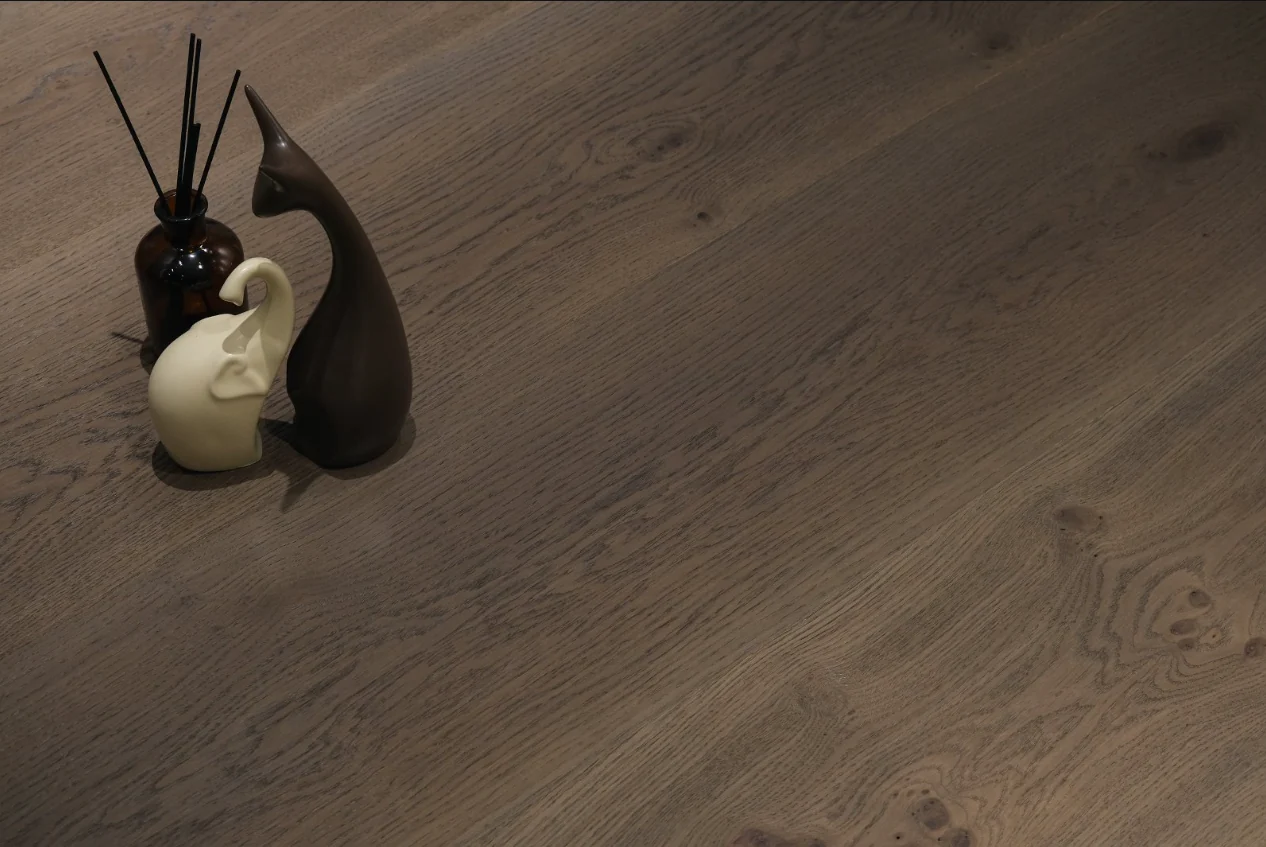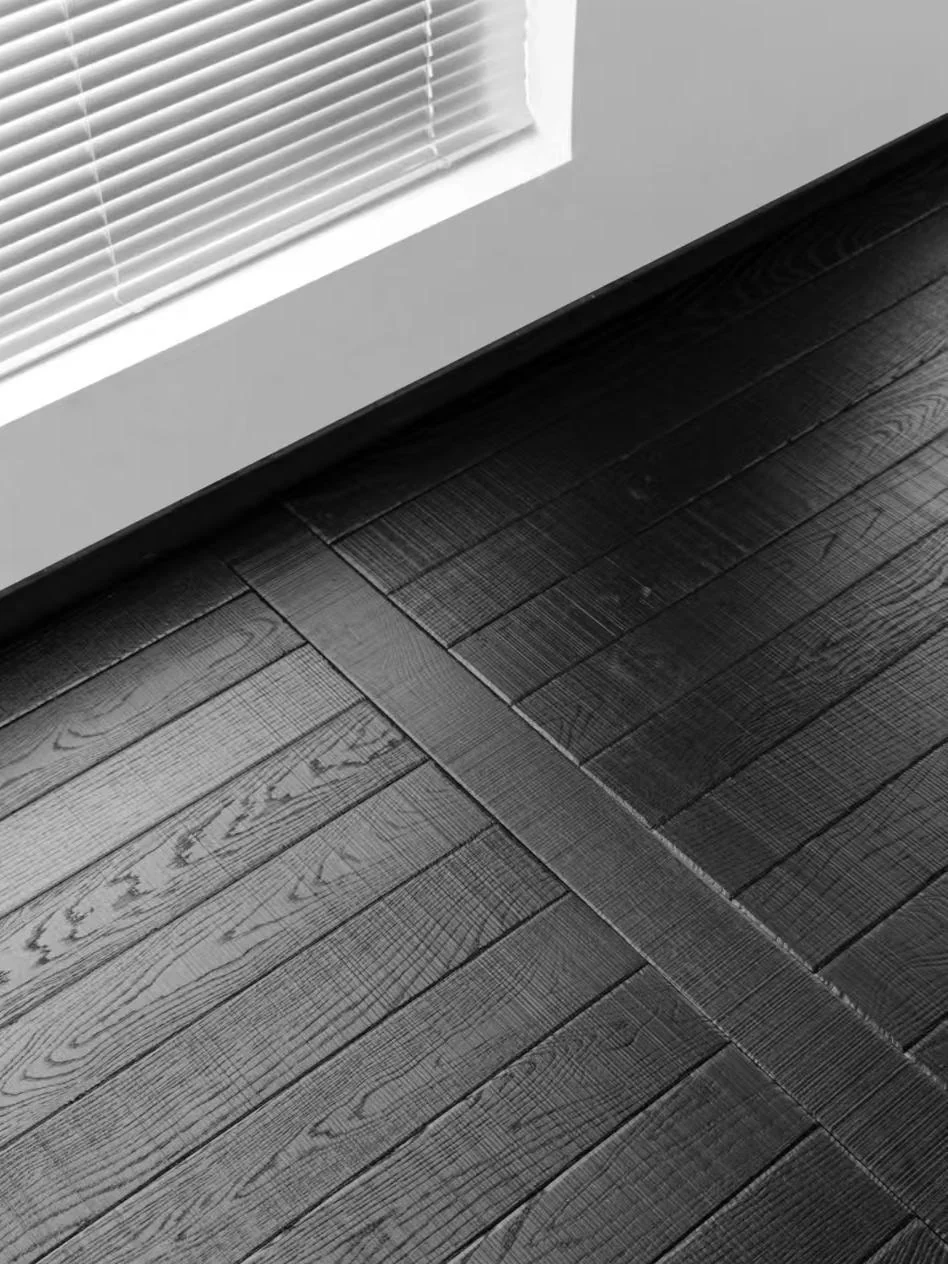
Dark wood can form the main flooring colour or appear only on selected walls and near furniture. Decide its role before comparing products. HUAGE's original records for Classic Black Oak and American Black Walnut offer different directions, but darker photographs do not necessarily show the same species, construction or surface treatment.
Map the scope of use before choosing individual materials
Mark dark-material locations on plans/elevations and view them with doors, cabinetry, textiles and lighting. For dark floors and full walls, compare grain and joint relationships; for local accents, define the area of emphasis. Establishing coverage before choosing colours is stronger than buying several dark materials and assembling a home afterwards.
Daylight and artificial light change how dark materials appear. Inspect samples at entrances, main seating positions and near windows, alongside pale walls or stone. Distinguish timber undertone, sheen and shadows caused by light. Black in a particular camera angle is not necessarily the material's inherent colour, and ‘dark’ is not a reusable universal colour code.
Similar tones do not mean identical configurations
Classic Black Oak belongs to the narrow-board records and its page mentions floors and walls. American Black Walnut straight boards are a separate engineered flooring record. Even where a design places them together, retain each product's dimensions, construction and finish. A floor installation proposal does not become a wall-fixing instruction, and a dark background in an image cannot identify a product name on that basis.
Suitability for a particular environment cannot be judged by atmosphere alone. Care or performance information must relate to the actual product and finish system, rather than assuming the same cleaning method because a name includes black or walnut. Sample comparisons can examine visible grain, sheen and adjacent materials, while final technical conditions still depend on product documents and project construction.
Include colour decisions in the material schedule
Record separate sample numbers for main floors, wall accents and edges, distinguishing exact colour matches from coordinated tones. Different species need not match perfectly, and no unapproved match should be promised. Compare samples and details together across applications rather than discover construction or finish differences only after completion.
HUAGE retains dark-material selection entries from the catalogue; current colours and overseas conditions require separate approval. Dark design depends on a clear material range and spatial emphasis rather than simply increasing darkness. Samples under real light and complete application schedules let later revisions follow an agreed direction without repeatedly explaining the whole scheme through renderings.