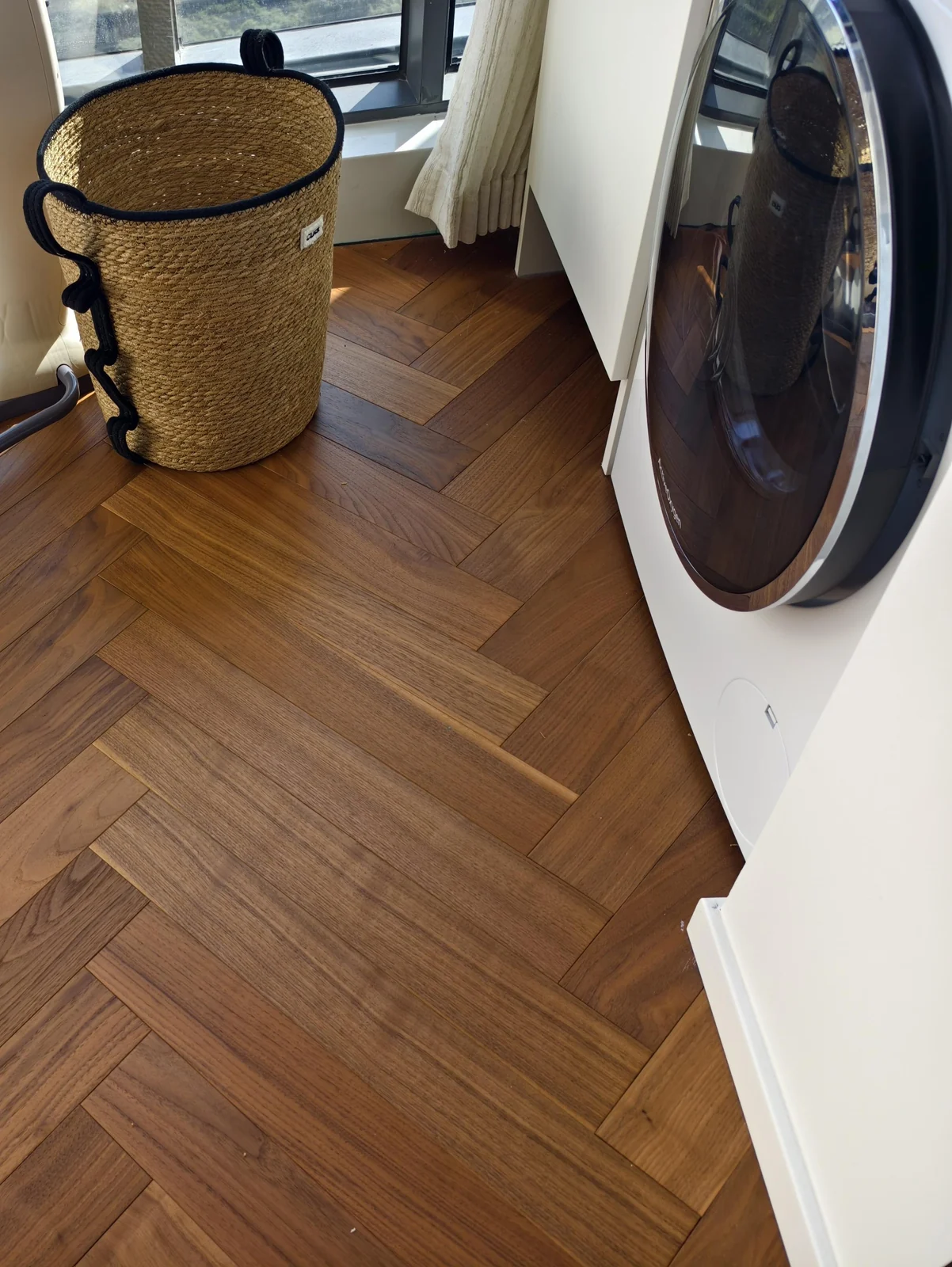
















Furniture handling and other trades may continue after flooring is installed. HUAGE recommends including finished-floor protection in the handover: define access timing, handling methods and inspection responsibility so the approved material condition continues through to occupation.
Explain the current condition before subsequent trades enter
Completion of fixing, readiness of the adhesive layer for use and completion of all works may occur at different times. Before subsequent personnel enter, understand actual system requirements and permitted work. ‘Installed’ alone does not permit heavy loads or other trades. The responsible party should confirm the site condition and communicate it to later participants.
Plan protection around routes, furniture placement and work areas, with the priority of avoiding unassessed contact and handling impacts. Abrasion-related descriptions in the catalogue do not mean the floor cannot be scratched and do not replace a protection plan. Different finishes and constructions have different requirements; use methods compatible with the actual product.
Check contact materials and handling methods together
Assess contact from furniture feet, wheels and temporary tools against actual weight and product instructions. Before adding pads or coverings, check staining, adhesion and surface effects. A protection label does not guarantee compatibility between every material, tape and coating.
Avoid dragging during handling without assessing the risks, and plan routes and corners in advance. When temporary coverings are needed, consider the condition of the floor, the covering material and the duration. Do not conceal existing moisture or abnormalities beneath a covering. Protection should permit inspection rather than leave problems hidden indefinitely beneath a tidy-looking surface.
Connect handover checks with routine protection
After furniture entry or other works, compare key areas against pre-entry records and locate and photograph new observations. Confirm supply, installation and later-handling responsibilities separately; close timing alone does not prove a cause. Base action on records and project agreements rather than verbal descriptions only.
Continue these principles during use: choose protection for the finish and inspect contact areas regularly. HUAGE sets no universal load/scratch result or free repair promise for every damage. Clear protection and handover arrangements turn product guidance into actionable tasks for users.