















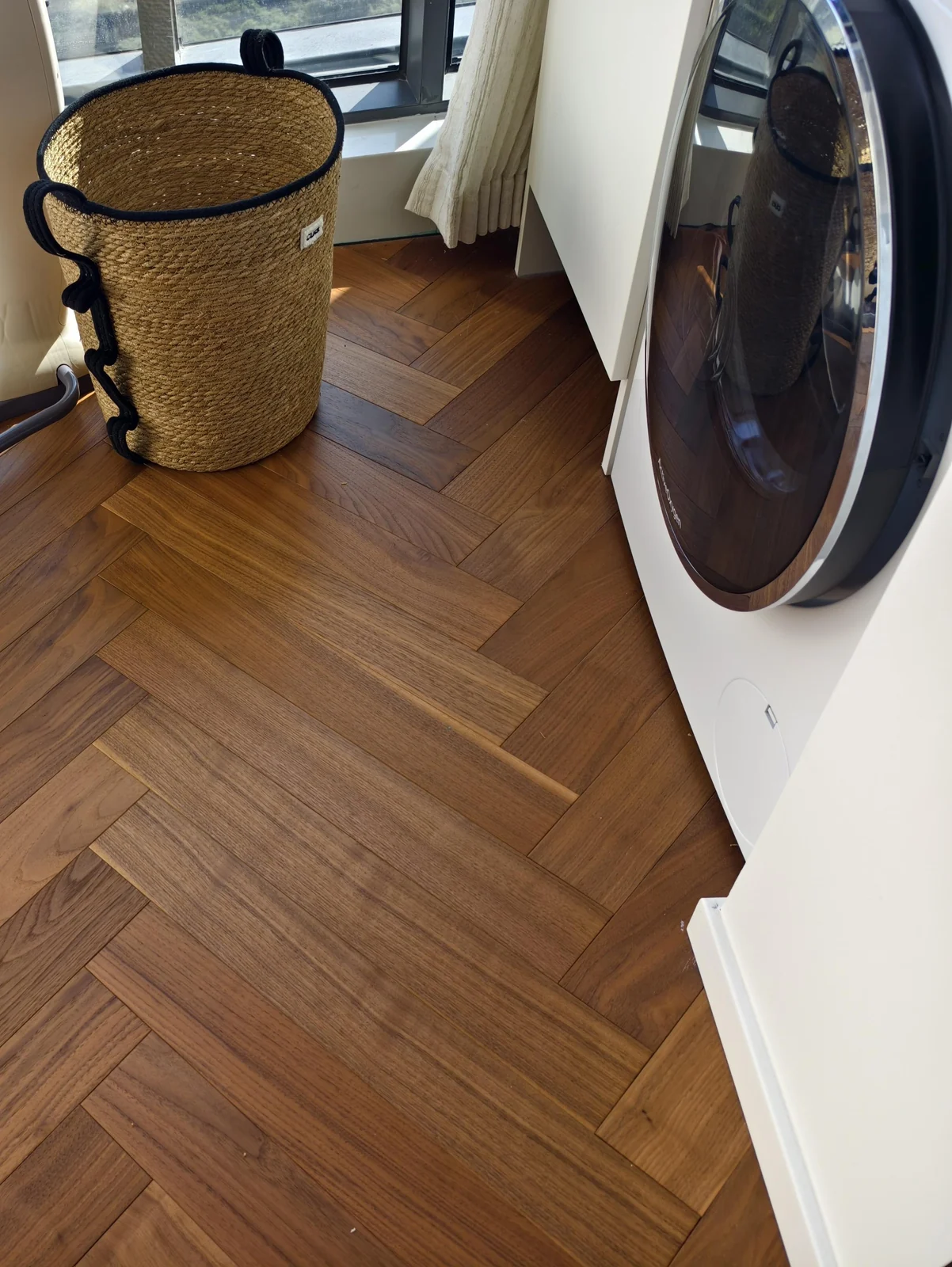
For local scratches, retaining the condition and identifying the actual material supports assessment better than immediately trying several repair products. HUAGE recommends starting with location, surface condition and product information, then letting the appropriate proposal establish whether site inspection or further treatment is necessary.
First assess scratches against the actual material
Establish the flooring construction, finish and previous repairs; the original catalogue name cannot describe every surface condition. Photograph the room location, affected boards and details together so responsible people understand the scope. Marks may appear differently under different light; state observation conditions rather than determining damage depth from photographs alone.
Recent furniture moves, cleaning or other work provide context, not automatic causes. Discovery time, changes and attempted treatments also matter. Retain the condition without repeated alteration; unauthorised abrasion or mixed products can worsen damage and remove the original evidence.
Repair methods depend on the surface and connection conditions
Local recolouring, recoating or treatment depends on coating system, damage extent and acceptable appearance. Similar colour does not prove repair-product compatibility, and grain or sheen can leave visible differences. Confirm methods through product guidance or a professional proposal, not a generic repair pen for every floor.
Replacements also need dimension, interface and laying checks. Establish whether spares match the configuration and require fresh appearance approval. Herringbone, chevron and parquet have distinct joints; no arbitrary board can necessarily be removed and replaced, nor can one interior image establish treatment difficulty.
Keep a record of proposed actions and their results
Record treatment area, materials and expected limitations, agreeing a local trial where needed. Keep outcomes and care instructions to review changes in the same location. Costs, responsibilities and scope follow actual agreements; after-sales maintenance does not mean unconditional warranty for every damage.
HUAGE provides a basis for maintenance discussions through product and site information, without deriving fixed repair or refurbishment counts from top-layer thickness. Define local UK inspection and execution separately. Accurate records, appropriate assessment and compatible proposals support focused treatment rather than repeated attempts that obscure the issue.