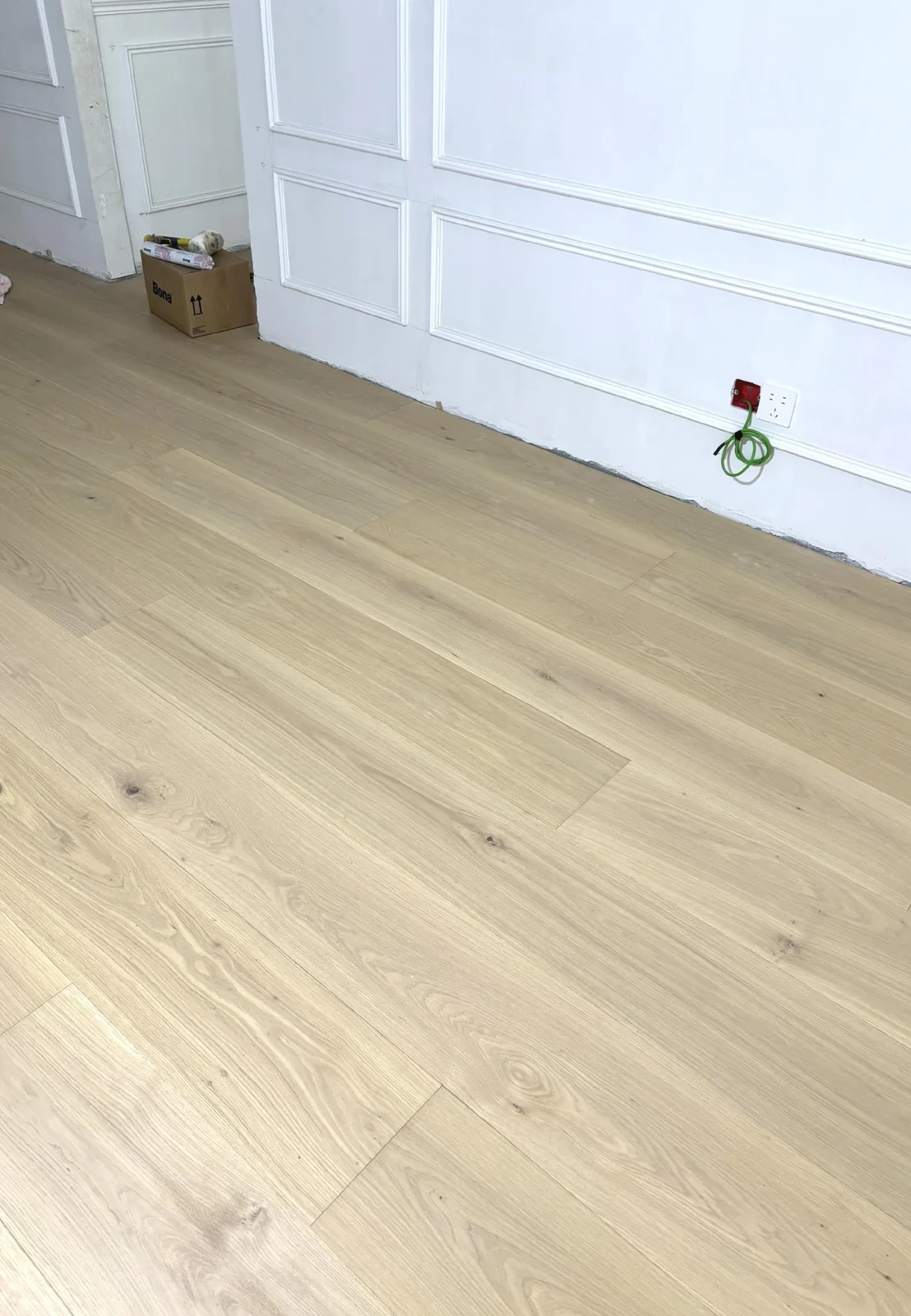















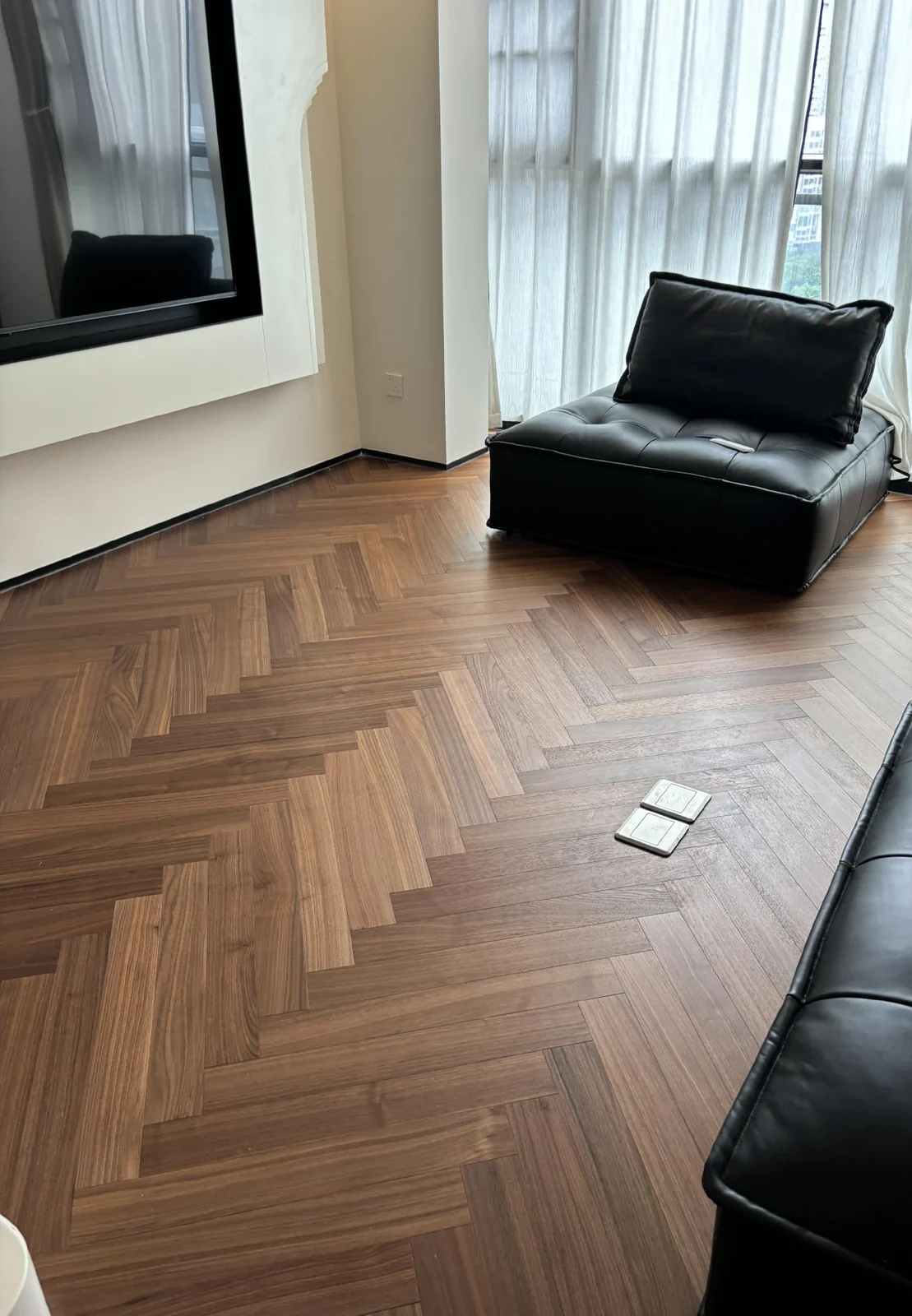
Identify the board-end arrangement first
Two floors may have similar colours but different patterns. Herringbone staggers square-ended rectangles, with one short end meeting another board's long edge. Chevron joins angled ends into continuous V shapes. Close joint inspection distinguishes them better than overall photographic style.
Then assess the pattern's rhythm
Herringbone creates staggered zigzags; chevron creates continuous V lines. Length and width change both patterns' scale, while chevron's mitre angle also needs consideration.
One sample shows the finish; several joined samples reveal grain and colour changes within the pattern. Compare both views before choosing a combination.
Put the pattern back into the room
Return to the plan and examine entrances, corridors, room edges and principal views before deciding whether to frame the floor or continue the pattern openly.
When preparing requirements for HUAGE, include plans, strip proportions, colour references and border details. For chevron, also state the angle. Confirm the pattern and material construction separately: an installation pattern does not identify the layers beneath the surface.