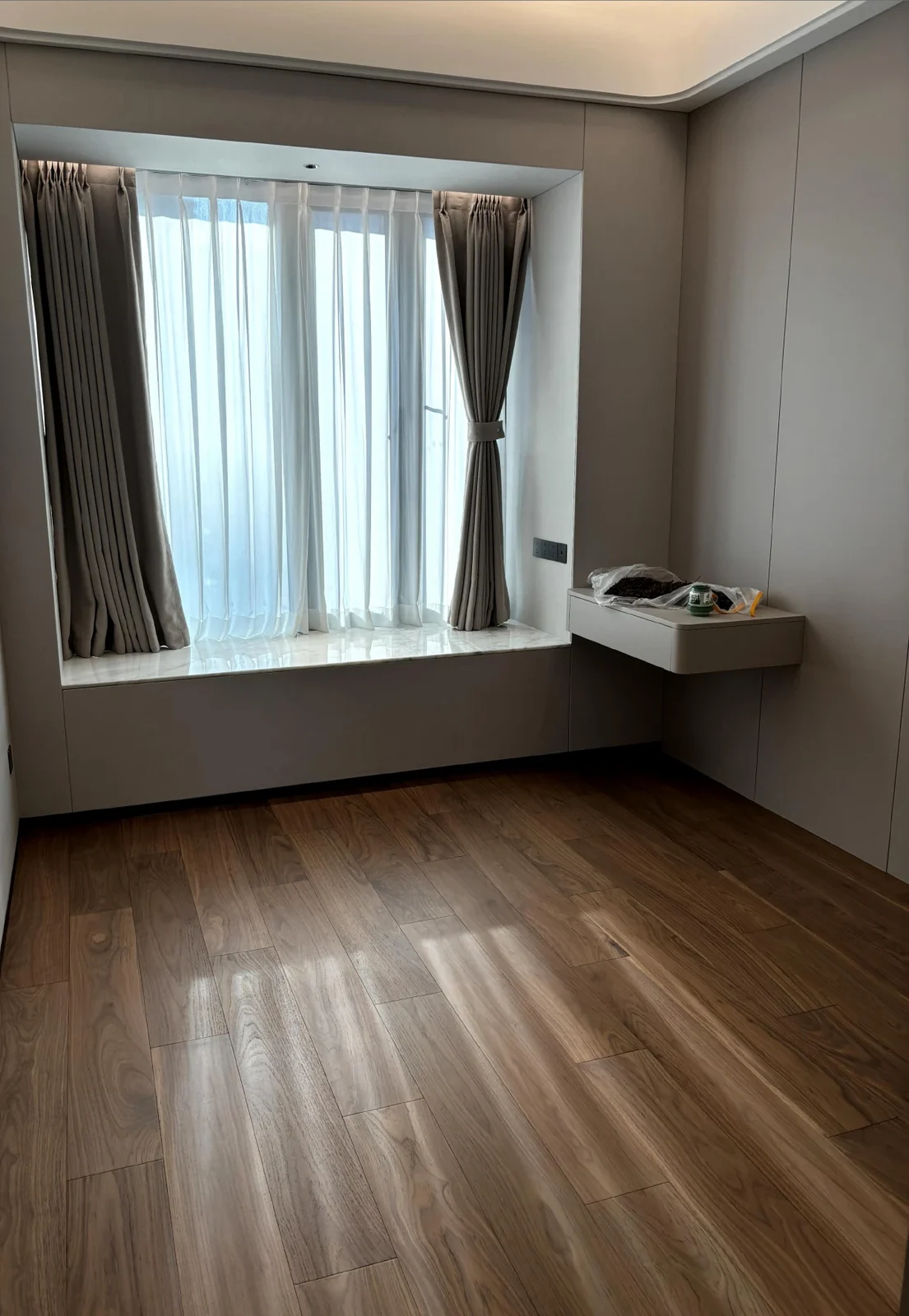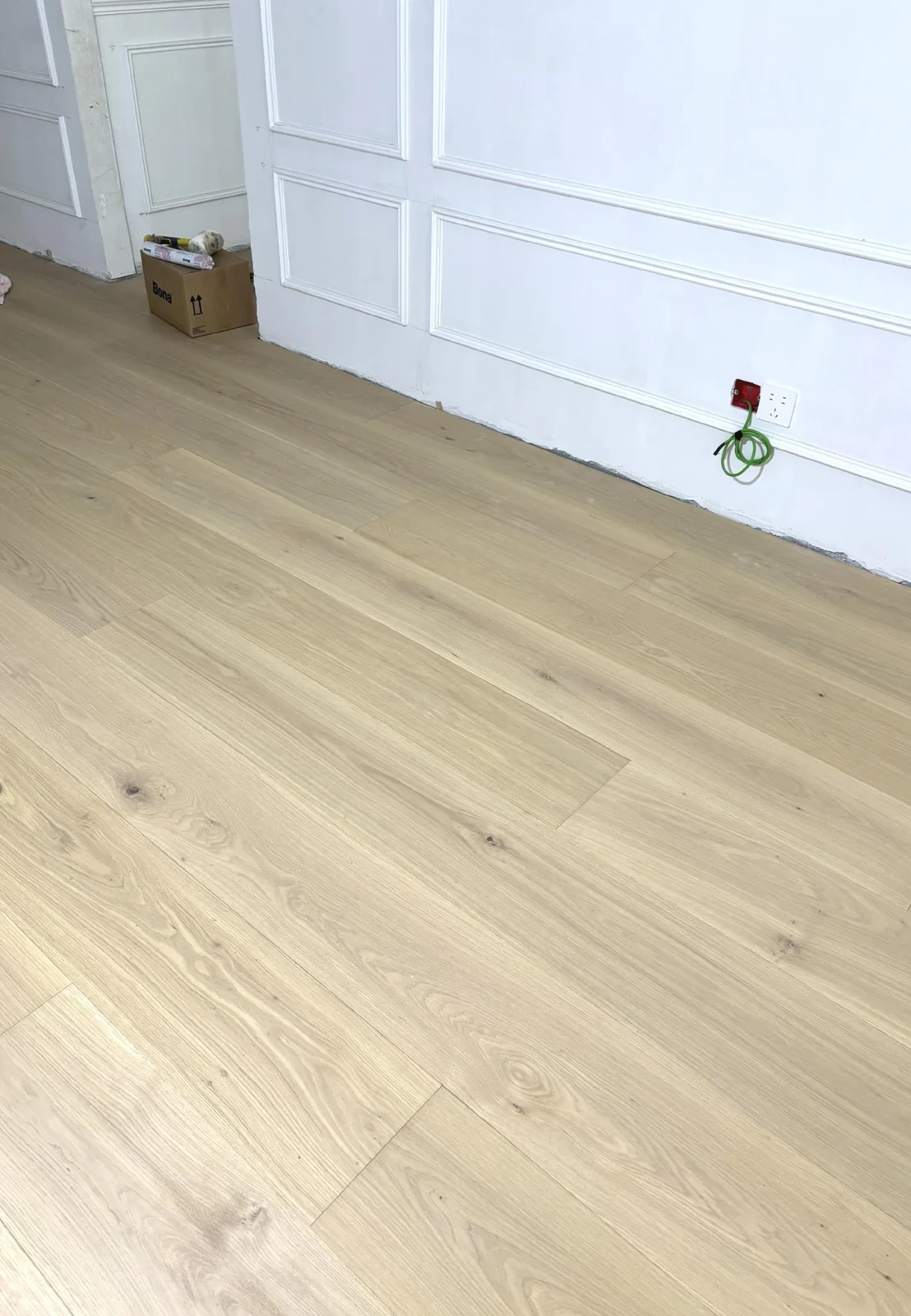
Observe the floor's repeated rhythm
Wide boards expose grain and colour over larger individual faces. At the same room width, they have fewer joints; narrow boards repeat joints more densely. Assess both against plans and neighbouring materials rather than decide from names alone.
Compare board width and direction together
HUAGE's wide-board choices for UK projects are 190, 220 and 300 mm. Compare them against room dimensions, doorways and neighbouring spaces. Layout drawings explain width relationships more clearly than one sample alone.
Narrow-board proposals can focus on repeated joints and end-joint distribution. Grain and tonal variation spread over more small boards can create different effects.
Complete the product specification
Once the visual direction is clear, specify the required board length as well as width, total board thickness, species or finish reference, estimated area, and adjoining flooring materials.
Board width describes format and cannot establish solid wood or multi-ply construction. Record format separately from construction so that the visual selection corresponds to a complete product specification.