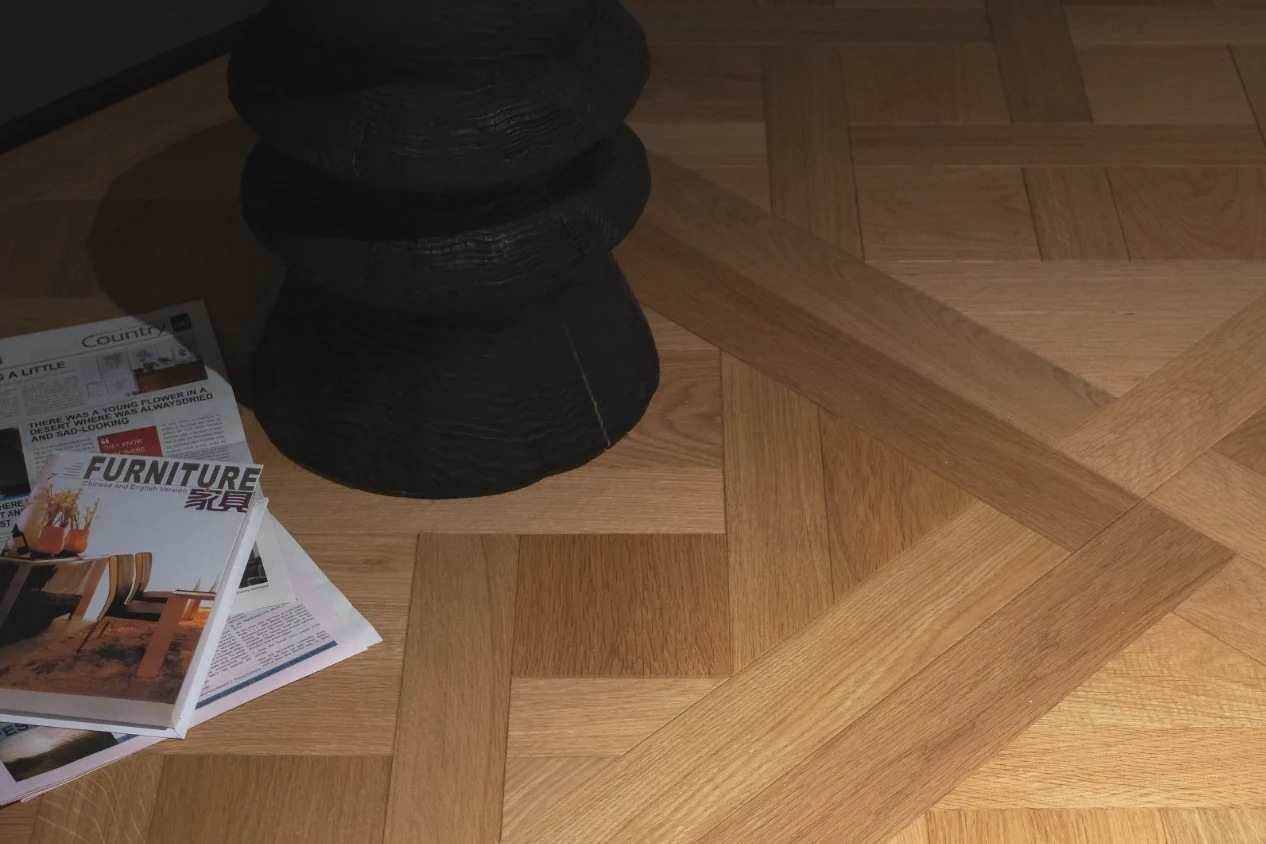















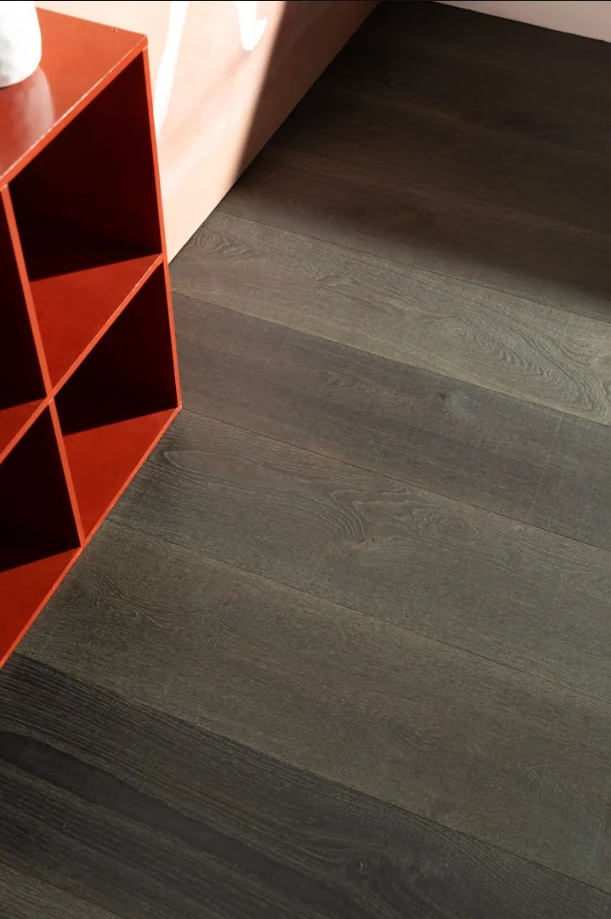
Oblique-light photographs help communicate visible wood-floor surface conditions. HUAGE recommends retaining material identity, site location and lighting context so recipients understand how the image was formed rather than see an enlarged light/dark contrast alone.
Photographs should first identify the material and observation conditions
Photograph spatial locations and relevant boards first, then closer details, linking both to one identifier. State whether the material is a sample, delivered board or installed flooring. Unidentified close-ups can be misapplied between designs and dates, obscuring what is being discussed.
Identify whether light comes from windows, fittings or temporary lighting, and record viewing/camera directions. Oblique light emphasises relief; frontal light can reduce local variation. Both complement each other. The aim is not maximum contrast but a reviewable record of what was observed under which conditions.
Describe visible observations first; do not infer performance from shadows
Surface lines may relate to grain, processing or local condition. First describe their position, direction and extent. Hand-scraping, cross-sanding and brushing in the HUAGE catalogue apply to their respective designs. Establish the original finish of the supplied material before comparison. Without the product context, do not classify every irregularity as damage or automatically call it a natural feature.
Photographs do not directly measure roughness, wear depth or coating performance and cannot replace wear- or slip-resistance documents. Exposure, angle and screens influence visible colour and sheen. Investigate uncertain causes with physical materials and relevant people. Record further measurement or technical judgements separately from the appearance photographs actually show.
Use the same identifiers for comparisons and corrective actions
For sample comparisons, retain similar light, orientation and camera distance and explain positions. Do not compare strong side-light with shade and infer quality solely from images. Photographs aid identification, not replace samples, agreed ranges or invent universal acceptance thresholds.
Use the same identifier for later replies, site inspections or completed local treatment, recording earlier and current conditions and the work done. HUAGE recommends retaining original photographs without filters or misleading crops. This makes surface records reviewable over time, supporting accurate communication while identifying performance and responsibility conclusions they cannot establish alone.