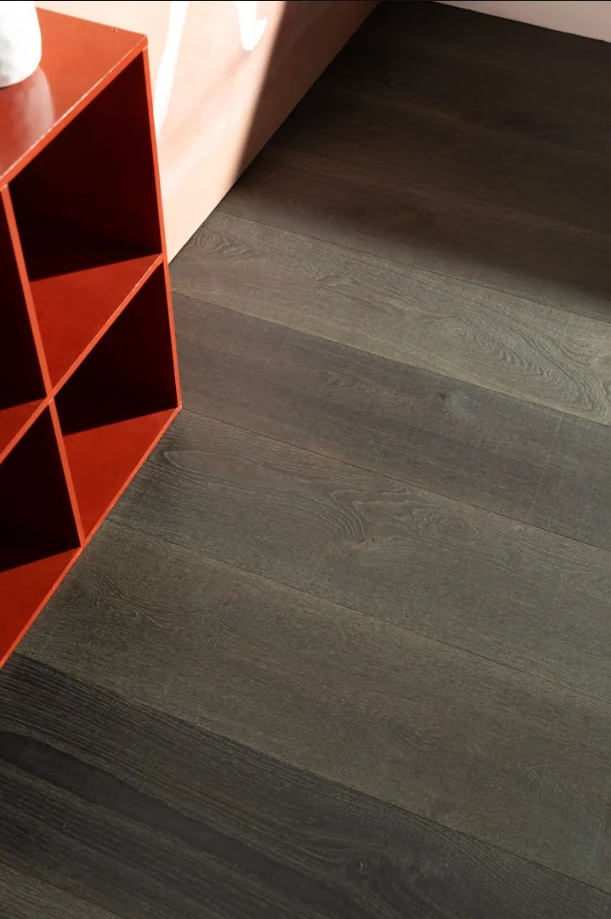















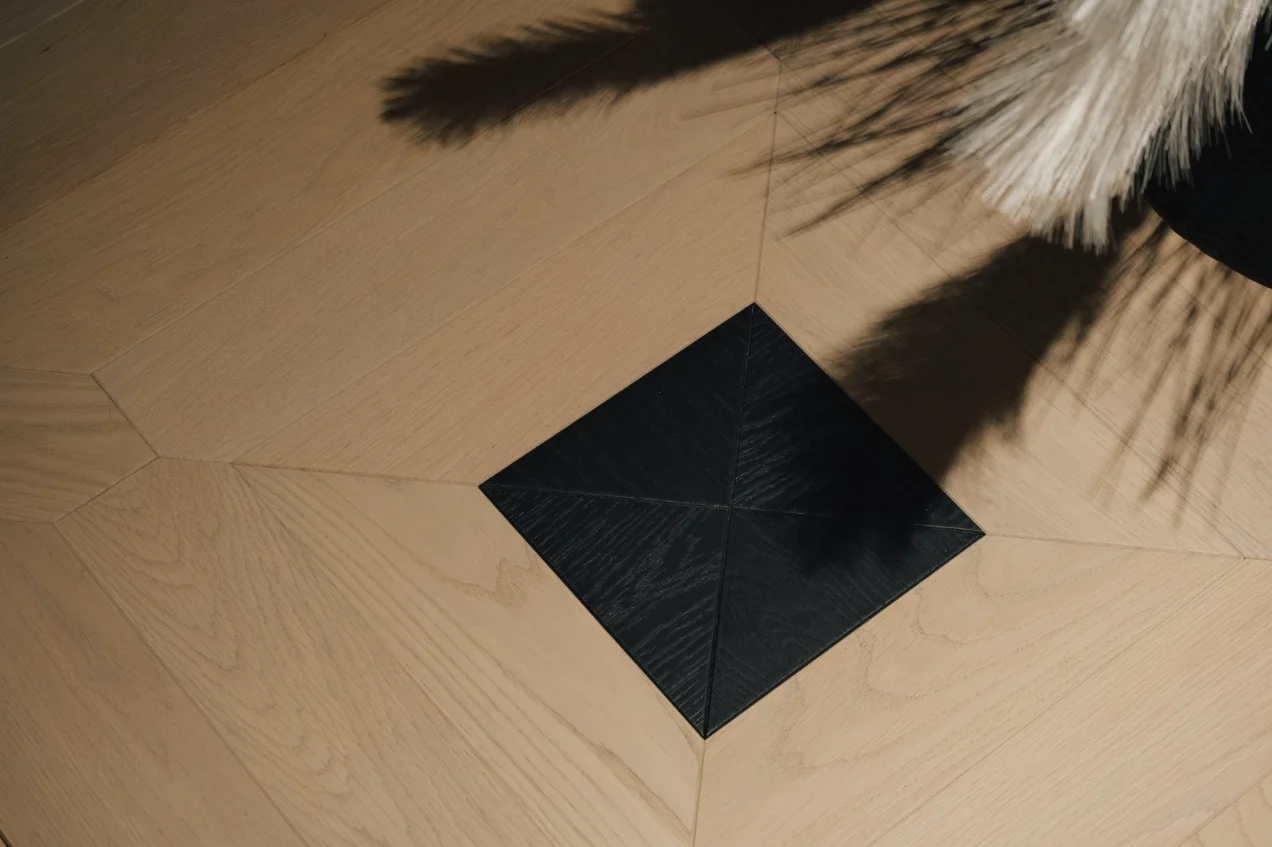
Wood flooring appearance and care depend on the actual finish. Some long-board catalogue records list water-based lacquer and some square parquet lists coating counts. Keep these with the relevant designs rather than merge them into one shared process for every product.
First identify which product a process description covers
Some long-board records describe Italian water-based lacquer and hand production; nine square parquet designs list nine primer coats and two topcoats. These come from different pages. Do not transfer the lacquer description to the other group or extend one design's layer count to SPC, solid wood or the entire catalogue.
Purchasing also requires confirming the finish on current samples and supplied products. Catalogue processes introduce options but do not replace the actual configuration. Read colour, style and coating type separately: pale colour does not establish a lacquer type, dark colour does not mean more coats, and interiors cannot prove coating brands or origins.
Layer count and performance answer different questions
The number of coating layers describes processing but cannot independently prove scratch resistance, a wear-resistance class or service life. Materials and application conditions can affect finished performance. Check product technical documents for specific requirements. Ranking all product quality by coating-layer count overlooks material systems, test methods and actual scopes of use.
Water-based coatings cannot be simplified into zero-emission or maintenance-free claims. Environmental requirements must be addressed by the specific finished product and relevant documents; maintenance follows the actual finish system. Enquiries can include cleaning instructions, local repair conditions and supporting documents, turning a finish name into information that can guide use.
Inspect finishes during sample approval and retain handover records
Beyond colour, inspect sheen, grain feel and processing direction under different light and relate them to the planned space. Exposure and screens affect photographs; one rendering cannot govern every appearance decision. Record sample numbers and finish descriptions for consistent arrival checks.
File finishes with product names, construction and dimensions. If coatings or colours change, reconfirm appearance and maintenance instructions and review whether existing performance documents still apply. Accurate process descriptions preserve material character while explaining what they establish, rather than inviting readers to treat promotion as test results.