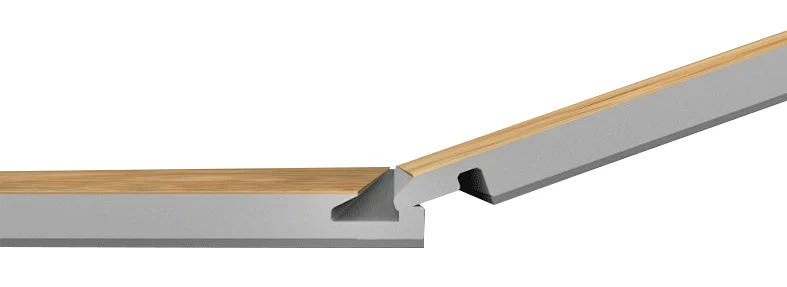















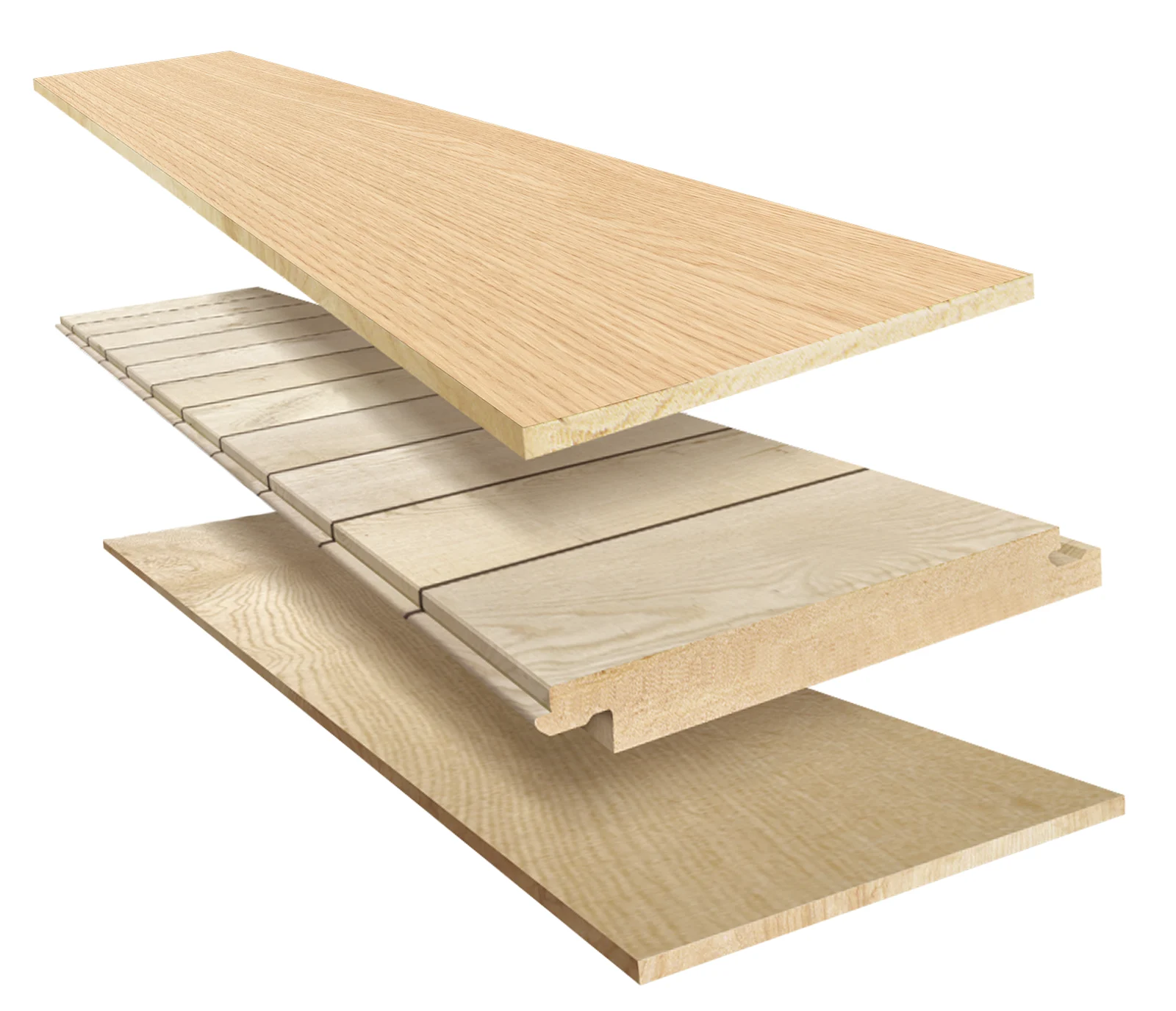
Construction explains how a floor is assembled; environmental and bonding performance each need their own evidence. The HUAGE catalogue describes a three-layer engineered wood construction with a solid wood face, solid wood core and veneer balancing layer. This cannot be rewritten as glue-free, zero-glue or zero-emission.
Understand construction and the limits of its documents
Layer names and positions explain face, interior and bottom, not a fully specified current model. HUAGE provides construction without named designs, layer thicknesses or complete supply configurations on that page. Continue product-specific confirmation during selection.
Original promotional wording about adhesives must not be reduced to 'no adhesives whatsoever'. Product technical information must explain how layers are joined, the materials used and their suitability. Natural wood does not automatically prove that a finished product passed a test or replace checks on coatings, adhesive layers and the complete product.
Ask specific questions based on application requirements
Owners or designers can first describe the flooring use, site conditions, format and appearance goals, then confirm whether a specific three-layer configuration meets them. Request actual product information for top-layer species, overall dimensions, joints, finishes and installation methods rather than measuring or estimating parameters from an original construction diagram.
Underfloor heating and other special conditions require assessment of the flooring-system combination. Catalogue construction descriptions are only a starting point; ‘three-layer’ alone establishes neither thermal nor dimensional-stability, moisture or other performance. Actual conditions determine the required documents, checked jointly by the relevant supply and installation participants.
Make quotations and samples describe the same configuration
When a three-layer proposal reaches quotation stage, use one confirmation sheet for the face, core, balancing layer and their descriptions, with colour, dimensions and delivery terms listed separately. Link the approved sample clearly to the quotation so it does not show one construction while the order uses a broad material name. Complete missing information before purchasing.
HUAGE describes three-layer engineered wood within the catalogue evidence: explain construction, leave unlisted parameters unconfirmed and check availability for the project. A construction name cannot establish environmental performance, durability and installation suitability. This introduces the material clearly while giving further discussions a defined object instead of replacing product information with simplified promotion.