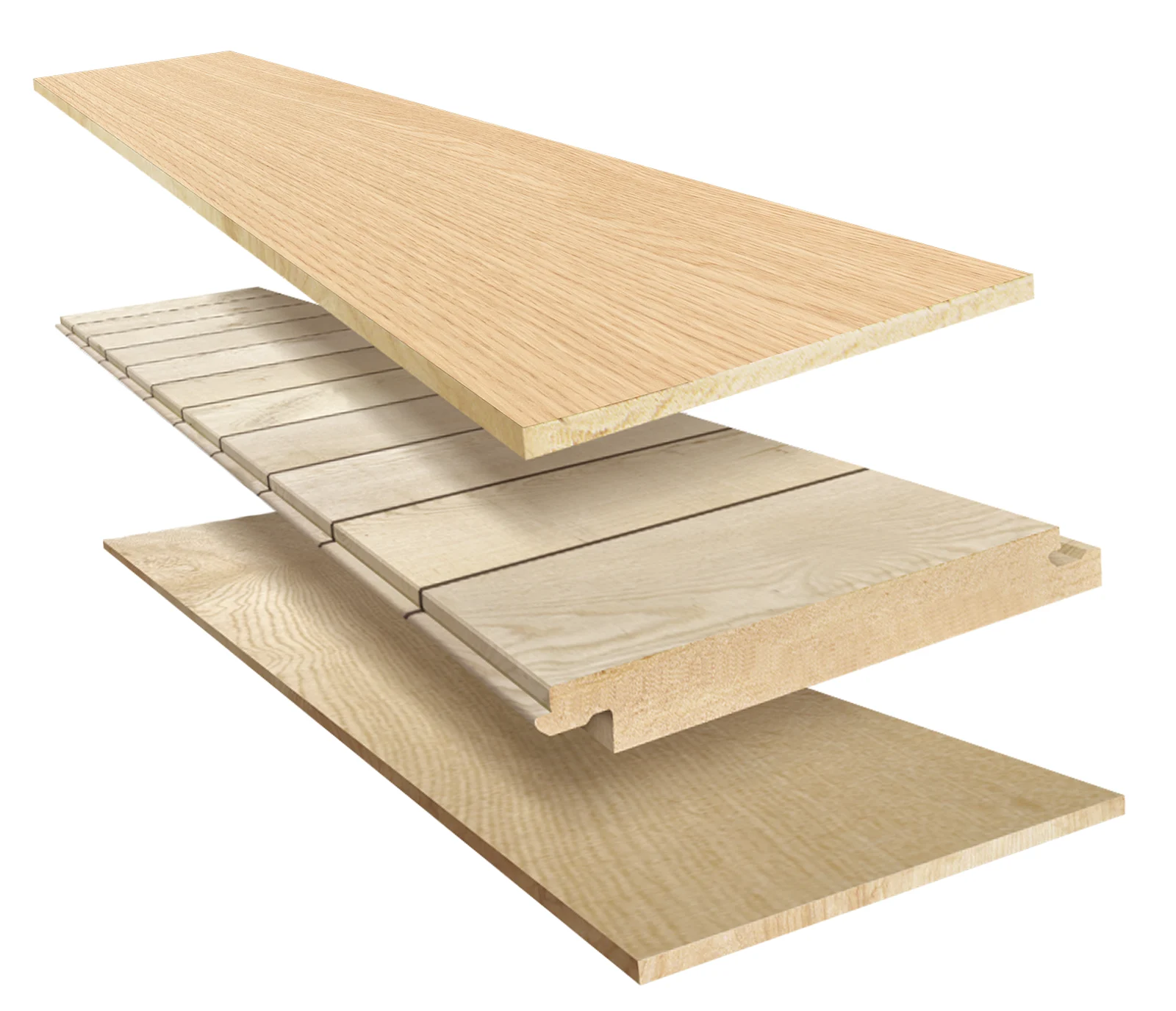
















A section helps reveal construction, while provenance documents have their own defined scope. HUAGE recommends connecting both with orders, samples and supply identifiers, first establishing which material component is being checked and then assessing how far the available information supports a conclusion.
Identify the product before recording its section
When receiving a cross-section photograph, identify its sample, product record and configuration. Similar surface colours do not prove identical internal cores. If the supplier provides the image, ask how it relates to the proposed materials. For site photographs, retain board and packaging identifiers so that one unnumbered close-up is not used as evidence for multiple products.
Section photographs show layers and some visible characteristics but cannot identify timber species or origin from colour alone. Scaling, processing and photography affect observation; provenance needs supporting documents. Use photographs to identify questions rather than infer Russian all-birch plywood or another definite material identity from layer colours.
Which component does a provenance document cover?
A document may concern a top layer, core or particular purchase without covering the entire board and all associated materials. Check its material description, subject, date and traceable identifiers, and ask the provider how it relates to the actual configuration. An origin in a title does not mean every material in an order shares that origin.
Some original pages specify Russian all-birch plywood, while others state only all-birch plywood. Retain that distinction rather than filling every record from one unexplained document. For current origin or specific supply-chain evidence, identify the products and uses concerned, then check document coverage. Historical promotion is not current batch evidence.
Retain review findings through clear correspondence
List section records, provenance files and supplier explanations beside the product approval, marking resolved relationships and questions. Reassess document applicability after material or production changes. If arrival identifiers cannot connect with earlier files, request clarification rather than infer identity from the same design name.
The catalogue introduces materials, while supply needs information tied to actual products. Core names, photographs and documents have distinct roles; none alone establishes species, provenance, performance and certification. Clear material mapping keeps checks useful through procurement, handover and later enquiries while identifying unsupported conclusions.