















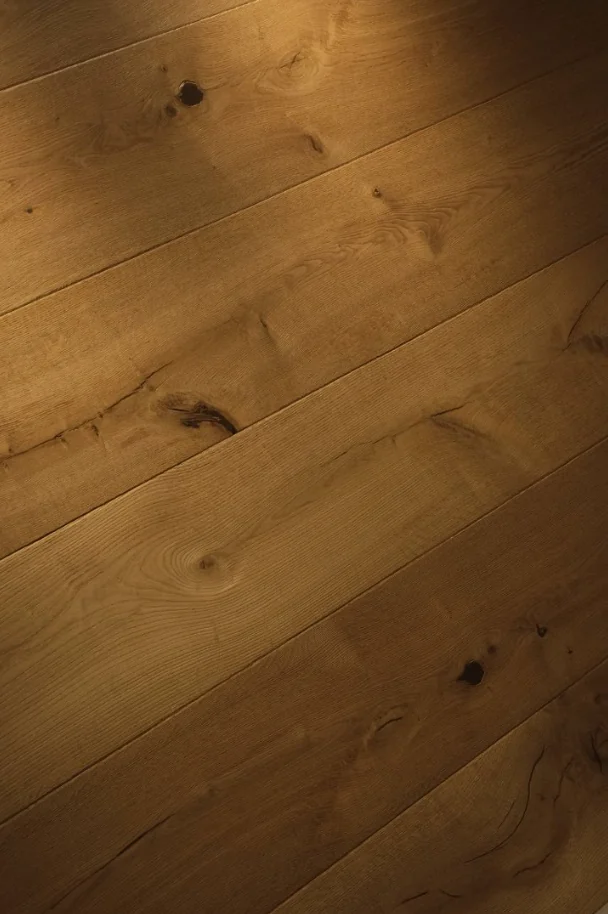
Publicly calling a batch reclaimed requires more than appearance comparison. HUAGE recommends defining the claim and checking explainable relationships among origin, processing and supply. Do not fill evidence gaps with an image's aged atmosphere.
First define the subject and scope of the proposed statement
Reclaimed provenance may concern one component, batch or element; identify it first. Using some old timber does not make every floor or other finish reclaimed. Before public statements, compare proposed wording with the actual supply schedule to establish precisely what each provenance claim concerns.
Claims about former locations or age need supporting evidence. Cracks, knots, colour and processing marks do not prove age, and reference photographs do not prove a particular building origin. Where records show only visual effects, retain appearance-reference status without turning assumptions into material history or project stories.
How inspection documents connect to actual materials
Provenance records should explain reclaimed material identity and subsequent movement; processing records describe treatment of the proposed material. Understand the relationship between provider, description and traceable identifiers. An unrelated certificate image cannot establish provenance of the actual order.
Treatment records and performance documents answer different questions. Reclaimed status alone does not establish fire, moisture or other suitability. For reprocessed material or combinations with other layers, state which components the provenance declaration covers. When supply configuration changes, document applicability must be explained again; similar grain or the same display name does not extend it automatically.
Public statements use only established relationships
Review findings can distinguish confirmed information, outstanding documentation and material suitable only as an appearance reference. Public copy should follow those distinctions, without presenting unknown details as facts. Any cited document also needs consideration of its scope and permission for use. Keep the complete internal review records; public descriptions need not disclose private addresses, personal information or irrelevant commercial details.
The current old-wood topic has no independent reclaimed-origin evidence. Its consultation entry cannot justify a confirmed reclaimed-timber claim. If specific material and documents are supplied later, review their actual content. Every provenance statement should identify its object and evidence, keeping brand descriptions aligned with supply rather than inventing history for a style.